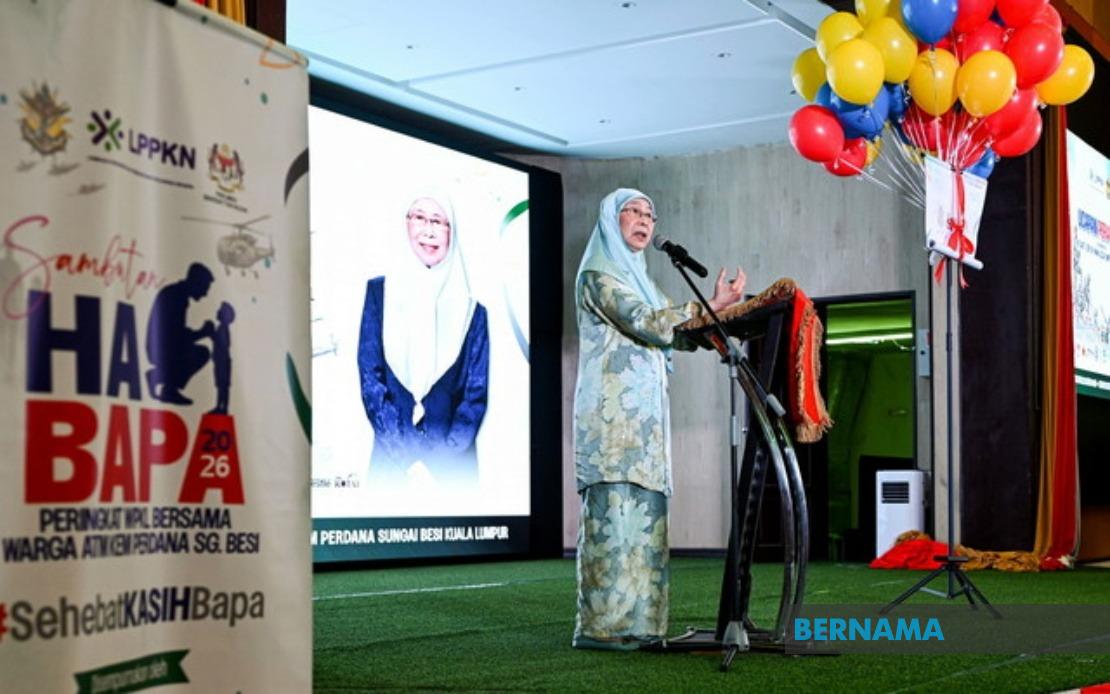
Datuk Seri Dr Wan Azizah Wan Ismail, wife of the Prime Minister and Member of Parliament for Bandar Tun Razak, has called for continued empowerment of fathers serving in the Malaysian Armed Forces, recognizing the particular challenges they face in reconciling their professional obligations with their roles as family men. Speaking at the 2026 Federal Territory of Kuala Lumpur Father's Day Celebration organized jointly by the National Population and Family Development Board (LPPKN) and the MAF, Dr Wan Azizah stressed that military personnel who are fathers deserve tailored support mechanisms to help them manage their dual responsibilities effectively.
The event, which brought together approximately 500 participants including service members, their spouses, and children, focused attention on a often-overlooked dimension of military service: the personal and familial toll of defending national sovereignty. Military personnel are frequently required to spend extended periods away from their families due to operational requirements, training exercises, and deployment responsibilities. This reality creates distinct pressures that differ significantly from civilian work environments, as the nature of military duty combines unpredictability with potential danger, adding emotional and psychological layers to the family dynamic.
Dr Wan Azizah highlighted the National Family Compassion Policy (DKKN) as a critical instrument in addressing these challenges. This policy framework is designed to provide practical assistance and support structures that enable military fathers to fulfil their parental obligations despite the geographical and temporal separations inherent in service. Such initiatives recognize that family stability and paternal engagement are not merely personal matters but contribute to broader national wellbeing by maintaining the psychological resilience and focus of military personnel.
Beyond the immediate family context, Dr Wan Azizah emphasized that strengthening support for fathers in the military sector serves a deeper purpose: reinforcing the institution of the family itself. In contemporary Malaysian society, where traditional family structures face various pressures, the deliberate empowerment of fatherhood as a fundamental social role carries symbolic and practical significance. By publicly acknowledging and institutionally supporting the role of military fathers, the government signals commitment to a family-centric approach to national development.
The Prime Minister's wife pointed to the importance of cultivating awareness regarding the paternal role as a principal foundation of family structure. This messaging operates on multiple levels: it validates the experiences of military fathers who often feel their sacrifices go unrecognized, it educates the broader public about the value of paternal involvement in child-rearing and family leadership, and it establishes policy frameworks that treat fatherhood as worthy of state investment and resources.
LPPKN has developed several targeted initiatives to operationalize this vision of enhanced paternal support. The Fatherhood Module represents a practical intervention focused specifically on parenting competencies and skills development, acknowledging that effective fatherhood requires education and deliberate cultivation rather than being intuitive. This module addresses topics ranging from emotional intelligence and child development to conflict resolution within families, providing military fathers with evidence-based approaches to managing their parental responsibilities.
Complementing this educational initiative is the Men Empowerment Network (MEN), which creates a communal space for male support and shared learning. The network recognizes that many fathers, particularly those in demanding professions like military service, may lack adequate peer support or forums for discussing the challenges they encounter. By establishing structured networks, LPPKN facilitates horizontal support relationships and knowledge-sharing among men navigating similar circumstances.
The timing and focus of this Father's Day celebration reflects broader shifts in how Southeast Asian governments approach social policy. Rather than treating family support as incidental to defence and security policy, the Malaysian approach integrates family welfare considerations into military personnel management. This holistic perspective acknowledges that military effectiveness depends not only on training and equipment but also on the psychological wellbeing and family stability of service members.
For Malaysian military personnel, the recognition accorded through such events and policies carries tangible significance. The public acknowledgment that military fathers face distinctive challenges validates their experiences and creates momentum for institutional accommodations. These might include flexible scheduling for family events, family counselling services, or childcare support during extended deployments—practical measures that translate policy rhetoric into lived improvements.
The initiative also carries implications for how Malaysia positions itself within regional defence conversations. A military workforce composed of stable, supported families contributes to organizational cohesion and retention of experienced personnel. By investing in the family dimension of military service, Malaysia demonstrates sophisticated understanding of human resource management in the security sector, potentially serving as a model for other Southeast Asian nations grappling with military professionalization and personnel retention.
Dr Wan Azizah's emphasis on recognizing military fathers as leaders within their families extends the conversation beyond family-focused policy into questions of male identity and civic responsibility. The framing positions fatherhood not as a private domestic matter but as a form of leadership that merits public recognition and institutional support, elevating the status of paternal engagement in national discourse.

