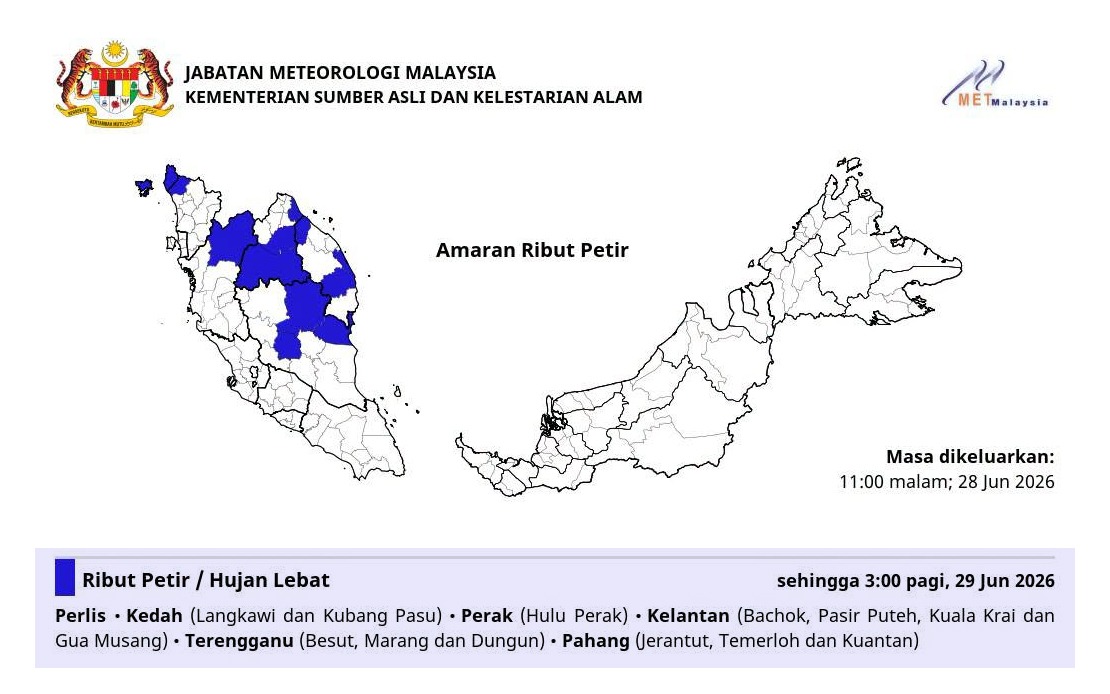
The Malaysian Meteorological Department has issued an urgent weather warning covering six states across the country's northern and east coast regions, cautioning residents to expect thunderstorms, heavy rain and strong wind conditions that will remain in effect until 3am. The alert, which came into effect on June 28, targets multiple locations across Perlis, Kedah, Perak, Kelantan, Terengganu and Pahang, affecting populated areas and rural districts alike.
In the northern region, Perlis faces the full extent of the warning, while Kedah's vulnerable zones have been identified as Langkawi and Kubang Pasu, two districts frequently affected by seasonal monsoon patterns. The island of Langkawi, a major tourist destination and economic hub for the state, warrants particular attention given its exposure to maritime weather systems and the potential impact on both residents and visitor safety. Perak's Hulu Perak district, located in the state's interior highlands, has also been flagged as a concern area where mountainous terrain may amplify rainfall accumulation and increase landslide risks.
Moving eastward, Kelantan faces perhaps the most widespread threat, with four separate districts placed under alert status. Bachok, Pasir Puteh, Kuala Krai and Gua Musang represent a significant portion of the state's geography, suggesting that the weather system affecting the region holds considerable geographic reach and intensity. The inclusion of Gua Musang, which sits inland and is bordered by Terengganu, indicates the system's penetration into areas that typically experience secondary weather impacts.
Terengganu's east coast exposure brings three districts into the warning zone: Besut, Marang and Dungun. These coastal and near-coastal areas face dual exposure—both to direct rainfall and to potential surge effects from strengthened wind patterns pushing water towards shorelines. For a state whose economy partially depends on fishing and marine activities, such warnings often necessitate precautionary measures including vessel movements and port operations adjustments.
Pahang, Malaysia's largest state by land area, has three districts under alert: Jerantut, Temerloh and Kuantan. Kuantan, the state capital and a significant commercial and industrial centre, serves as a critical node for regional commerce and logistics. Temerloh's position on the Pahang River means that concurrent heavy rainfall poses flooding risks to riverside communities and infrastructure. Jerantut, situated in the state's interior, represents another inland location where accumulated water drainage may create secondary hazard scenarios in the hours following peak rainfall.
The timing of this alert—extending into the early morning hours—suggests a weather system of considerable duration and organisation rather than isolated convective activity. Such prolonged thunderstorm warnings typically indicate the presence of an active monsoon trough or a well-defined low-pressure area that has developed sufficient structure to maintain organised convection over multiple hours. For residents across these six states, the warning period represents a critical window during which preparedness measures should be activated, including securing loose outdoor items, ensuring drainage systems are clear, and remaining alert to flash flood risks.
For authorities managing disaster response and public safety, the geographic spread across three regions—northern Peninsular Malaysia, the east coast, and portions of the interior—suggests coordination challenges. Different state governments and local councils must simultaneously activate their respective weather response protocols, from traffic management around vulnerable routes to emergency services pre-positioning and public alerts through multiple communication channels.
The Malaysian Meteorological Department's decision to issue this specific alert reflects confidence in forecast modelling regarding both the timing and geographic extent of the severe weather. Such warnings serve as critical public safety tools, enabling individuals, businesses and government agencies to take protective action before conditions deteriorate. In an era of climate variability and intensifying weather systems, the accuracy and timeliness of such alerts have become increasingly vital to minimising disruptions and preventing loss of life or property damage across affected communities.

