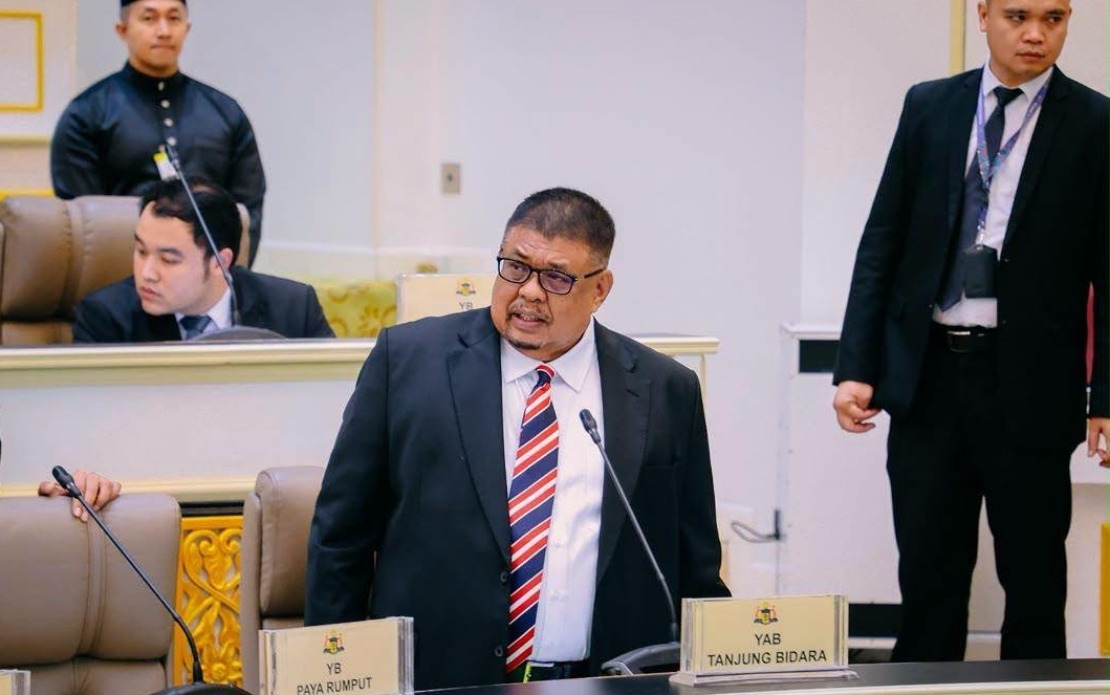
The Melaka state government faces a significant political reconfiguration following the Democratic Action Party's abrupt exit from the ruling coalition, yet Chief Minister Datuk Seri Ab Rauf Yusoh has sought to project stability and continuity in his administration. Speaking at the Seri Negeri Complex in Ayer Keroh on July 15, the Chief Minister reassured residents, public servants, investors, and the business community that essential government functions—ranging from daily administration to long-term development initiatives—will proceed without disruption or delay despite the departure of his coalition partner.
The withdrawal of the DAP, one of the original partners in the Melaka governing coalition, came as a direct response to the state legislature's approval of an amendment to the Melaka state constitution. This amendment fundamentally altered the mechanism for filling vacant State Legislative Assembly seats by introducing a system of appointed representatives, departing from the traditional practice of relying solely on elected members. Four DAP assemblymen—Allex Seah Shoo Chin from Kesidang, Low Chee Leong from Kota Laksamana, Leng Chau Yen from Banda Hilir, and Kerk Chee Yee from Ayer Keroh—announced their immediate resignations from the state government following the legislative vote, effectively removing the party's representation from the executive council.
Ab Rauf's emphasis on administrative continuity carries particular weight given the sensitivity surrounding the constitutional amendment and the rapid unravelling of the coalition arrangement. The Chief Minister deliberately avoided dwelling on the political tensions underlying the DAP's exit, instead framing the situation as a matter of individual parties exercising their prerogative to make principled decisions. He noted that while the state government and the DAP would no longer collaborate within the administration, this rupture need not translate into adversarial relations or undermine their shared commitment to serving Melaka's population. This language suggests an attempt to prevent further escalation and maintain a degree of institutional comity despite the ideological disagreements that prompted the separation.
The departure of DAP representatives removes a layer of complexity in Melaka's governance structure, as the party held four executive council positions. Rather than immediately appointing replacements to these vacant posts, the Chief Minister opted for a transitional arrangement whereby the responsibilities previously shouldered by DAP exco members would be redistributed among the existing administrative team. This measured approach avoids the appearance of hasty political opportunism while allowing current office-holders to absorb additional duties temporarily. The practicality of this solution, however, will depend on whether the extended workload can be genuinely managed without compromising service delivery or creating administrative bottlenecks.
Prime Minister Datuk Seri Anwar Ibrahim had appealed to the DAP to postpone its withdrawal and reconsider the decision, framing the request in terms of prioritising development outcomes and public welfare over factional disputes. The Chief Minister's explanation that the DAP's resignation became final upon submission of the formal letter—occurring immediately after the party's own press conference—effectively closed the door on these negotiations. This sequence of events underscores the calculated nature of the DAP's departure, suggesting the party had reached a threshold of dissatisfaction with the constitutional amendment that could not be bridged through dialogue at the federal level.
For Malaysia's broader political landscape, the Melaka situation illustrates the fragility of multi-party coalitions at the state level, particularly when fundamental constitutional questions trigger deep disagreements over governance principles. The amendment permitting appointed representatives represents a departure from democratic convention in a state that has experienced considerable political volatility in recent years. The DAP's objection appears rooted in concerns about bypassing electoral accountability, a position that resonates with the party's broader advocacy for democratic standards and institutional transparency. By withdrawing rather than capitulating, the DAP signalled that certain procedural boundaries remain non-negotiable, even at the cost of losing governmental power.
The implications for Melaka extend beyond the immediate political realignment. The state must now navigate questions about its governing capacity with a numerically reduced coalition, particularly if further defections occur or if the newly appointed assembly members prove unable to provide stable support for the administration. The Chief Minister's confidence in the government's ability to function effectively will be tested against the reality of managing state business with diminished political resources. Investors and business stakeholders will be closely watching whether the promised continuity materialises or whether governance suffers from the sudden loss of coalition partners.
Ab Rauf's commitment to maintaining constructive relations with the federal government represents a strategic priority, given that state administrations often depend on federal funding, programmes, and coordination for successful implementation of their policy agendas. By framing the DAP's departure as an internal matter that should not affect Melaka's position within the national governance framework, the Chief Minister is attempting to insulate the state from potential federal displeasure or retaliation. This approach acknowledges the vertical power dynamics between state and federal levels in Malaysia's federal system, where autonomous state decision-making must ultimately remain compatible with federal interests.
The broader constitutional question raised by the amendment—regarding the proper mechanism for filling vacant assembly seats—touches on fundamental issues of representation and democratic legitimacy that will likely continue to generate debate within Melaka and potentially influence other states. The DAP's opposition suggests that this amendment may become a point of contention in future state-level negotiations or federal-state relations, particularly if the appointed representatives prove unpopular or if questions arise about their accountability to constituents. The state's political trajectory will depend significantly on how effectively these appointed members integrate into the assembly and whether they can command genuine legitimacy among their peers and the public.
Moving forward, the Chief Minister faces the dual challenge of demonstrating that Melaka's governance remains robust despite reduced coalition support while simultaneously managing the underlying political tensions that the constitutional amendment has exposed. His measured rhetoric and emphasis on continuity may succeed in calming immediate anxieties about administrative disruption, but the longer-term stability of his administration will ultimately depend on whether this transitional arrangement can evolve into a durable governing configuration. The test for Ab Rauf lies not merely in maintaining the appearance of normalcy but in delivering tangible results that vindicate his confidence in the government's continued effectiveness.

