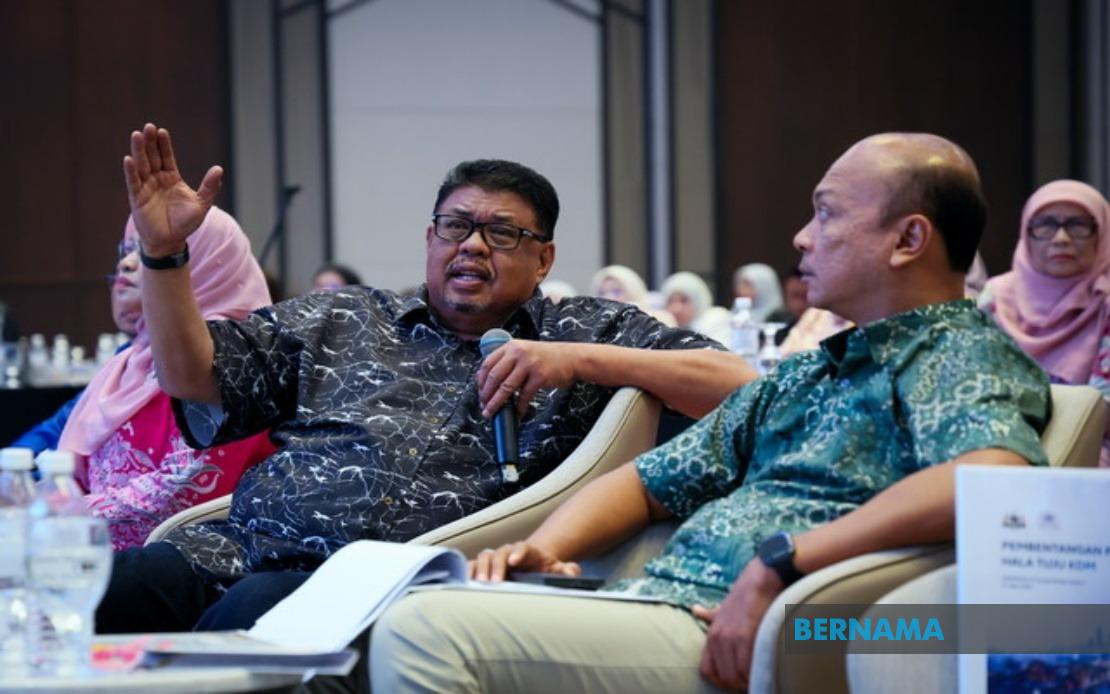
Melaka's Barisan Nasional coalition has made clear its intention to contest every one of the 21 State Legislative Assembly seats it presently occupies when the state heads to the polls, with party leadership signalling there is no room for concessions on this matter. Datuk Seri Ab Rauf Yusoh, who chairs both the Melaka BN leadership and serves as the state's Chief Minister, delivered this message while attending a Digital Kampung workshop in Alor Gajah, emphasising that the coalition's commitment to all 21 seats represents the foundation upon which any negotiations with prospective allies must be built.
The requirement that coalition partners accept BN's full slate of incumbents is being positioned as a precondition rather than a point for discussion, underscoring the leadership's resolve to maintain the coalition's current territorial hold. Ab Rauf's declaration suggests that Melaka BN views its electoral performance in the previous contest as a mandate to contest comprehensively, without conceding ground to allies or rivals. This stance reflects a broader pattern in Malaysian politics where state-level coalitions often assert territorial claims as a negotiating strategy during alliance-building exercises.
When questioned about reported discussions involving three PAS senior leaders, Ab Rauf indicated openness to dialogue with any prospective partners, though he qualified this by noting that such conversations must rest on a foundation of reason and practicality. He pointedly stressed that any decisions flowing from such talks would require endorsement from BN's Supreme Council, the highest decision-making body within the coalition, thereby ensuring that individual negotiations do not override party machinery. This layering of approval processes suggests that while exploratory talks may proceed, final determinations remain subject to formal party ratification, a safeguard that prevents overextension of negotiating authority.
The matter of timing for the state election remains deliberately ambiguous. When pressed about speculation that the Melaka State Legislative Assembly would be dissolved in September, Ab Rauf offered a characteristically non-committal response, stating that dissolution could occur "at any time" and that while no specific date had yet crystallised in his mind, the moment would arrive when circumstances dictated. His comment about not revealing the timing to preserve the "thrill" of the announcement added a lighter note to what is fundamentally a strategic decision about when to go to voters. This discretion over timing represents a traditional advantage enjoyed by ruling coalitions in Malaysian state politics, allowing them to select electoral moments deemed most favourable to their prospects.
The current composition of Melaka's legislature reflects the results of the 15th state election, when BN captured 21 of the 28 available seats, establishing a commanding majority. Pakatan Harapan secured five seats while Perikatan Nasional won two, leaving the incumbent coalition with a comfortable buffer against opposition challenges. This parliamentary mathematics has generally provided BN with stability to govern without dependency on opposition support, though the relatively narrow margin compared to historical BN dominance in some other states underscores the increasingly competitive nature of Malaysian electoral contests.
The state government's current term is constitutionally mandated to conclude on December 31, providing a natural deadline by which elections must be held. This timeline means that while Ab Rauf retains discretion over the precise election date, he operates within a fixed window that is now rapidly narrowing. The December deadline creates planning pressure for all political actors—candidates must be selected, campaigns organised, and voter messaging developed—lending urgency to coalition discussions and partnership negotiations currently underway.
For Malaysian political observers, Melaka's positioning holds significance beyond state-level considerations. The state has historically served as a barometer for broader national political trends, and its electoral outcome frequently influences calculations at federal level. BN's performance in defending its Melaka stronghold will factor into assessments of the coalition's resilience in an era of fragmented voting patterns and emergent political challengers. Similarly, whether Melaka remains a coalition-based battleground or becomes a more three-cornered contest will reflect the state's broader political trajectory and the viability of various alliance configurations.
The insistence on defending all 21 seats also carries implications for potential coalition partners. Any party contemplating collaboration with Melaka BN must accept a subordinate role in seat negotiations, as the coalition has signalled it will not yield any of its current holdings. This stance may complicate discussions with PAS or other potential allies who might have aspirations for additional representation. Such dynamics highlight the inherent tensions within multiparty coalitions, where the leading partner must balance maintaining unity with accommodating the ambitions of coalition members seeking their own expansion.
From a Southeast Asian perspective, Melaka's forthcoming contest exemplifies the continued vitality of Malaysia's democratic process and the genuine competitive dimensions that characterise state-level politics even where one coalition has maintained long-term dominance. The willingness of political actors to negotiate, the structural mechanisms through which decisions are made, and the constitutional constraints that govern electoral timing all reflect institutional frameworks that, despite periodic strains, continue to structure political competition. The outcome in Melaka will thus offer insights into the current health and trajectory of Malaysian electoral democracy.

