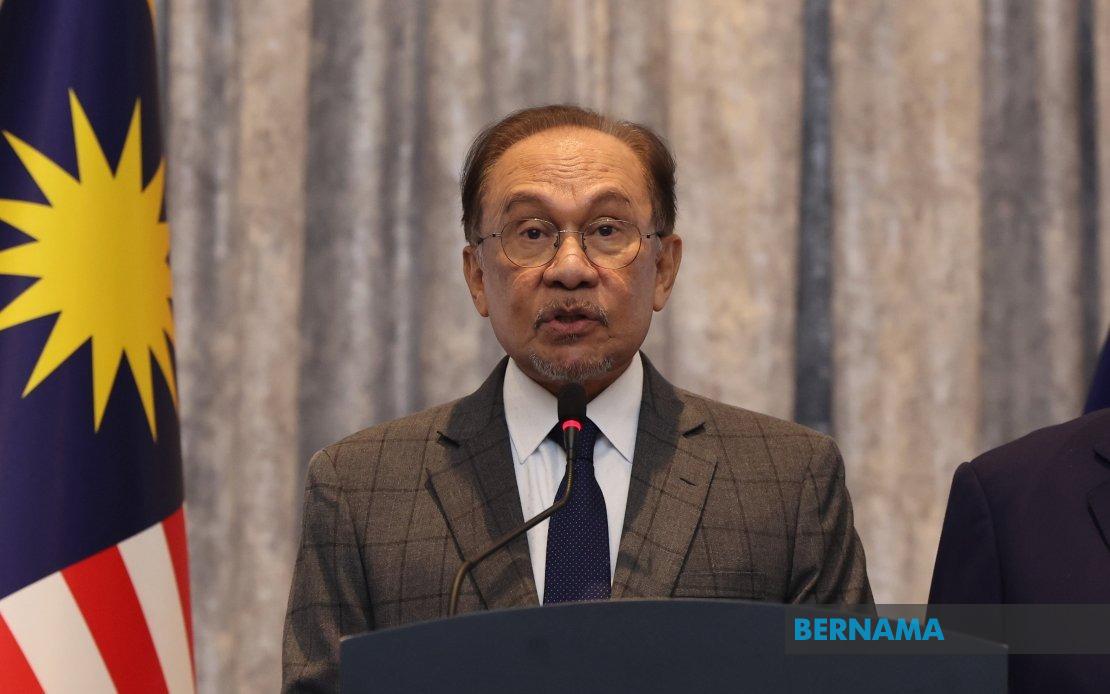
Prime Minister Datuk Seri Anwar Ibrahim has issued a measured call for Malaysia's media industry to pursue technological advancement without surrendering its core values and ethical principles, framing the challenge as essential to preserving national identity in an increasingly digital world. Speaking at the Malaysian Press Night 2025 and the Malaysian Press Institute-PETRONAS Journalism Awards 2026 in Kuala Lumpur on July 17, Anwar articulated a central tension facing contemporary journalism: the need to harness innovations in artificial intelligence, digital platforms and information technology while remaining anchored to professional standards and cultural moorings that reflect Malaysian society.
The Prime Minister's intervention reflects mounting concern within government circles about the broader implications of unregulated technological adoption across media systems. Anwar cautioned that rapid technological progress, if pursued without adequate safeguards, carries the risk of national disorientation—a particularly acute concern for a multicultural nation navigating complex domestic dynamics and competing regional influences. His framing positions technology not as inherently neutral but as a domain where values and governance frameworks must actively shape implementation, rather than allowing tools to dictate outcomes.
Anwar drew explicit parallels between historical patterns of Western media dominance and contemporary technological power concentration, suggesting that the mechanisms of narrative control have evolved rather than diminished. He highlighted how dominant global powers historically leveraged media infrastructure to advance their own strategic interests and worldviews, establishing what he termed a form of intellectual subordination among audiences. The Prime Minister argued that this phenomenon persists today through different channels—technological platforms and digital systems now serve as vectors for cultural and ideological influence, operating with greater subtlety and reach than traditional broadcasting or print media.
The concept of a "captive mind" featured prominently in Anwar's remarks, signalling the government's focus on psychological and intellectual autonomy as a policy concern. While the term traditionally referenced colonial and Cold War-era political influence, Anwar repositioned it within a contemporary technological context, suggesting that digital tools and algorithmic systems can establish forms of dependency and value capture that bypass traditional political mechanisms. This intellectual reframing has significant implications for how Malaysia approaches technology regulation and media literacy initiatives, potentially informing future policy in areas ranging from content moderation to platform governance.
Communications Minister Datuk Seri Fahmi Fadzil and the Malaysian Communications and Multimedia Commission (MCMC) were positioned as key institutional partners in this endeavour, suggesting that government support for media practitioners will remain contingent on adherence to ethical standards and value-conscious deployment of technology. Anwar's rhetoric emphasized partnership rather than control, framing the government's role as one of providing institutional support and creating conditions for media innovation while maintaining guardrails against ideological capture. This approach reflects Malaysia's broader efforts to position itself as a technologically advanced nation while maintaining distinct cultural and political characteristics.
The Prime Minister's call for greater attention from columnists and opinion leaders signals recognition that technological governance cannot rely solely on technical or regulatory mechanisms. Cultural and intellectual leadership from within the media profession itself becomes crucial to establishing norms around responsible technology adoption. By elevating the role of editorial voices and analytical commentary, Anwar invoked a vision of media professionalism that extends beyond reporting to include normative guidance on how technological tools should be deployed in service of public understanding rather than elite agenda-setting.
For Malaysian media practitioners, this address establishes expectations around the relationship between innovation and institutional responsibility. The recognition that media freedom and technological advancement must move together, rather than in tension, suggests that future conversations about press regulation will increasingly centre on questions of professional ethics and value alignment rather than crude content censorship. This represents a potentially more sophisticated approach to media governance, one that acknowledges legitimate concerns about ideological influence while respecting the operational autonomy that professional journalism requires.
The awards ceremony and press night served as forums for reinforcing these themes directly to journalists and media organization leaders, suggesting that the government views the media profession itself as a crucial ally in navigating technological transition. By commending organizations like the Malaysian Press Institute (MPI) and the Malaysian Media Council (MMC) for their reform initiatives, Anwar signalled approval for industry-led self-regulation and professional standard-setting, implicitly arguing that robust internal mechanisms for quality assurance and ethical oversight are preferable to external mandates.
The broader regional context underscores the relevance of Anwar's concerns. Across Southeast Asia, media systems face mounting pressures from disinformation campaigns, foreign influence operations, and the concentration of digital advertising revenue in the hands of global technology corporations. Malaysia's experience with politically motivated disinformation and the challenge of maintaining editorial standards across digital platforms lends particular urgency to the Prime Minister's framing. His address speaks to shared anxieties across the region about whether national media systems can retain their role as arbiters of public discourse and sources of accountable information in an environment dominated by algorithms and global tech platforms.
The emphasis on openness to criticism and the government's commitment to listening to media voices, despite potential disagreement, indicates an effort to build consensus around technology governance through dialogue rather than decree. This approach carries risks—insufficient regulation could allow harmful uses of technology to proliferate—but also advantages, particularly the preservation of editorial independence and the cultivation of professional buy-in for whatever standards ultimately emerge. The framing suggests that Malaysia intends to chart a middle course between permissive laissez-faire approaches to technology and more restrictive models that subordinate media autonomy to state objectives.
Moving forward, the practical challenge facing Malaysian media will be translating these principles into sustainable business models and editorial practices. Technology adoption often serves economic imperatives—algorithmic content recommendation systems drive engagement and advertising revenue, for instance—creating tensions between commercial incentives and the value-conscious deployment Anwar advocated. The role of government support, whether through advertising expenditure, regulatory frameworks that protect business models built on quality journalism, or direct institutional backing, may prove decisive in enabling media organizations to resist purely profit-driven technological implementation.
The event also underscored the government's broader investment in media institution-building, with support from PETRONAS and coordination across multiple agencies signalling that technology governance in media is not an isolated policy domain but integral to wider concerns about national resilience and soft power. As Malaysia positions itself within regional and global technology ecosystems, the capacity of its media institutions to operate with both sophistication and integrity will contribute significantly to the nation's ability to shape narratives about its own development and values. Anwar's address thus frames media technology policy not as a narrow professional concern but as foundational to Malaysia's standing and influence in an increasingly digitized world.

