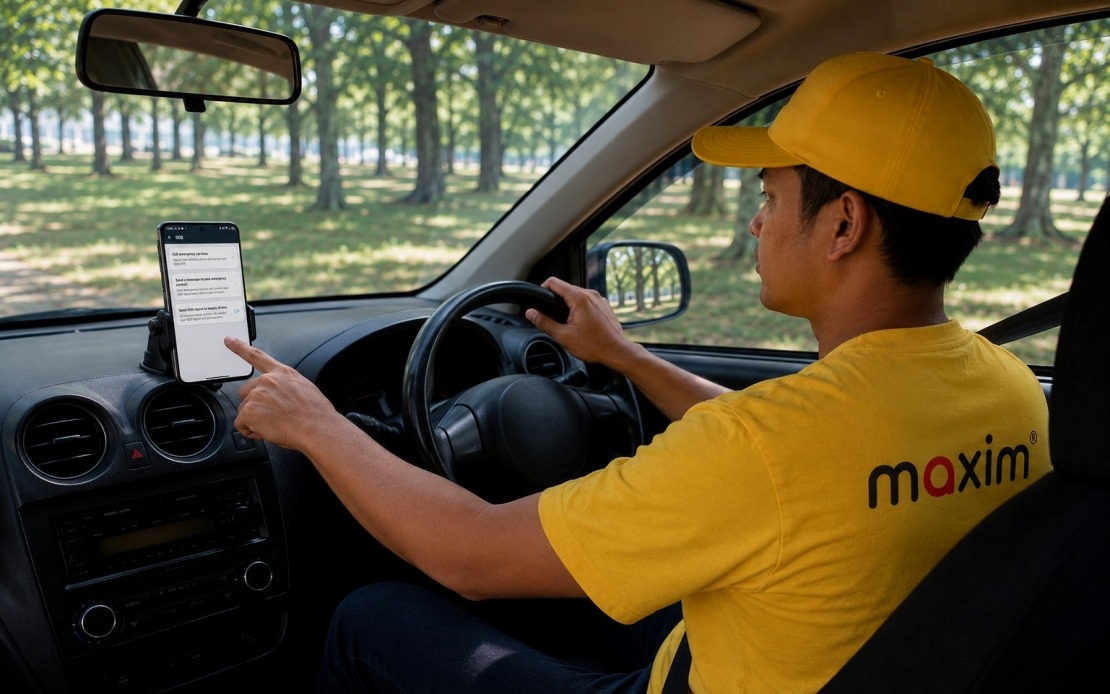
Ride-hailing platform Maxim Malaysia has significantly strengthened its safety infrastructure by rolling out an upgraded SOS emergency system designed to accelerate assistance during critical situations. The enhancements, unveiled on July 13, reflect growing industry recognition that robust emergency features are essential to building user confidence in ride-sharing services across Malaysia's urban centres.
The revamped system fundamentally changes how both drivers and passengers access emergency support by standardising the SOS button experience across user groups. Rather than forcing users into a one-size-fits-all emergency notification protocol, the platform now empowers individuals to make rapid decisions about who receives alerts during crisis moments. Users can choose to contact the 999 emergency hotline, notify up to three pre-registered emergency contacts, or trigger the new Driver Alert System that broadcasts distress signals to nearby Maxim driver-partners. This layered approach acknowledges that different emergencies demand different responses—a passenger experiencing harassment may prioritise police involvement, while a driver facing mechanical breakdown might benefit most from peer assistance.
The technical infrastructure supporting these features demonstrates Maxim's commitment to operational reliability under adverse conditions. Alert recipients receive SMS notifications containing precise GPS coordinates and live trip-tracking links, with the system engineered to function even when internet connectivity deteriorates or fails entirely. This redundancy proves critical in Malaysian contexts where network coverage can be inconsistent outside major metropolitan areas, ensuring that users in secondary cities and suburban regions maintain access to emergency features. The GPS data transmission occurs in real-time, allowing emergency responders or family members to monitor a user's precise location throughout a crisis situation.
The Driver Alert System represents an innovative addition that leverages Maxim's existing network to create community-based emergency response mechanisms. When a driver activates emergency notifications, other Maxim partner drivers operating within a three-kilometre radius receive automatic alerts specifying the nature of the emergency and exact location details. This approach recognises that professional emergency services, while essential, face response time challenges in congested urban areas like Kuala Lumpur and Petaling Jaya, where minutes can be critical. Nearby drivers can provide immediate assistance—from staying on the line to offering physical help—while formal emergency responders mobilise toward the incident. This crowdsourced safety model has proven effective in other Southeast Asian ride-sharing ecosystems and addresses a persistent gap in emergency response capacity.
Maxim Malaysia Director Mohd Hazwan Musli emphasised that the system's flexibility transforms emergency response from a rigid protocol into a responsive decision-making process. He highlighted how the ability to activate assistance within seconds—rather than navigating multiple menu layers or making difficult judgment calls about whom to contact—can prove decisive during genuine emergencies. The psychological factor matters considerably; a panicked individual can trigger their preferred response channel immediately rather than losing critical seconds deliberating between options. This design philosophy aligns with modern safety best practices that prioritise reducing cognitive load during high-stress situations.
Passengers benefit from additional protective layers including secure in-app messaging that incorporates fraud detection mechanisms, preventing scammers from exploiting the platform's communication channels. The Trip Sharing feature allows users to immediately distribute real-time journey links to trusted contacts upon boarding, enabling family members or friends to monitor their location throughout the ride. This transparency mechanism has become increasingly important as Malaysian users develop safety consciousness around ride-hailing services, particularly following high-profile safety incidents that generated public concern about passenger vulnerability. The feature essentially extends personal safety networks by allowing multiple trusted individuals to monitor a single journey simultaneously.
Internal trip monitoring continuously tracks critical journey parameters including GPS location data for every completed order, creating detailed records that support investigations if incidents occur. This comprehensive logging capability proves valuable not only for emergency response but also for dispute resolution and driver conduct reviews. Should a passenger report concerning driver behaviour or an accident, Maxim can reconstruct precise journey details from encrypted system records, supporting both the platform's regulatory compliance obligations and users' legitimate interests in documenting their trips.
Data security underpins every component of this enhanced system, with Maxim implementing modern encryption standards for all SOS function transmissions, Driver Alert System notifications, and Trip Sharing links. Only authorised security personnel and law enforcement agencies can access encrypted data, and only through established legal procedures—a critical safeguard against privacy violations. Malaysian regulators increasingly scrutinise how ride-hailing platforms handle sensitive user information, particularly location data that reveals personal movement patterns. Maxim's approach acknowledges these regulatory concerns while maintaining the data accessibility necessary for genuine emergency response.
These upgrades position Maxim competitively within Malaysia's ride-hailing sector, where safety features have become primary differentiators rather than secondary amenities. Passengers making platform choices increasingly prioritise demonstrated safety capabilities, and drivers selecting between platforms evaluate how thoroughly companies support their security. As Malaysia's gig economy continues expanding and ride-hailing penetrates secondary cities beyond Klang Valley and Penang, robust emergency systems become even more critical. Rural and smaller urban markets often lack established emergency infrastructure, making platform-integrated safety features the primary recourse for users facing dangerous situations.
The upgrades reflect broader industry trends toward comprehensive safety ecosystems that integrate technology, community resources, and professional emergency services. Rather than viewing safety as a compliance obligation, leading ride-hailing platforms increasingly treat it as a strategic advantage that builds user loyalty and attracts quality driver-partners. Maxim's willingness to invest in these systems signals confidence in the Malaysian market's growth trajectory and commitment to establishing the platform as the region's most safety-conscious ride-hailing option. For users concerned about personal security—whether passengers worried about unsafe drivers or drivers concerned about passenger behaviour—these enhanced features represent tangible progress toward more protected ride-sharing experiences.

