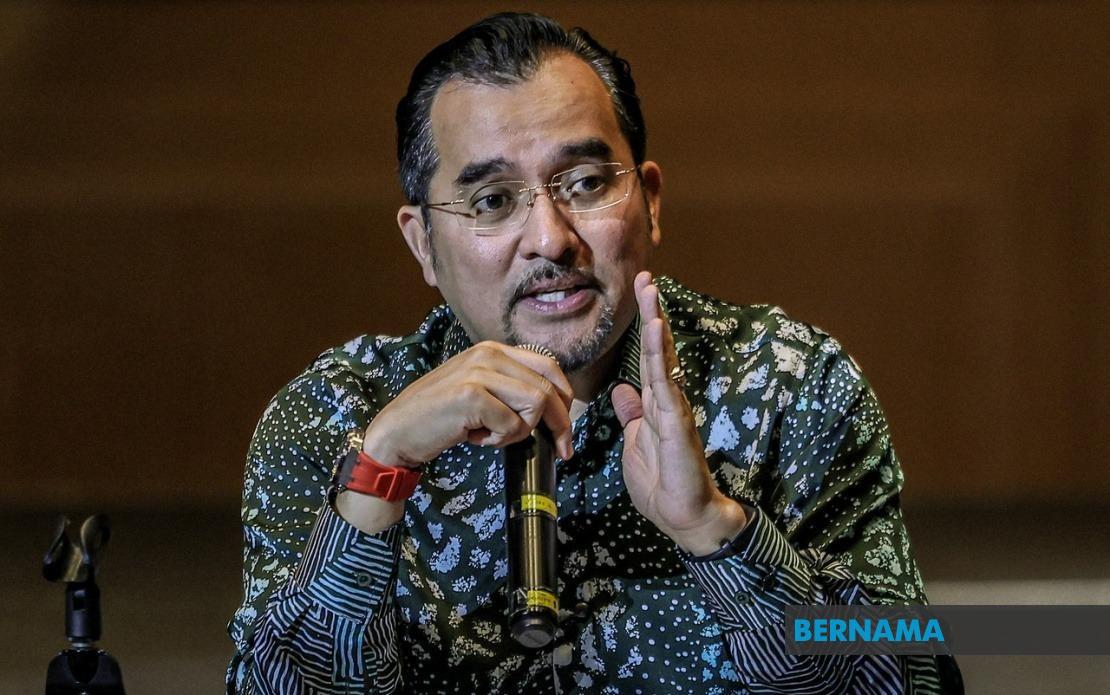
The Malaysian government is moving to substantially restructure how Majlis Amanah Rakyat operates through comprehensive legislation designed to prevent a recurrence of mismanagement that has plagued the institution. MARA chairman Datuk Dr Asyraf Wajdi Dusuki announced that the proposed MARA Bill 2026, scheduled for parliamentary consideration before December, dedicates the overwhelming majority of its provisions to addressing corporate governance deficiencies that have accumulated over decades of operation under the original 1966 legislation.
The governance component represents the Bill's defining feature, with Asyraf Wajdi emphasising that Cabinet approval in principle signals government commitment to fundamentally reshaping institutional accountability. The initiative responds directly to documented cases where MARA's leadership exploited structural ambiguities in the current statute, resulting in misappropriated funds, procurement irregularities, and management decisions that inflicted substantial financial harm on an institution mandated to advance Bumiputera economic interests. By recalibrating the legal framework governing MARA's operations, policymakers are attempting to eliminate the conditions that previously enabled such breaches.
A cornerstone reform centres on curtailing the MARA chairman's executive authority. Under the existing 1966 Act, the chairman wields expansive discretionary powers spanning both policy formulation and strategic decision-making. The new Bill deliberately narrows this remit, confining the chairman's role to Board chairmanship and policy matters, effectively separating executive functions from the Board's supervisory responsibilities. This restructuring reflects international best practice in corporate governance, where institutional checks prevent power concentration within single office-holders. The separation prevents scenarios where personality-driven leadership overrides institutional safeguards, a vulnerability that plagued MARA under previous administrations.
The proposed legislation introduces mandatory institutional mechanisms absent from current arrangements. A 'fit and proper' assessment framework for Board members will establish baseline competency and integrity standards, while term limits will ensure regular renewal of Board composition and reduce entrenchment of particular interest groups. These mechanisms directly address recurring institutional pathologies where Board members retained positions despite manifesting conflicts of interest or insufficient expertise in fiduciary responsibilities. Term limitations create natural pressure points for accountability review and succession planning that the current statute lacks entirely.
Financial governance represents another critical pillar of the reform agenda. The Bill mandates tightening procurement practices and financial controls to align MARA with both national and international standards. This responds to widespread reporting of procurement irregularities where vendors with questionable credentials or undisclosed relationships to MARA officials received contracts at inflated prices. Standardised financial protocols reduce discretionary decision-making that previously created opportunities for corruption. By implementing transparent, rules-based procurement frameworks comparable to those used by Malaysia's central bank and government agencies, MARA will operate within an auditable system where deviations from approved procedures become immediately visible.
The Bill establishes four mandatory Board committees addressing distinct governance domains. The Audit Committee will oversee financial statement reliability and internal control effectiveness. The Investment Committee will scrutinise capital deployment decisions, a particularly vital function given MARA's substantial property and equity holdings. The Finance and Governance Committee will coordinate budgetary discipline and structural compliance. The Risk Committee will identify emerging threats to institutional stability. This committee architecture distributes governance scrutiny across multiple specialised bodies rather than concentrating oversight authority in the chairman or a central management function, thereby creating redundant accountability mechanisms.
For the first time, the Bill establishes a Syariah Committee to ensure all MARA operations conform to Islamic legal principles. This provision responds to longstanding tension between MARA's role as custodian of community wealth and its actual adherence to Syariah-compliant investment and operational standards. Many institutional investors and Bumiputera community members have questioned whether specific MARA ventures—particularly real estate and equity investments—aligned with Islamic jurisprudence. The committee formalises Syariah compliance as an institutional requirement rather than an aspirational objective, embedding religious governance into operational decision-making.
These reforms emerge from a systematic governance assessment initiated by Asyraf Wajdi following his appointment as MARA chairman in March 2023. The institution engaged Tan Sri Muhammad Ibrahim, former Bank Negara Malaysia governor, to lead a specialised task force examining structural weaknesses. This examination uncovered numerous deficiencies in financial discipline, subsidiary oversight, internal audit independence, and procurement protocols. The resulting reform roadmap identified specific statutory gaps that only legislative amendment could address, distinguishing between administrative improvements implementable under current authority and structural changes requiring parliamentary approval.
Contemporaneous measures already undertaken demonstrate the administration's commitment beyond legislative change. MARA has initiated forensic audits of subsidiaries to identify hidden irregularities, centralised internal audit functions to ensure independence from operational management, and restructured the procurement division to implement transparent competitive bidding protocols. Monthly financial performance reporting to the MARA Council now tracks institutional health against internationally accepted metrics, replacing the opaque reporting that previously masked performance deterioration until external crises emerged. These interim reforms establish cultural and operational foundations upon which the new statutory framework will rest.
The Bill's content reflects recognition that Bumiputera development objectives require institutional credibility and financial sustainability. MARA's capacity to discharge its statutory mandate—advancing Bumiputera participation in commerce, industry, and education—fundamentally depends on institutional legitimacy and sound stewardship of public assets. Each governance deficit previously identified undermined both stakeholder confidence and MARA's effectiveness, as management attention diverted toward scandal containment rather than constructive programme delivery. By aligning institutional architecture with contemporary governance standards, the Bill attempts to restore MARA as a credible development instrument rather than permitting it to function as an opaque entity vulnerable to insider exploitation.
For Malaysian readers and Southeast Asian observers, the MARA Bill's scope offers instructive lessons regarding institutional reform in developing economies. The legislation demonstrates that governance deficiencies are addressable through sustained commitment to structural amendment, though success depends on genuine implementation rather than symbolic legislative revision. The specification of mandatory committees, separated powers, and transparent financial reporting transforms abstract governance principles into concrete institutional obligations. Whether these mechanisms function effectively will ultimately depend on whether MARA's leadership, Board members, and stakeholder communities genuinely prioritise institutional integrity over factional advantage—a cultural transformation that legislation facilitates but cannot independently ensure.

