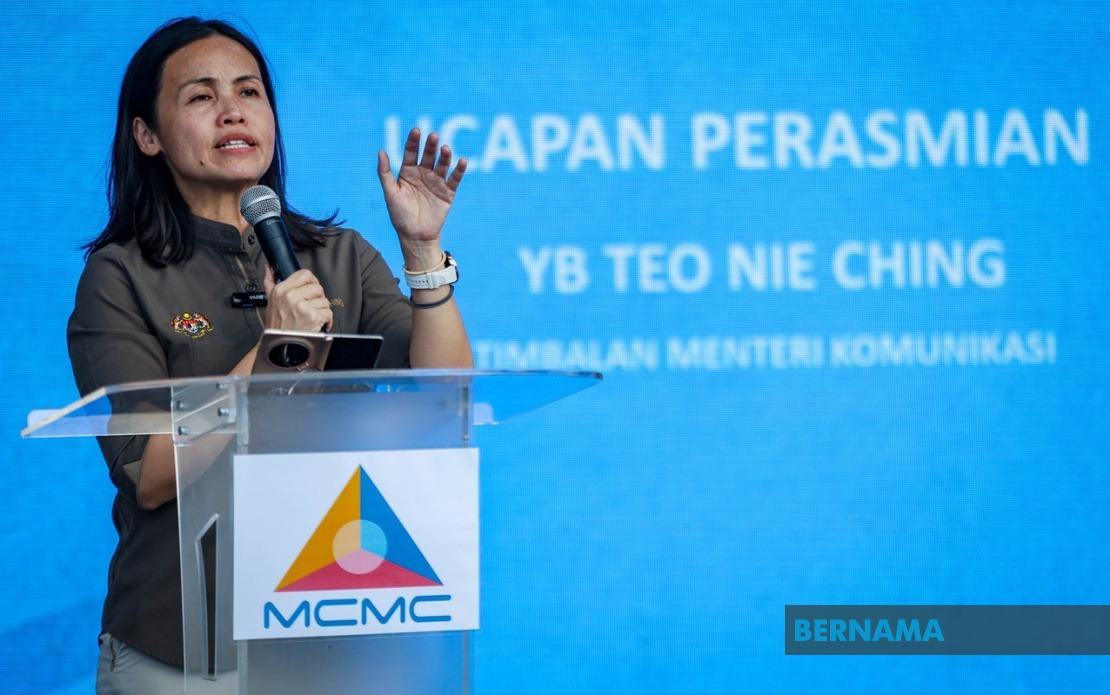
Malaysia's digital scam problem is intensifying, with the National Scam Response Centre logging nearly 6,000 reports within just four months of this year. Deputy Communications Minister Teo Nie Ching disclosed that the NSRC fielded 5,944 reports through its dedicated 997 hotline between January and April, painting a sobering picture of fraud prevalence across the nation's online ecosystem.
The composition of these cases reveals the diverse tactics fraudsters employ to exploit Malaysian consumers and citizens. E-commerce fraud dominated the complaint statistics, accounting for 2,566 instances where buyers fell victim to counterfeit goods, non-delivery of purchased items, or payment interception schemes on digital shopping platforms. Telecommunication scams represented the second-largest category with 1,369 cases, typically involving fraudsters impersonating government officials, financial institutions, or service providers through phone calls and text messages. The remaining complaints centred on fabricated loan and investment opportunities, schemes that exploit financial desperation and promise unrealistic returns to vulnerable populations.
Teo emphasised that the volume of reports, while alarming, also indicates growing public awareness of the 997 hotline as a resource for victims. She noted during the Safe Internet Campaign Community Carnival in Kulai that many Malaysians now recognise this avenue for seeking assistance when targeted by scammers. However, she cautioned that the raw numbers simultaneously suggest far larger numbers of actual victims who either remain unreported or unaware they have been defrauded, particularly among elderly populations and those with limited digital literacy.
The minister's assessment points to a critical gap between reported and actual scam victimisation in Malaysia. Many individuals, especially older citizens and rural communities, may not realise they have been scammed until significant financial damage occurs, or they lack knowledge of reporting mechanisms entirely. This hidden figure problem means the true scale of digital fraud likely dwarfs the official statistics, underscoring why government intervention extends beyond reactive law enforcement to proactive education.
Addressing this knowledge deficit, Teo announced the geographic expansion of the Safe Internet Campaign throughout Johor state. Following Kulai's inaugural hosting of the initiative, the programme will roll out sequentially across nine additional districts: Kluang, Muar, Kota Tinggi, Pontian, Segamat, Batu Pahat, Mersing, Tangkak, and Johor Bahru, with the final event scheduled for December 19. This systematic rollout transforms the campaign from a sporadic awareness effort into a sustained, state-wide digital literacy initiative.
Originally launched in 2025, the Safe Internet Campaign initially concentrated exclusively on educational institutions, treating digital safety as primarily a student concern. This narrow focus overlooked a significant portion of the population vulnerable to online exploitation. The programme encompassed primary and secondary schools, tertiary institutions spanning both public and private universities, and the Malaysian Institute of Teacher Education, creating an ecosystem of youth-focused messaging that inadvertently marginalised older demographics.
This year represents a strategic pivot toward inclusive community engagement that recognises digital fraud victimisation transcends age and educational boundaries. Parents, who often manage household finances and make online purchases, face distinct scam vectors compared to younger users. Senior citizens, increasingly adopting digital banking and online services out of necessity or convenience, frequently lack the experiential awareness to identify social engineering tactics. The campaign's evolution acknowledges that cybersecurity literacy must permeate all demographic segments rather than concentrating resources on students who may have greater inherent digital fluency.
The implications for Malaysia's broader cybersecurity posture are significant. With approximately 5,944 reports in four months translating to roughly 1,500 reports per month, the nation faces a scam epidemic that strains victim support resources and erodes public confidence in digital commerce and banking platforms. This volume suggests that despite regulatory efforts by the Malaysian Communications and Multimedia Authority and ongoing law enforcement operations against scam syndicates, the supply of fraudulent schemes and the vulnerability of targets continue to outpace intervention capacity.
Teo's emphasis on awareness and digital literacy as preventive measures reflects recognition that technological solutions alone cannot stem the tide of human-targeted fraud. Scammers continuously adapt their methodologies to exploit psychological vulnerabilities, cultural contexts, and information asymmetries. A population equipped with critical thinking skills, knowledge of common fraud patterns, and understanding of verification procedures represents the most resilient defence mechanism available to policymakers.
The Johor rollout carries symbolic importance as well, signalling government commitment to provinces beyond the federal territory and major urban centres. Johor, Malaysia's southernmost state and a significant economic hub, presents a microcosm of urban-rural demographic diversity. Success in implementing comprehensive digital literacy campaigns here could serve as a replicable model for other states seeking to address scam victimisation within their borders.
Looking forward, the National Scam Response Centre's 997 hotline represents crucial infrastructure for both victim support and data collection on emerging fraud trends. The statistics flowing from this platform enable policymakers and law enforcement to identify patterns, prioritise prevention strategies, and allocate resources toward high-impact vulnerabilities. As digital fraud methodologies continue evolving—leveraging artificial intelligence, deepfakes, and increasingly sophisticated social engineering—maintaining this data pipeline and translating insights into targeted community interventions becomes essential to protecting Malaysian consumers and citizens.

