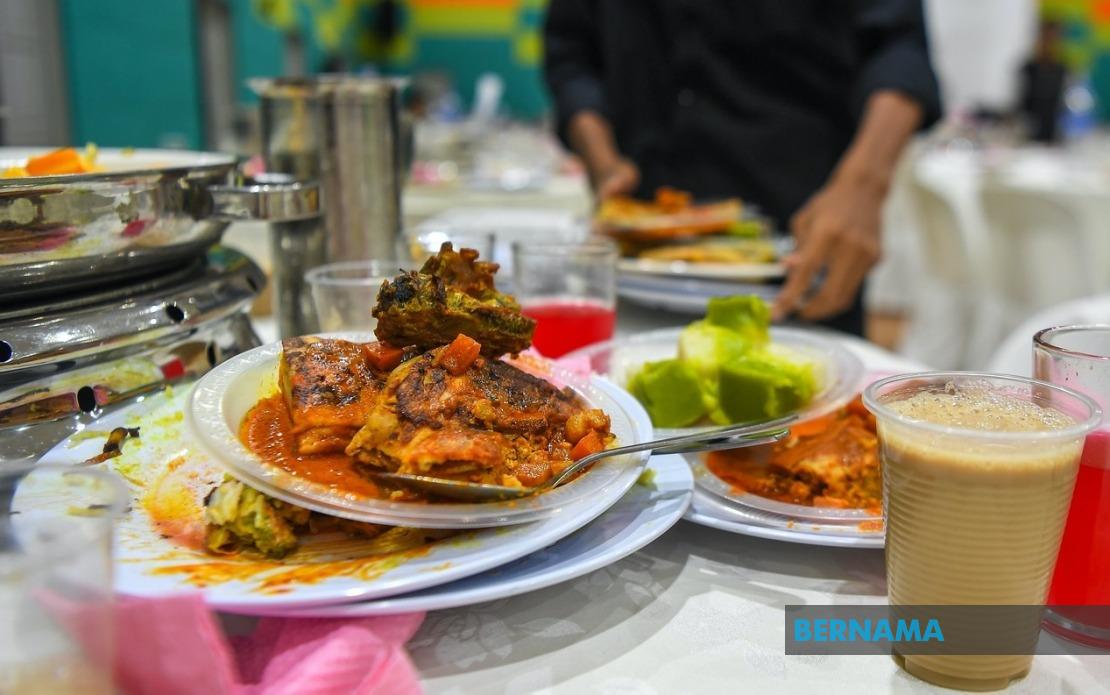
Food waste in Malaysian households has become inextricably linked to rising incomes and the lifestyle changes that accompany economic development, according to Datuk Seri Dr Mohd Uzir Mahidin, the country's Chief Statistician. Speaking ahead of his retirement after 36 years of public service and nearly nine years leading the Department of Statistics Malaysia, Mahidin identified a clear pattern: wealthier urban communities and states with higher per capita incomes dispose of substantially more food than their less affluent counterparts, revealing a paradox of prosperity where abundance breeds carelessness.
The underlying mechanism is straightforward yet revealing about modern Malaysian consumer behaviour. As households transition beyond subsistence living and their basic nutritional needs are secured, purchasing patterns undergo a fundamental shift. Consumers increasingly buy items that exceed actual consumption requirements, driven by a sense of availability and the perception that food is inexpensive. Mahidin observed that many Malaysians leave portions uneaten on plates, and household surveys uncovered patterns of redundant purchasing—parents buying groceries during promotional sales while adult children simultaneously purchase identical items, ultimately resulting in spoilage when products languish in refrigerators beyond their usable lifespan.
The urban-rural divide in food waste reflects not merely income disparities but also evolving social practices. In urban centres, particularly during weekends, multiple social functions often occur simultaneously, with guests receiving overlapping invitations and attending primarily for ceremonial purposes rather than genuine participation. The result is predictable: substantial quantities of leftover food at each gathering. Meanwhile, rural communities, traditionally characterised by home-prepared meals within family settings, are increasingly adopting catered services for kenduri and similar occasions. This shift toward external food provision has introduced urban-style wastage patterns into previously conservative communities, spreading consumption behaviours from wealthy to developing areas.
Geographic concentration of wealth amplifies the problem. States such as Selangor, with substantially higher per capita incomes, experience greater food wastage not necessarily because wealthier residents consume more per person, but because the density of social functions and celebrations—weddings, corporate events, community gatherings—creates multiple opportunities for excess food generation. In contrast, states where such occasions occur less frequently naturally generate lower aggregate waste volumes.
The economics underlying this behaviour provides crucial insight into why education and awareness campaigns alone may prove insufficient. When consumers perceive food as abundant or heavily discounted, the psychological relationship with that commodity fundamentally changes. In economic terms, scarcity creates value; when items are neither scarce nor valued because of ready availability and aggressive promotional pricing, consumers develop a disconnect from the true cost and loss represented by waste. A discounted item purchased impulsively and subsequently discarded carries no emotional weight equivalent to purchasing the same product at full price. This devaluation mechanism extends beyond food to clothing and other consumer goods, particularly through online retail channels where pricing strategies explicitly encourage excessive purchasing.
The empirical scale of Malaysian food waste, revealed through the National Household Indicators Survey 2025, underscores the magnitude of this behaviour. Individual households waste between 31.9 kilograms and 97.3 kilograms of food annually per capita, representing a substantial resource loss across the nation's population. The survey data demonstrates a striking distinction between processed and raw food categories, with processed or cooked food accounting for the majority of discarded items. Nearly 95 per cent of households reported discarding cooked or processed food, compared to approximately 89 per cent for raw ingredients, suggesting that the waste occurs not primarily at the procurement stage but rather through unconsumed prepared meals and leftover dishes.
Within each category, specific items dominate the waste stream. For raw ingredients, vegetables lead at 29.1 per cent of raw food waste, followed by fruits at 22.4 per cent and seafood at 15 per cent. Among cooked foods, rice represents the largest waste component at 16.7 per cent, reflecting the centralised role of this staple in Malaysian cuisine combined with its frequent preparation in excess quantities. Vegetables maintain a significant presence in cooked food waste at 15.8 per cent, while purchased ready-to-eat meals account for 13.8 per cent, indicating that even convenience foods fail to prevent wastage when consumption patterns are unpredictable.
The disposal practices revealed in the survey paint a picture of minimal environmental consciousness in mainstream households. Approximately 79 per cent of Malaysian homes dispose of food waste mixed with general household rubbish, while only one-fifth separate organic waste for distinct handling. This combined disposal approach eliminates opportunities for composting, animal feed generation, or other resource recovery methods that could mitigate environmental impact. The absence of widespread food waste separation reflects both lack of awareness and insufficient infrastructure supporting segregated waste management at the household level.
For Malaysia and other developing Asian economies approaching middle-income status, this research carries significant implications. The data suggests that economic development and rising living standards, while improving material welfare, simultaneously introduce consumption patterns that generate substantial invisible costs through resource waste. Unlike poverty, which constrains waste through necessity, affluence removes these natural constraints. The challenge for policymakers involves fostering a cultural shift that decouples prosperity from profligacy, promoting what Mahidin termed a "stronger culture of food appreciation" among increasingly wealthy households.
Addressing this multifaceted problem requires interventions operating simultaneously across psychological, economic, and practical dimensions. Education campaigns emphasizing the connection between food waste and environmental degradation may resonate with younger, urban consumers, though economic pricing mechanisms may prove more effective at altering behaviour than moral appeals. Implementing mandatory food waste separation requirements, as several developed economies have done, could make waste visible to households and create accountability. Supply-side interventions—such as restrictions on promotional pricing strategies or regulations encouraging right-sized packaging—may prove complementary to demand-side approaches.
The retirement of Mahidin after nearly a decade transforming Malaysia's statistical capacity leaves research continuity uncertain. His departure coincides with growing recognition that food waste represents not merely a technical problem amenable to logistical solutions but a symptom of broader cultural attitudes toward consumption. As Malaysia continues its economic ascent, the patterns identified in household food waste surveys will likely intensify unless deliberate policy interventions and cultural messaging actively counter the waste-generative impulses of rising affluence. The question facing policymakers is whether prevention measures can be implemented now, during the transition period, or whether they must wait for waste volumes to create sufficient economic and environmental pressure to compel change.

