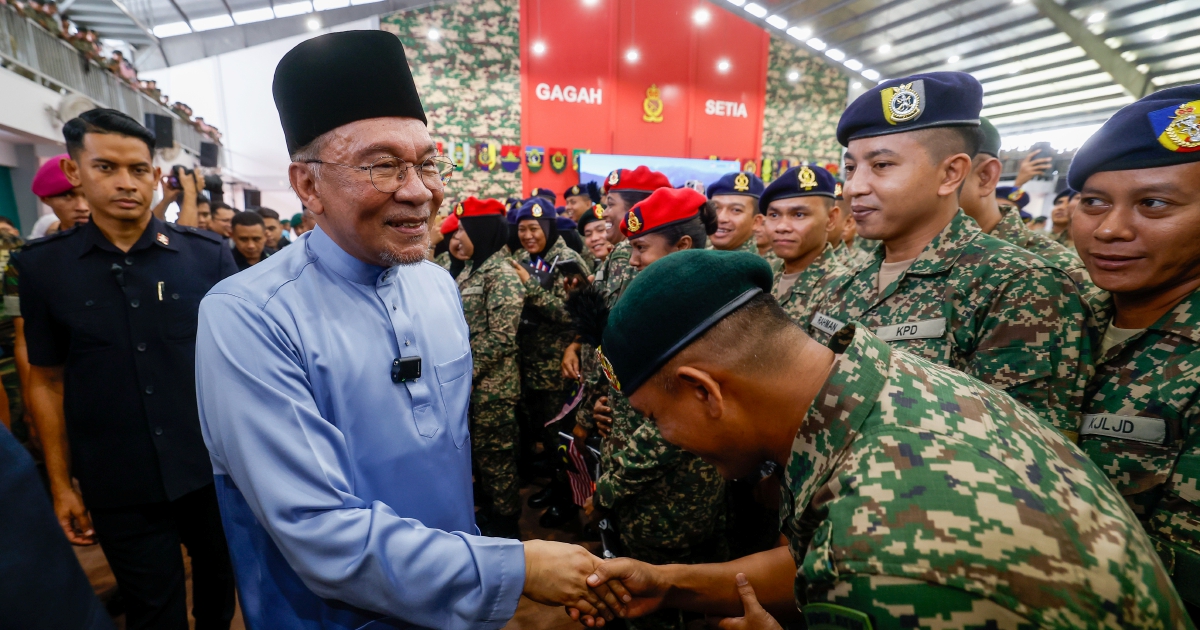
Prime Minister Datuk Seri Anwar Ibrahim made a deliberate distinction between Malaysia's geopolitical opposition to Israel's policies and its relationship with Judaism and Jewish communities during remarks in Port Dickson, seeking to frame the nation's contentious Middle East stance within carefully defined parameters. His clarification comes as Malaysia navigates increasingly complex international relations in a period marked by heightened tensions in the region and global scrutiny of countries' responses to Middle Eastern conflicts.
Anwar's statement represents an attempt to articulate what successive Malaysian governments have long maintained: that opposing specific Israeli government actions does not equate to prejudice against Jewish people as a whole. This distinction carries particular weight in Malaysia's diplomatic context, where the country maintains historic sympathy for Palestinian causes whilst simultaneously engaging with multiple international constituencies. The Prime Minister's emphasis on differentiating between governmental policies and religious or ethnic identity reflects broader efforts by Malaysian leadership to present the nation as principled yet not discriminatory in its international outlook.
The clarification carries significance for Malaysia's international standing and diplomatic relationships. As a Muslim-majority nation with a Muslim-led government, Malaysia has long articulated support for Palestinian self-determination and has been critical of Israeli military operations and settlement expansion. However, such positions have occasionally drawn criticism from Western nations and Jewish diaspora organisations who characterise Malaysian statements as anti-Semitic rather than legitimately political. Anwar's current articulation attempts to address this persistent tension by drawing a sharper line between policy criticism and ethnic or religious prejudice.
For Malaysian audiences and policymakers, the distinction Anwar outlined reflects constitutional and national identity considerations embedded in Malaysia's approach to international affairs. The country's multicultural framework and commitment to religious pluralism, enshrined in the Federal Constitution, create both domestic expectations and international pressures around how the government articulates positions on religious and ethnic matters globally. By emphasising opposition to Israeli state actions rather than opposition rooted in anti-Jewish sentiment, Anwar positions Malaysia within international norms that recognise legitimate political disagreement as distinct from discrimination.
The timing of Anwar's remarks also situates Malaysia within broader regional dynamics affecting Southeast Asia's approach to Middle Eastern conflicts. Countries throughout the region have grappled with balancing genuine concern for Palestinian welfare with maintaining pragmatic international relationships and avoiding accusations of bigotry. Malaysia's explicit articulation of this distinction responds partly to an environment where social media amplifies statements and where geopolitical actors readily deploy accusations of discrimination as diplomatic tools. By clearly separating the political from the religious dimension, Anwar attempts to protect Malaysia's international credibility and diplomatic flexibility.
Within Malaysia itself, the clarification matters for community relations and national cohesion. While Malaysia's primary Jewish population is relatively small, Anwar's statement carries symbolic weight for Malaysia's Hindu, Christian, Buddhist, and other religious minorities who benefit from a national framework that purports to distinguish between legitimate political positions and religious or ethnic prejudice. The Prime Minister's framing reinforces official doctrine that Malaysia as a state maintains religious neutrality in its domestic sphere, even whilst taking positions on international affairs that reflect majority population values and sympathies.
The statement also reflects pragmatic considerations around Malaysia's economic and strategic partnerships. As a significant economy within Southeast Asia and an increasingly important player in global trade networks, Malaysia benefits from maintaining relationships with diverse international partners, including Western nations with substantial Jewish populations and influence. Clear separation between political opposition to Israeli policies and respect for Jewish people and their faith facilitates these relationships by allowing Malaysia to maintain principled positions without inviting accusations of systematic bigotry that might alienate valuable trading partners or international institutions.
However, observers note that Malaysia's track record on this distinction has been inconsistent, with various Malaysian officials, media outlets, and public figures having made statements over the years that critics contend blur the lines Anwar attempted to establish. These historical instances complicate the Prime Minister's current effort to cleanly separate political from religious dimensions, and international observers may regard his clarification with some scepticism based on precedent. Nonetheless, leadership-level clarification signals an intent to tighten official discourse and maintain the distinction going forward.
The remarks also situate Malaysia within broader Muslim-majority nation discourse on Middle Eastern conflicts. Many Islamic-majority countries face similar challenges articulating support for Palestinian causes whilst maintaining international standing and avoiding characterisation as discriminatory. Malaysia's approach, emphasising political rather than religious opposition, aligns with positions articulated by other significant Muslim-majority nations seeking to balance moral and political commitments with international reputation management. This convergence reflects how geopolitical positioning increasingly requires nuanced public messaging that acknowledges distinctions between legitimate policy disagreement and prejudice.
Moving forward, Anwar's clarification likely signals that Malaysia will seek opportunities to emphasise this political-versus-religious distinction in international forums and bilateral relationships. For Malaysian readers and regional observers, the statement represents an investment in framing Malaysia's Middle East positions as policy-based rather than identity-based, a framing that carries implications for how the country positions itself in an increasingly polarised global environment where geopolitical conflicts increasingly intersect with cultural and religious identity markers in ways that complicate straightforward political discourse.

