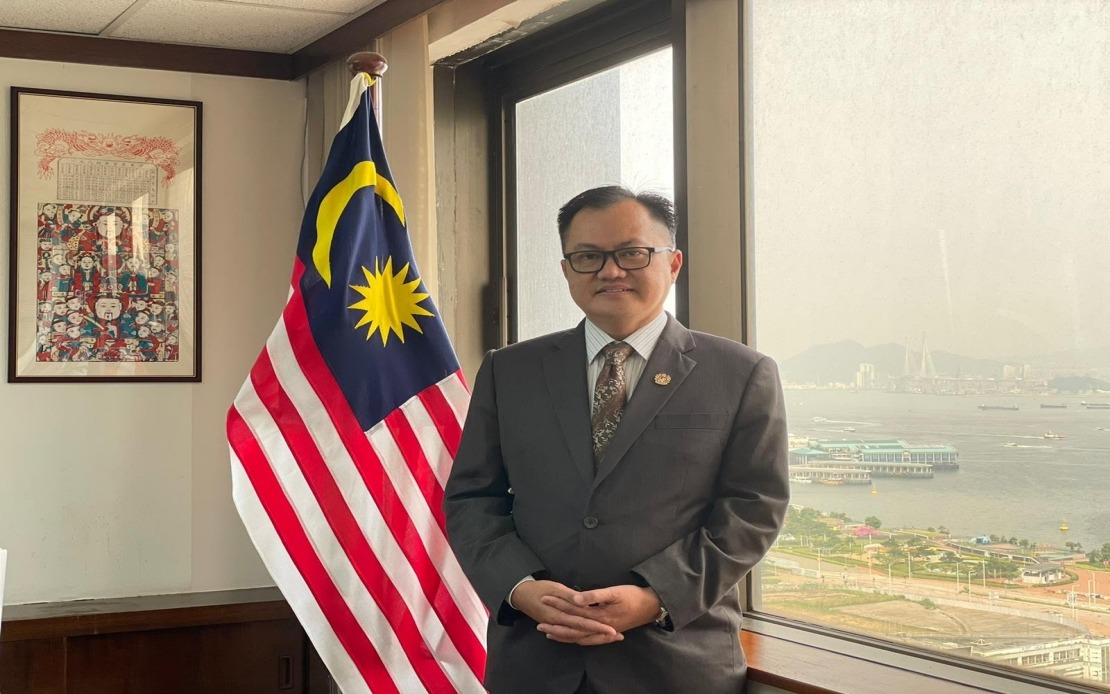
The Consulate General of Malaysia in Hong Kong has moved to counter criticism regarding voter awareness among overseas Malaysians during the Johor state election, emphasising that it deployed a comprehensive information campaign designed to reach its diaspora community. Consul General Muzambli Markam issued a formal response to a South China Morning Post article published in early July, which alleged that Malaysian expatriates in Hong Kong experienced difficulties participating in the electoral process due to insufficient knowledge about voting procedures and deadlines.
In his rebuttal, Markam outlined the consulate's multifaceted approach to voter engagement, which encompassed regular postings of electoral guidance and procedural instructions across its digital communication channels. Beyond internal efforts, the mission actively coordinated with the Malaysian Association of Hong Kong, a key community organisation representing compatriots in the territory, to ensure timely distribution of announcements regarding voter registration windows and timelines. This collaborative framework was specifically implemented to promote civic participation among the Malaysian population resident in Hong Kong.
The consul general contested the characterisation presented in the SCMP report, asserting that describing overseas Malaysians as hampered by lack of awareness fundamentally misrepresented the scale and effectiveness of the consulate's local engagement initiatives. He contended that the published article overlooked the systematic manner in which his mission had disseminated essential voting information through official channels, thereby failing to acknowledge the substantive effort invested by the diplomatic post in supporting electoral participation. Markam further suggested that the journalist had been explicitly briefed on these proactive measures prior to publication, yet the information was not adequately reflected in the final reporting.
A significant bone of contention centred on the article's headline, which Markam argued grossly distorted the concurrent efforts undertaken by Malaysia's Election Commission and the broader government apparatus to advance overseas voting accessibility. The consul general characterised the headline as misleading insofar as it implied systemic failure rather than capturing the reality of modernised electoral infrastructure. He acknowledged the publication's interest in Malaysian affairs but objected to what he described as a selective editorial approach that omitted contextual information he had specifically provided to facilitate accurate coverage.
Markam also addressed the article's suggestion that the consulate's inability to furnish local voter statistics represented an administrative deficiency. Rather than constituting a shortfall, he explained, the deliberate absence of such intermediary data collection reflected a conscious design choice within Malaysia's reformed electoral architecture. The Election Commission had substantially upgraded and digitalised the overseas voter registration mechanism, enabling Malaysian citizens abroad to file applications independently via the MySPR centralised online portal without requiring consular involvement or processing.
This direct-digital methodology, according to the consul general, represented an intentional feature of a streamlined and secure electoral framework, not an organisational weakness. By eliminating the consulate as an intermediary point in the registration workflow, the system enhanced both efficiency and data security whilst empowering overseas voters to manage their registration status autonomously. The approach reflected international best practices in leveraging digital infrastructure to facilitate remote democratic participation whilst minimising bureaucratic friction.
The distinction between traditional consular gatekeeping and the new digital-first model carries particular significance for Malaysian diaspora communities across Asia and beyond. Many overseas Malaysians have long encountered delays and administrative hurdles when attempting to register as postal voters through conventional channels, which typically required in-person visits or postal submission of documents. The shift towards centralised online processing theoretically democratises access by removing geographical and temporal constraints that previously disadvantaged citizens in distant locations, though the transition has evidently created information gaps for some voters unaware of the new system's existence.
Markam's defence underscores an emerging tension within Malaysia's democratic infrastructure: the balance between reducing consular administrative burdens through digitalisation and ensuring that overseas voters possess adequate awareness and understanding of reformed electoral procedures. While the Election Commission's technical modernisation may be sound, the case highlighted by the SCMP suggests that promotional efforts have not reached all segments of the diaspora community uniformly. Hong Kong's significant Malaysian expatriate population, comprising professionals, students, and business persons, ostensibly represents a fertile ground for electoral engagement, yet the discrepancy between official outreach and actual voter knowledge indicates potential gaps in communication penetration.
The consulate's assertions regarding cooperation with the Malaysian Association of Hong Kong merit examination in this context. Community organisations often function as trusted information conduits within diaspora networks, leveraging existing social ties and communication channels to distribute civic information more effectively than government institutions operating through formal diplomatic channels alone. The effectiveness of such partnerships, however, depends substantially on the capacity and reach of the partner organisation, factors that remain unaddressed in the consulate's public statement.
For Malaysia's broader electoral governance framework, this incident illustrates the challenges inherent in managing remote voting for a geographically dispersed citizenry. As the nation continues refining mechanisms for overseas participation, particularly following the expansion of postal voting rights, ensuring equitable access requires not merely technical infrastructure but also culturally sensitive and comprehensive communication strategies tailored to diverse diaspora communities. The consulate's defensive posture, whilst understandable, does not fully resolve the underlying question of whether existing outreach truly reaches all eligible overseas voters or whether certain demographics remain inadequately informed.
The Johor state election represented a particularly significant test case given that state elections, unlike federal polls, typically attract less international media attention and lower participation rates among overseas voters. The relatively compressed timeline for state elections compared to federal polls may additionally constrain voters' ability to learn about registration procedures and deadlines, particularly those in distant markets like Hong Kong who must navigate multiple time zones and different media environments. Future improvements to overseas voter engagement should therefore account for these temporal and informational challenges inherent to subnational electoral contests.
Moving forward, Malaysia's election authorities would benefit from supplementing the consulate's diplomatic communications with targeted digital marketing campaigns reaching diaspora communities through social media platforms and expatriate-focused online forums where overseas Malaysians congregate. Additionally, establishing accessible, multilingual resources specifically designed for first-time overseas voters could address the awareness deficits that the SCMP article highlighted. The consulate's statement demonstrates institutional commitment to supporting overseas participation, but operational effectiveness ultimately depends on whether information dissemination translates into actual voter registration and electoral engagement among the target population.

