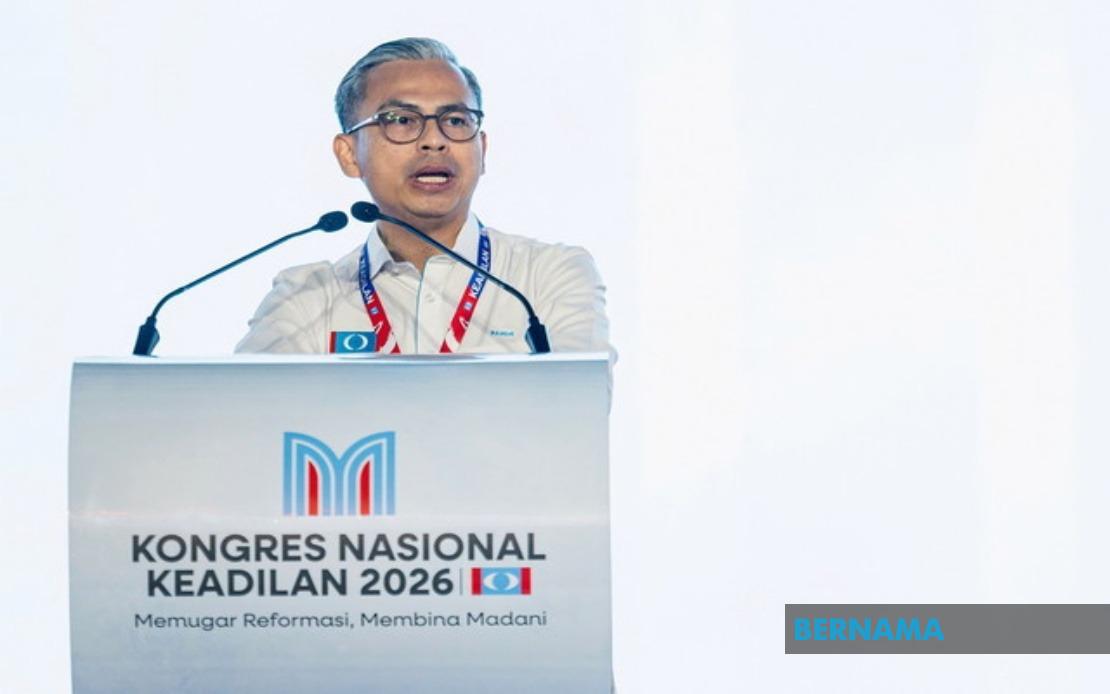
The Malaysian government faces a persistent communications challenge: whilst its economic policies are performing well on paper, the average citizen remains unconvinced of their real-world impact. This disconnect became the focal point of Datuk Seri Fahmi Fadzil's address at the 2026 PKR National Congress in Melaka, where the PKR information chief and Communications Minister argued that bridging this perception gap requires fundamentally rethinking how the administration conveys its message to the public.
Fahmi's observations point to a broader problem affecting the current administration. The Anwar Ibrahim-led government has implemented numerous initiatives that show positive results in macroeconomic indicators—what Fahmi characterised as the "pot economy"—yet these gains have not meaningfully filtered down to shape public sentiment or everyday experience. The disconnect suggests that Malaysia's policymakers have excelled at technical implementation but faltered in narrative construction, failing to help citizens understand how national-level economic improvements should translate into local benefits at the community and household level.
The Communications Minister emphasised that the government's messaging strategy must evolve beyond simply informing the public about policy existence. Instead, officials must craft communications that engage the emotional and psychological dimensions of public consciousness. This represents a sophisticated acknowledgment that factual accuracy and policy success alone do not automatically generate public confidence or support. Citizens need to internalise achievements emotionally and see them reflected in their lived experience before they truly believe in government effectiveness. Without this emotional connection, even sound economic data remains abstract and disconnected from the concerns that preoccupy ordinary Malaysians—employment security, cost of living pressures, housing affordability, and educational opportunity.
To operationalise this shift, the PKR party intends to strengthen its grassroots communication infrastructure. The strategy involves mobilising division chiefs and local party leaders as information conduits, recognising that trusted community voices often carry more persuasive weight than official government announcements. This decentralised approach acknowledges that Malaysians process information through social networks and trusted local figures rather than through formal government channels. By equipping grassroots operatives with better talking points and communication tools, the party hopes to catalyse more organic, person-to-person discussions about policy impact.
The government also plans to expand smaller-scale community forums and dialogue sessions. These intimate settings permit detailed policy explanations in less formal atmospheres whilst creating space for genuine two-way conversation. Such approaches address a critical weakness in Malaysia's current communication ecosystem: citizens often lack accessible venues where they can ask questions, voice concerns, and receive clarification directly from knowledgeable officials. Scaling up these intimate engagement opportunities could substantially improve public understanding and perception, particularly in areas where misinformation and rumour have previously filled information vacuums.
Parallel to these positive communication initiatives, the government is intensifying efforts to combat the spread of false information and fake social media accounts. Fahmi noted that since the Johor state election, the Malaysian Communications and Multimedia Commission has identified and requested removal of more than 8,410 fake accounts deliberately spreading misleading information around sensitive "3R" issues—religion, race, and the royal institution. This aggressive defensive posture reflects recognition that emotionally charged misinformation can severely damage public confidence and undermine legitimate policy communications by poisoning the information environment itself.
The focus on combating false narratives around sensitive communal issues carries particular significance for Malaysia's plural society. Religion, ethnicity, and respect for the monarchy remain potent emotional triggers capable of overshadowing substantive policy discussions. Bad-faith actors exploiting these sensitivities can rapidly delegitimise government messaging and sow community discord. By identifying and removing coordinated inauthentic accounts, the government attempts to preserve communication space where genuine policy dialogue can occur without constant manipulation by malicious actors seeking to weaponise communal divisions.
Fahmi's comments regarding media relations also reflect evolution in government thinking. Rather than adopting confrontational stances towards critical journalism, the administration indicates willingness to work respectfully with media outlets to address factual inaccuracies through proper channels. This measured approach contrasts with more authoritarian impulses to suppress critical reporting and instead embraces the concept that accurate information ultimately serves government interests better than censorship. By positioning itself as a reasonable actor willing to engage in professional corrections rather than heavy-handed control, the administration projects confidence in its narrative and policies whilst preserving press freedom principles essential to Malaysia's democratic functioning.
The enhancement of coordination with the Wanita wing represents another significant tactical adjustment. Women's groups often maintain extensive community networks and enjoy particular credibility in discussions affecting household welfare, children's education, and social services. By engaging this constituency as active communication partners rather than passive recipients of messaging, the government multiplies its reach whilst tapping into authenticity that official pronouncements lack. This inclusive approach recognises that effective policy communication in Malaysia requires mobilising diverse voices and stakeholders rather than relying solely on top-down government machinery.
Looking forward, the success of these communication initiatives will substantially influence the government's political fortunes. Malaysians increasingly evaluate governments not merely on technical policy competence but on whether they perceive tangible personal benefit. The Anwar administration's challenge lies in translating genuine macroeconomic improvements into visible, felt improvements in ordinary citizens' lives whilst simultaneously convincing people that government policies genuinely account for whatever improvements they experience. This communication transformation must occur in a contested information landscape where rivals actively work to diminish government credibility and where citizens navigate conflicting narratives from multiple sources. The PKR congress deliberations suggest the administration has recognised this challenge and is mobilising resources to address it, though whether these efforts sufficiently close the perception gap remains to be seen.

