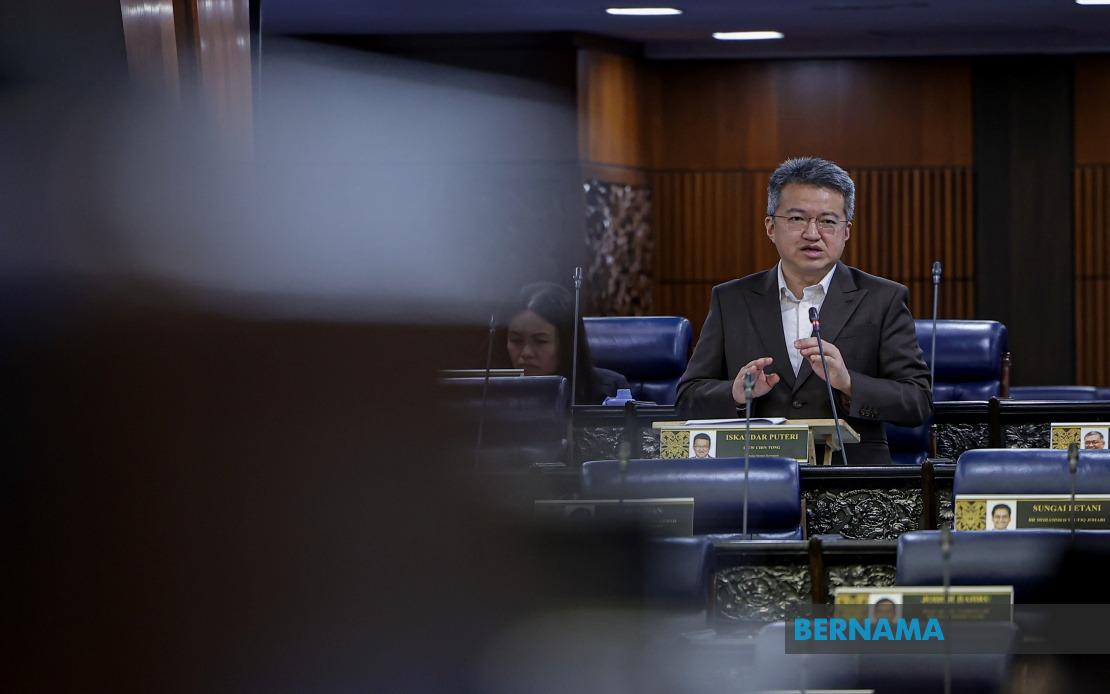
The Malaysian government is doubling down on institutional reforms designed to prevent another financial scandal of the scale and notoriety of 1Malaysia Development Berhad, according to Deputy Finance Minister Liew Chin Tong. Speaking in Parliament this week, Liew explained that Prime Minister Datuk Seri Anwar Ibrahim's administration views governance strengthening as central to restoring the nation's reputation abroad and rebuilding the confidence of international investors and markets, a process that remains ongoing more than a decade after the scandal first erupted.
The reputational damage inflicted by the 1MDB crisis cannot be overstated. Beyond the staggering financial losses sustained by Malaysian taxpayers, the scandal triggered a cascade of international investigations, cross-border legal proceedings, and intense global media scrutiny that fundamentally altered how the world perceived Malaysian institutions. Foreign enforcement agencies mobilised resources to investigate the affair, while the integrity of Malaysia's public administration came under sustained international questioning. This reputational harm has created persistent headwinds for policymakers attempting to position Malaysia as an attractive destination for foreign investment and a stable, trustworthy economic partner in the region.
Central to the government's reform agenda is the Public Finance and Fiscal Responsibility Act 2023, which represents a legislative effort to entrench fiscal discipline and curtail the kind of unchecked executive power that enabled the 1MDB debacle to unfold. By establishing legal guardrails around the management of public finances, the legislation aims to create structural barriers against future abuse. The measures reflect recognition that effective governance reform requires not merely administrative tightening but legal transformation that binds future administrations to higher standards.
Another critical pillar involves expanding the Auditor-General's investigative mandate. Amendments to the Audit Act introduce what officials describe as a "follow the public money" framework, granting auditors greater latitude to trace and scrutinise public expenditure across the system. This represents a meaningful shift in audit culture, moving from narrower compliance checks towards more comprehensive tracking of where public funds flow and how they are deployed. For Malaysian readers familiar with the opacity that characterised pre-1MDB oversight mechanisms, this expansion signifies a material tightening of bureaucratic accountability.
The government is simultaneously developing a Government Procurement Bill and overhauling the legal structures governing state-owned enterprises, recognising that SOE governance had become a particular vulnerability. The 1MDB entity itself operated as a state investment vehicle, and its collapse revealed profound weaknesses in how Malaysia's government monitored and controlled such organisations. Tightening these frameworks addresses a structural gap that enabled vast sums to disappear into questionable international deals and investments.
The financial toll continues to burden Malaysian public finances. Since 2017, the government has allocated RM18.7 billion from operating and development expenditure solely to meet 1MDB's obligations, money that could otherwise have been deployed towards healthcare, education, or infrastructure. The situation worsened when the MADANI administration assumed office in March 2023. The incoming government immediately faced a pressing obligation to redeem USD3 billion in government-guaranteed 1MDB bonds, requiring RM13 billion to be diverted from the development budget. This allocation represented 13.1 per cent of the entire annual development expenditure for that year, a staggering commitment that illustrates how thoroughly the 1MDB legacy continues to constrain fiscal flexibility.
Despite this ongoing fiscal drag, Liew's parliamentary remarks point to some positive indicators emerging from the reform effort. Malaysia has recorded what he characterised as its highest-ever levels of approved investment, suggesting that the governance narrative is beginning to shift in the international investment community. Similarly, the country's standing in global competitiveness rankings has improved, indicating that markets are responding positively to the reform signals emanating from Kuala Lumpur. These developments, while encouraging, remain fragile and dependent on consistent, visible commitment to the reform agenda.
The reforms also carry implications for Malaysia's regional standing in Southeast Asia. As investors and trading partners evaluate opportunities across ASEAN, governance quality increasingly features in decision-making calculus. Countries perceived as vulnerable to large-scale financial corruption or lacking robust institutional controls face higher risk premiums and reduced inflows. By aggressively pursuing governance improvements, Malaysia attempts to differentiate itself from this perception and reclaim space in regional competition for capital and talent.
Look ahead, the government faces a critical challenge in translating legislative and administrative changes into tangible improvements in institutional practice. Laws alone prove insufficient without consistent implementation, adequate resourcing of oversight bodies, and a sustained commitment to enforcement. The credibility of Malaysia's governance reform programme depends on demonstrating that these mechanisms operate effectively in practice, not merely in statute. International observers and potential investors will closely monitor whether the expanded Auditor-General powers yield meaningful discoveries and corrections, or whether the apparatus becomes merely symbolic.
The 1MDB scandal fundamentally altered Malaysia's standing in global financial markets and diplomatic circles. That legacy cannot be erased by legislative acts alone, but must be gradually overcome through demonstrated institutional improvement over years. The MADANI government's comprehensive approach, spanning fiscal legislation, auditing authority, procurement systems, and SOE governance, represents an acknowledgment that addressing the roots of the crisis requires multifaceted reform rather than cosmetic adjustment. Whether these efforts prove sufficient to fully restore international confidence remains an open question, but the pathway forward is clearer than it appeared in the immediate aftermath of the scandal.

