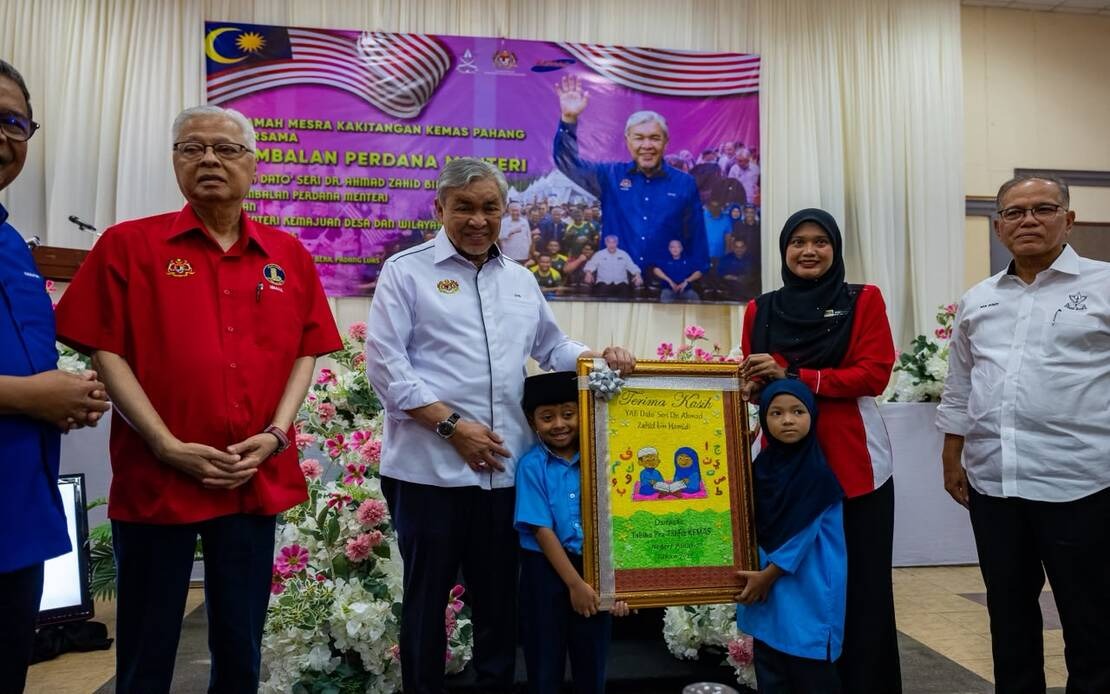
Malaysia's approach to early childhood education is undergoing a significant evolution, with the Rural and Regional Development Ministry committed to modernising KEMAS kindergartens and childcare centres whilst maintaining strong cultural and religious foundations. Deputy Prime Minister Datuk Seri Dr Ahmad Zahid Hamidi unveiled this strategic direction during a community engagement programme in Bera, Pahang, signalling a comprehensive rethink of how the nation prepares its youngest learners for an increasingly digital future.
The modernisation initiative arrives at a pivotal moment for Malaysian education. With the government recently lowering the school starting age from seven to six, early childhood institutions have become even more crucial in shaping foundational skills and values. KEMAS, operating under the Rural and Regional Development Ministry, stands at the forefront of this transformation, managing a vast network of Tabika kindergartens and Taska childcare centres that have collectively served approximately 8.4 million children since their establishment six decades ago. The scale of this responsibility underscores why the ministry is prioritising systematic upgrades across its entire system.
Technological integration forms a central pillar of the modernisation strategy. Ahmad Zahid outlined plans to expand Smart Class programmes and introduce smartboards across KEMAS kindergartens, recognising that digital literacy has become essential even for young learners. This technological emphasis reflects broader global trends in early childhood education, where interactive learning tools and digital exposure complement traditional pedagogical methods. However, the Malaysian approach deliberately avoids becoming technology-centric; instead, digital tools are positioned as enablers of better learning outcomes rather than ends in themselves.
Equally important to the modernisation agenda is a strengthened focus on religious and moral education. Ahmad Zahid proposed expanding memorisation programmes within KEMAS kindergartens beginning next year, introducing young students to specific chapters of the Quran beyond the existing curriculum. The expansion would include Surah Yasin, Al-Waqiah, Al-Mulk, and As-Sajdah, building upon the current focus on Juzuk 30. This initiative reflects Malaysia's commitment to balancing contemporary skill development with preservation of Islamic values and cultural identity—a balancing act that many Muslim-majority nations grapple with in their education systems.
Implementing this expanded memorisation programme requires careful preparation at the teacher level. Ahmad Zahid explicitly stressed that KEMAS educators must themselves master these chapters before introducing them to students, emphasising the need for structured, effective teaching rather than rote instruction. This quality-focused approach suggests the ministry recognises that religious education in early childhood must be age-appropriate, engaging, and delivered by trained personnel who understand both the spiritual significance and pedagogical principles involved.
Funding and infrastructure support will determine whether these ambitious plans succeed. Ahmad Zahid specifically acknowledged the Pahang state government's contributions, including efforts to secure land titles for KEMAS facilities and provide grants for physical improvements. This multi-level governmental cooperation—federal ministry, state government, and local representatives—indicates recognition that early childhood education cannot advance through top-down directives alone. The presence of Pahang Menteri Besar Datuk Seri Wan Rosdy Wan Ismail and Bera Member of Parliament Datuk Seri Ismail Sabri Yaakob at the event underscored this collaborative approach.
The broader context reveals why Malaysia is prioritising this modernisation now. Regional economic competition has intensified, with neighbouring countries similarly investing in early childhood development. Singapore's renowned early education system and Thailand's expansion of preschool access have prompted Malaysian policymakers to reassess their competitive position. By combining technological skills, religious values, and modern pedagogy, Malaysia aims to position KEMAS not merely as a childcare provider but as a comprehensive early development institution capable of producing globally competitive yet culturally grounded citizens.
Political stability emerges as an essential prerequisite for sustained progress. Ahmad Zahid's emphasis on cooperation across all government levels and openness to reform suggests awareness that educational transformation requires political consensus and continuity. Frequent changes in political leadership or policy direction could disrupt the lengthy process of teacher training, infrastructure development, and curriculum implementation. For Malaysia's early childhood system to achieve its potential, stakeholders must maintain focus beyond election cycles.
The scale of KEMAS's reach—having served 8.4 million children over six decades—means that improvements ripple across society. Early childhood experiences significantly influence long-term educational outcomes, social development, and even economic productivity. When KEMAS implements better teacher training, introduces technology infrastructure, and strengthens values education, the cumulative effect extends far beyond individual classrooms into communities nationwide. Rural and semi-rural areas particularly benefit, as KEMAS often provides the primary accessible early education option for families unable to afford private institutions.
Implementation timelines will be critical. The proposed expansion of memorisation programmes beginning next year provides a concrete target, yet achieving meaningful transformation across hundreds of KEMAS facilities requires sustained effort and resources. Teacher recruitment, professional development, curriculum materials, and technological infrastructure all demand significant investment. The government's willingness to commit funding will ultimately determine whether Ahmad Zahid's vision becomes widespread reality or remains concentrated in better-resourced locations.
Regionally, Malaysia's integrated approach to early childhood education merits attention. While some Southeast Asian countries emphasise technological advancement at the expense of cultural foundations, or conversely prioritise traditional values without modern skill development, Malaysia's stated intention to pursue both simultaneously offers a potentially distinctive model. If successfully implemented, KEMAS's transformation could provide useful lessons for neighbouring countries seeking similar balance in their education systems.

