Malaysia is hosting a pivotal gathering this week to navigate the increasingly complex terrain of digital governance, with the International Regulatory Conference 2026 bringing together regulators, policymakers, and technology leaders to chart a course through rapid technological change and mounting concerns about internet safety. Organised by the Malaysian Communications and Multimedia Commission (MCMC), the two-day forum operates under the overarching theme 'Shaping the Next Digital Era: Regulation, Resilience and Trust,' reflecting the multifaceted challenges facing the nation as it balances innovation with consumer protection and national interests.
The conference represents a critical juncture for Malaysian digital policy. It follows the implementation of the Online Safety Act 2025 (ONSA), which took effect on January 1, establishing new ground rules for how platforms operate and how vulnerable users are protected online. For Malaysia, this gathering signals both the maturity of its regulatory thinking and the urgency of addressing challenges that extend far beyond traditional telecommunications oversight. The presence of Communications Minister Datuk Seri Fahmi Fadzil at the opening underscores the government's commitment to positioning digital governance as a cornerstone of national development strategy.
A central focus of the inaugural sessions examines the tension between protecting vulnerable populations and maintaining functional digital platforms. The dialogue 'Online Safety by Design: Platform Accountability and Child Protection in an Age of User Vulnerability' brings together expertise spanning children's rights, international development, and diplomatic perspectives. Malaysia's participation reflects a broader regional conversation about how nations in Southeast Asia can collectively establish standards that prevent the most egregious harms—particularly to minors—without stifling the digital innovation that underpins economic growth. The inclusion of representatives from SUHAKAM, UNICEF Malaysia, and the Australian High Commission indicates that this is not merely a domestic concern but part of a transnational effort to establish best practices.
The conference also grapples with the concept of data sovereignty, a theme that resonates powerfully across Southeast Asia. The session on 'Sovereign Data, Empowered Citizens' addresses anxieties about corporate data accumulation and foreign control of information infrastructure. For Malaysia, positioning itself as a steward of citizens' digital assets while fostering a competitive technology sector requires careful calibration. The involvement of major telecommunications and cloud infrastructure players like Maxis and Ericsson suggests that these discussions involve genuine negotiation between regulatory ambitions and business realities rather than predetermined outcomes.
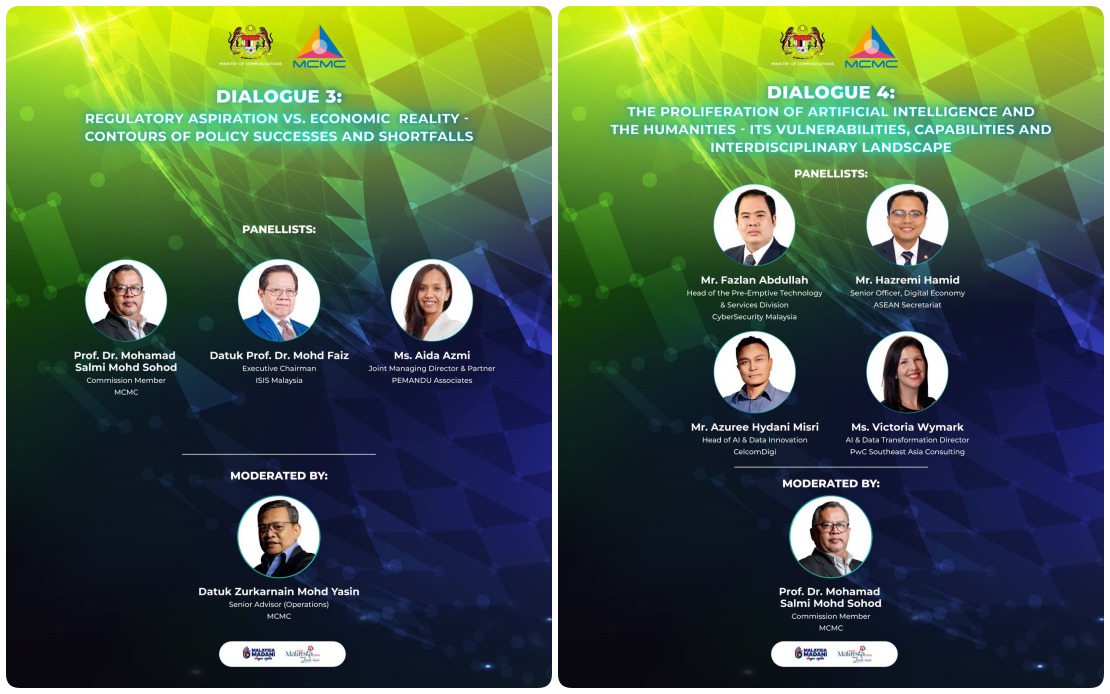
Artificial intelligence emerges as a particularly thorny challenge, with dedicated sessions examining both its potential and perils. The segment on 'AI and the Humanities' reflects growing recognition that technological governance cannot remain purely technical; it requires input from social scientists, ethicists, and policymakers who understand AI's implications for employment, education, and social cohesion. Malaysia's approach of engaging the ASEAN Secretariat indicates that the country views AI regulation as necessarily regional, acknowledging that fragmented national approaches could disadvantage Southeast Asian economies relative to larger tech powers.
Looking toward emerging technologies, the second day pivots to exploring quantum computing and robotics, domains where Malaysia currently lags behind developed economies but where establishing clear regulatory frameworks today could position the nation advantageously as these technologies mature. Involving universities like Universiti Teknologi Malaysia and Universiti Malaya in these discussions bridges the gap between academic research and policy implementation, a connection often missing in regulatory processes that move too quickly to be informed by frontier scholarship.
The conference's scope reveals an underlying strategic calculation. By convening representatives from over seven countries and multiple sectors, Malaysia positions itself not as a follower adopting others' rulebooks but as an active participant in shaping global norms for digital governance. This matters for a middle-income nation where the digital economy represents an increasingly important driver of growth and where being perceived as either too restrictive or too permissive carries real economic costs.
The balancing act between regulation and economic dynamism, explicitly addressed in the 'Regulatory Aspiration vs Economic Reality' session, represents perhaps the conference's most candid acknowledgment of the fundamental tensions in digital governance. Malaysia cannot afford to alienate technology companies that drive employment and innovation, yet must respond to legitimate public concerns about privacy, child safety, and data exploitation. The involvement of think tanks like ISIS Malaysia and PEMANDU Associates suggests serious engagement with evidence-based policymaking rather than ideologically driven regulation.
This gathering also reflects Malaysia's maturation in handling digital policy after several years of rapid experimentation. The Online Safety Act 2025, though new, builds on earlier regulatory frameworks and represents an evolution rather than revolutionary change. The conference serves partly as an opportunity to assess what is working, where unintended consequences have emerged, and how Malaysia's approach compares to international standards.
The inclusion of diverse stakeholders—from civil society and international development organisations to private sector leaders and academics—signals recognition that effective digital governance requires genuine dialogue across traditionally siloed communities. In Southeast Asia, where digital adoption has rapidly outpaced regulatory development, Malaysia's willingness to engage openly on these challenges could establish models other countries adopt.
Fundamentally, IRC 2026 addresses questions that will define Malaysia's position in the global digital economy for the coming decade. How the nation manages artificial intelligence development, protects citizens while enabling innovation, and establishes data governance frameworks will influence whether Malaysia becomes a destination for responsible tech investment or a cautionary tale of missed regulatory opportunities. The conference outcomes matter not just for Malaysian consumers and businesses but for how the entire region approaches digital governance.

