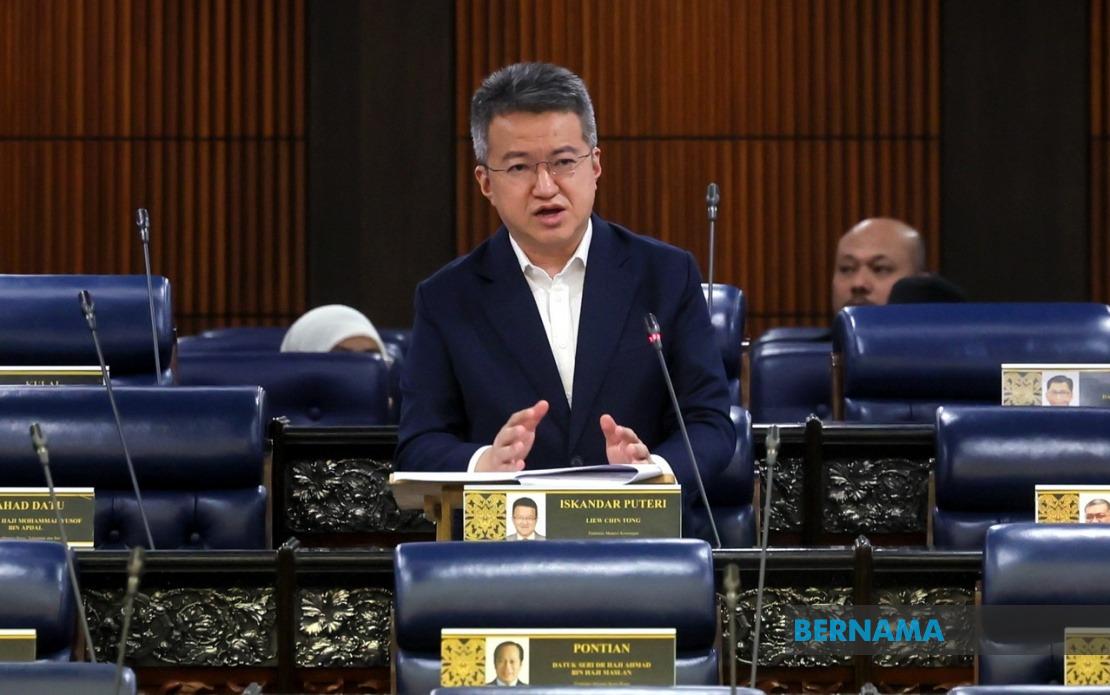
Malaysia's Deputy Finance Minister Liew Chin Tong has categorically denied claims that fugitive businessman Low Taek Jho, commonly referred to as Jho Low, slipped into the country alongside a Chinese delegation late last year for confidential discussions about resolving the 1Malaysia Development Berhad scandal. The assertion in parliament came during Question Time when opposition lawmakers pressed the minister on the government's handling of the sprawling financial crisis that has cost the nation billions in direct losses and incalculable reputational damage.
The allegations surfaced after international media outlets reported that Jho Low, the architect of what investigators describe as one of the world's largest financial frauds, had participated in a clandestine meeting on Malaysian soil to negotiate terms for recovering 1MDB funds. Syed Saddiq Syed Abdul Rahman, the member of parliament for Muar representing the MUDA party, directed a supplementary question at Liew regarding the veracity of these reports. The deputy minister's terse denial—"I deny the allegation"—offered little elaboration but signalled the government's firm rejection of the narrative.
The emergence of such claims underscores the persistent uncertainty surrounding Jho Low's whereabouts and movements, more than a decade after investigations into 1MDB began exposing the systematic theft that drained the state development fund. Despite international arrest warrants and Interpol red notices, the fugitive remains at large, fuelling speculation about his potential contacts with Malaysian officials and the possibility of informal negotiations occurring outside public channels. For Malaysian citizens and the broader Southeast Asian business community, these rumours raise uncomfortable questions about accountability and the comprehensiveness of enforcement mechanisms designed to prevent high-profile criminals from evading justice.
Instead of addressing the underlying concerns, Liew pivoted to outlining the government's comprehensive legal strategy for recovering stolen assets. He emphasised that authorities are pursuing both criminal and civil avenues simultaneously, leveraging multiple judicial tools to claw back funds and hold perpetrators accountable. This two-pronged approach reflects international best practices in addressing financial crime, where parallel proceedings strengthen the state's position by attacking the problem from different angles and maximising the likelihood of successful recovery.
A landmark December 26, 2025 High Court verdict marked a significant milestone in the government's efforts to dismantle the 1MDB architecture of corruption. The court found former Prime Minister Datuk Seri Najib Tun Razak guilty on twenty-five counts spanning money laundering and abuse of power linked to bribery connected with 1MDB. Najib received a fifteen-year custodial sentence alongside a financial penalty of RM11.38 billion, representing one of the largest fines ever imposed in Malaysian legal history. This conviction, though coming years after the initial allegations emerged, demonstrated that even individuals at the apex of political power could face serious consequences for financial malfeasance.
Parallel civil litigation targets Datin Seri Rosmah Mansor, Najib's wife, in relation to allegations that 1MDB funds were diverted to purchase luxury items including designer handbags and precious jewellery. The government is pursuing damages totalling US$380 million, equivalent to approximately RM1.56 billion, reflecting the substantial sums allegedly spent on personal consumption from state coffers. The case illustrates how 1MDB's stolen wealth circulated through multiple channels and beneficiaries, creating a complex web of financial trails that investigators and prosecutors have painstakingly unravelled.
The most consequential proceedings, however, centre on Jho Low himself, whom authorities identify as the principal orchestrator and beneficiary of the 1MDB misappropriation scheme. Outstanding civil claims against the fugitive businessman amount to US$3.78 billion—approximately RM15.4 billion—representing the government's attempt to recover the lion's share of stolen assets. These figures dwarf the penalties and damages sought against other actors, reflecting Jho Low's central role in conceiving and executing the fraud. Criminal prosecutions also remain active, though the defendant's evasion complicates enforcement and prolongs the path toward full restitution.
The aggregate impact of 1MDB extends far beyond the quantifiable sums recovered or pursued through courts. Liew acknowledged four distinct categories of loss inflicted upon Malaysia: direct financial depletion from the fund itself; opportunity costs representing projects and investments that never materialised because resources had been diverted; irrecoverable losses from assets that have depreciated or disappeared entirely; and immeasurable harm to the nation's international standing. For Malaysian investors and the country's appeal as a destination for foreign capital, these reputational consequences persist long after legal proceedings conclude, affecting perceptions of governance and institutional integrity.
The persistence of claims regarding Jho Low's alleged movement and communications reflects ongoing intelligence gaps and the challenges inherent in pursuing transnational financial crime. Even years after the scandal exploded into public view, comprehensive answers about the fugitive's location and activities remain elusive, suggesting sophisticated evasion mechanisms and potentially complicit networks across multiple jurisdictions. For policymakers and law enforcement officials throughout Southeast Asia, the 1MDB experience offers sobering lessons about the vulnerability of state institutions to infiltration by individuals with sufficient resources and international connections to operate beyond conventional oversight.
Moving forward, the government's recovery efforts depend on sustained political will, international cooperation, and the cooperation of jurisdictions where 1MDB assets may have been relocated or concealed. The denial issued by Liew Chin Tong, while categorical, does not resolve the underlying questions about how thoroughly Malaysia can pursue accountability when key suspects remain fugitives and assets have been dispersed across borders. For Malaysians confronting a complex legacy of institutional failure and corruption, the path toward full restitution and restored confidence in governance remains protracted and uncertain, requiring sustained commitment from successive administrations.

