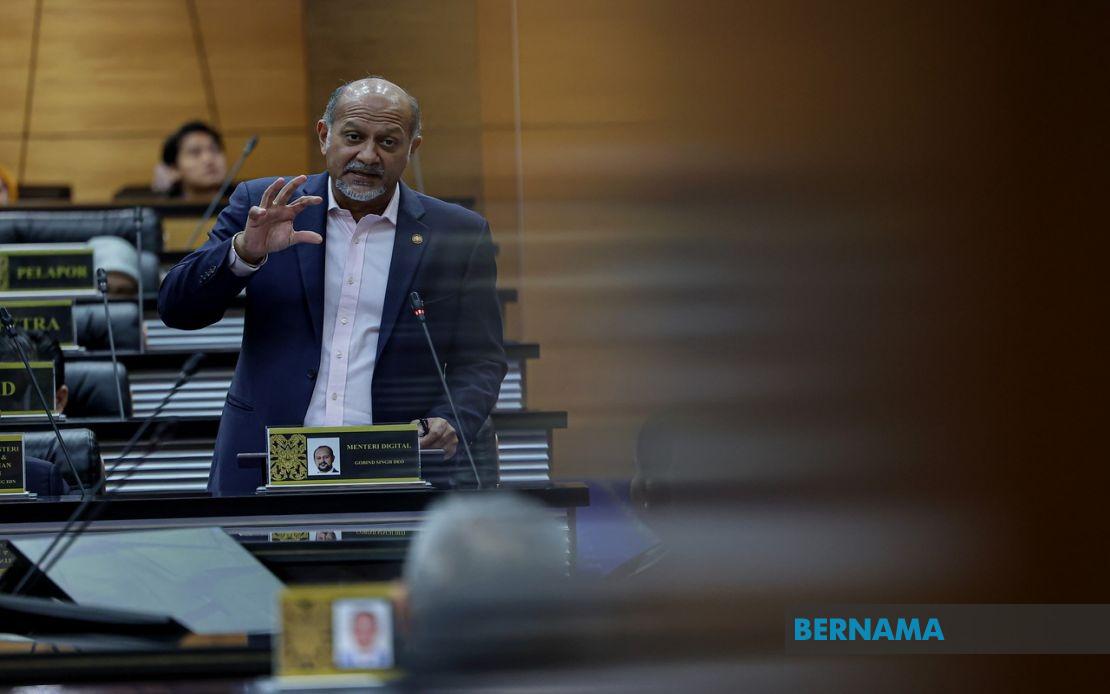
Malaysia is moving forward with comprehensive legislation designed to hold people and organisations responsible for any damage or dangers caused by artificial intelligence systems. Digital Minister Gobind Singh Deo made this declaration during parliamentary proceedings in the Dewan Rakyat, emphasising that because AI technology cannot itself be held legally accountable, the burden of responsibility must fall squarely on those who create, deploy, manage, or utilise these systems. This principle underpins the emerging AI Governance Bill, which the government is developing as a safeguard for Malaysians navigating an increasingly technology-dependent society.
The core challenge addressed by the bill stems from a fundamental legal reality: artificial intelligence, unlike a human being, possesses no legal personality and cannot be held morally or legally responsible for its actions or consequences. This creates a crucial gap in Malaysia's regulatory framework as AI adoption accelerates across both government and private sector operations. Rather than attempting the impossible task of attributing liability to an algorithm, the bill shifts accountability upstream and downstream along the AI ecosystem. Those who design the system, those who sell or provide access to it, those who manage its operations, and those who deploy it in real-world applications all become subject to legal accountability for the outcomes their decisions produce.
Gobind outlined an approach that captures the entire lifecycle of AI systems, from their initial conception through development, deployment, and eventual retirement or decommissioning. This comprehensive scope reflects a sophisticated understanding of how artificial intelligence risks evolve over time. A system that performs safely during initial testing may develop serious problems once integrated with other technologies, transplanted into different operational contexts, or used by populations it was never designed to serve. By establishing accountability mechanisms that span the complete lifecycle, the bill attempts to catch emerging risks at multiple checkpoints rather than relying solely on post-incident responses. This preventive orientation carries significant implications for technology companies and government agencies planning to implement AI systems in Malaysia.
The proposed legislation is being constructed as a horizontal framework rather than as a replacement for existing sectoral regulations. This architecture recognises that AI applications cross traditional regulatory boundaries and that blanket rules cannot effectively govern technology that serves radically different purposes across healthcare, finance, law enforcement, and commerce. Instead of consolidating all AI oversight under a single agency, the bill operates as an overarching governance structure that works alongside established laws and regulators. When an AI system creates criminal liability, consumer protection issues, intellectual property disputes, or problems within specific regulated industries, the existing legal apparatus and responsible authorities will continue to function as they currently do, armed now with clearer accountability chains.
One of the most important mechanisms under development is a mandatory incident reporting system that would require organisations to disclose when AI systems malfunction, produce harmful outcomes, or behave in unexpected ways. This transparency requirement serves multiple purposes simultaneously. It provides regulators with crucial data to assess emerging risks and identify patterns that might signal systemic problems before they cause widespread harm. It also creates public records that can inform enforcement actions and help prevent recurrence of similar incidents across the industry. For Malaysian consumers and citizens, such reporting requirements offer indirect protection by enabling authorities to intervene earlier and more effectively in cases where AI systems cause injury or injustice.
Complementing the reporting framework, the government is exploring the creation of regulatory sandboxes—controlled testing environments where developers, industry players, and government agencies can collaboratively trial and refine AI systems before they reach the general public. These sandboxes represent a middle ground between unrestricted innovation and heavy-handed prohibition. Within these designated spaces, companies can experiment with new applications while authorities observe and assess whether safeguards prove adequate. This approach acknowledges that meaningful oversight requires technical knowledge and real-world experience, not just theoretical rules issued by distant regulators. For Malaysia's emerging technology sector, sandboxes could provide the breathing room necessary to develop competitive AI capabilities while maintaining public confidence in the systems gradually entering daily life.
Gobind explicitly stated that the government will not attempt to directly regulate or censor the content and outputs that AI systems generate. This represents an important delineation between accountability for governance and censorship of speech or expression. Rather than empowering officials to screen every prediction, recommendation, or generated text that flows from artificial intelligence, the bill concentrates on upstream governance mechanisms designed to reduce risks before they manifest. This boundary-setting becomes increasingly important as AI systems begin generating text, images, and other content at scale. By avoiding content regulation while maintaining process accountability, Malaysia's framework attempts to preserve space for innovation and expression while still protecting public interests from systemic harms.
The bill's development reflects growing international recognition that AI governance cannot follow traditional sectoral models. Because artificial intelligence operates across domains and multiplies the effects of human decisions, standard regulatory approaches often prove inadequate. Malaysia joins other jurisdictions grappling with how to establish meaningful oversight without stifling the rapid technological change that increasingly shapes economic competitiveness. The government's stated intention to balance protection of public interests with support for innovation, research, and national competitiveness acknowledges this tension explicitly. The challenge lies not in choosing between safety and progress, but in structuring accountability in ways that allow both to coexist.
For Malaysian citizens and residents, the bill's emphasis on accountability means that when AI systems cause injury, discrimination, or damage, there will be clearer pathways for establishing responsibility and seeking redress. Rather than confronting a regulatory void where harm occurs but no one can be held accountable, the comprehensive accountability framework should enable courts, regulators, and enforcement agencies to trace liability through the chain of actors who made decisions about the system. This matters especially in contexts where AI's opacity makes it difficult for ordinary people to understand why they received a particular decision or outcome. An organisation that implements an AI hiring system that systematically discriminates, or a developer that deploys a medical diagnostic tool without adequate testing, becomes subject to accountability under this framework in ways that were previously unclear.
The bill's development also carries implications for Malaysia's position in the regional and global technology ecosystem. As one of Southeast Asia's more developed digital economies, Malaysia's regulatory choices influence how technology companies approach the region. A framework that establishes clear accountability without attempting impossible content censorship could prove more attractive to international firms than jurisdictions taking more restrictive approaches. Simultaneously, by moving decisively to establish governance structures before widespread AI deployment, Malaysia avoids the reactive regulation that other countries have pursued only after harmful incidents occurred. This proactive positioning may enhance the country's ability to attract responsible innovation while protecting local interests.
The coming months will prove crucial as the government refines the bill through consultation with industry, civil society, and technical experts. The precise definitions of accountability, the scope of reportable incidents, the structure and accessibility of the regulatory sandbox, and the enforcement mechanisms all remain subject to revision. These details will ultimately determine whether the bill achieves its stated aims of enabling safe, responsible, and reliable development and adoption of AI in Malaysia while preserving the space for innovation that national competitiveness demands. As artificial intelligence becomes embedded in more aspects of Malaysian life, from government services to private sector operations, the accountability framework being crafted today will shape how citizens and organisations can protect their interests and hold powerful technology systems accountable for their effects.