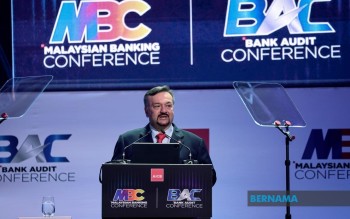
The Malaysian banking industry faces a critical inflection point as it accelerates artificial intelligence deployment across operations—a transition that demands far more than merely installing new software systems. The Asian Institute of Chartered Bankers highlighted this fundamental shift during conferences held in Kuala Lumpur on July 7–8, bringing together over 1,000 senior banking, audit and regulatory figures to grapple with how the sector can harness AI's potential while maintaining public trust and financial stability. The message resonated clearly: technology adoption alone will not secure the sector's future. What matters now is how banks govern, validate and integrate AI into decision-making processes that affect millions of customers and the broader economy.
This reorientation occurs as Malaysia's financial sector pursues its ambitions under the Financial Sector Blueprint, a comprehensive transformation roadmap designed to position the country as a regional financial hub. Banks are moving swiftly to integrate AI into customer onboarding, fraud detection, anti-money laundering compliance and internal productivity tools. Yet this pace of deployment has outstripped institutional confidence in the technology's outputs. A significant finding from the AICB-Ecosystm AI in Practice report—which surveyed nearly 90 senior leaders from commercial banks, digital banks and development financial institutions—revealed that merely 25 per cent of respondents trust AI-generated results sufficiently to base critical business decisions upon them. This gap between deployment and confidence signals that the banking sector understands a fundamental truth: AI systems require rigorous governance frameworks before they can become genuinely valuable to the institution and safe for the customer.
The governance challenge extends beyond technical validation. Banks across Malaysia operate within an increasingly complex regulatory environment marked by evolving cybersecurity standards, climate transition requirements and geopolitical risks that can destabilise markets and capital flows. When artificial intelligence is introduced into this landscape, the implications multiply. An AI system that flags fraudulent transactions must be auditable; algorithms that assess credit risk must be explainable to regulators and borrowers alike; systems managing sensitive customer data must be fortified against cyber threats that grow more sophisticated monthly. The AICB report positions governance, assurance and resilience as the three pillars enabling responsible AI scaling, marking a distinct departure from the earlier phase when financial institutions treated AI as primarily a cost-reduction or efficiency tool.
Minister of Finance II Datuk Seri Amir Hamzah Azizan articulated a crucial principle during his address at the conferences: the AI Governance Framework developed by AICB's Chief Risk Officers' Forum represents industry-led standard-setting rather than government mandate. This distinction carries weight in Malaysia's regulatory context. By allowing the banking sector to develop its own AI standards—albeit with support and endorsement from Bank Negara Malaysia and the Association of Banks in Malaysia—the approach builds trust from within the system rather than imposing rules from above. Trust, as Amir Hamzah emphasised, grows from internal commitment and peer accountability rather than external compliance pressure alone. For Malaysian banks competing regionally, this self-governance framework could become a competitive asset, signalling to international partners and depositors that the sector is mature enough to police itself responsibly.
Bank Negara Malaysia Governor Datuk Seri Abdul Rasheed Ghaffour reinforced this perspective by broadening the definition of innovation beyond mere technology adoption. True innovation, he suggested, encompasses the leadership capabilities and governance structures that ensure financial systems remain anchored to societal needs rather than drifting toward purely profit-driven applications. This framing is particularly pertinent for Malaysia, where public confidence in financial institutions underpins the entire sector's stability. If banks deploy AI systems perceived as opaque, unfair or prone to errors without recourse, confidence erodes rapidly. Conversely, banks that earn reputations for transparent, well-governed AI deployment could attract deposits and customers precisely because they signal stability and ethical practice.
The talent dimension represents perhaps the most acute challenge facing Malaysian banks as they scale AI responsibly. The AICB has developed the Future Skills Framework and FSF Xcel initiatives to equip banking professionals with capabilities required in an AI-centric environment. However, the skills gap is substantial. Banks need not only data scientists and AI engineers—increasingly available through regional universities and training programmes—but also auditors capable of validating AI systems, risk managers who understand algorithmic bias, compliance officers versed in explainable AI, and senior leaders equipped to govern these technologies strategically. Building this talent pipeline requires sustained investment in education and professional development. For Malaysian banks competing against regional peers in Singapore, Hong Kong and Australia, investing in future-ready talent becomes a strategic imperative, not merely a human resources consideration.
The survey findings carry implications that extend beyond Malaysia's borders. Banks across Southeast Asia confront nearly identical questions regarding AI governance, cybersecurity resilience, climate risk quantification and workforce readiness. Malaysia, through the AICB's conferences and frameworks, is positioning itself as a thought leader addressing these challenges at the regional level. Smaller financial institutions in neighbouring countries watching Malaysia's approach may adopt similar governance templates, effectively extending the reach of Malaysian banking standards throughout the region. This soft power through professional standard-setting could enhance Malaysia's influence in regional financial architecture discussions, particularly as Southeast Asia becomes an increasingly important market for global financial services firms seeking to establish responsible AI practices.
The transition from AI experimentation to responsible scaling also intersects with sustainability and climate transition concerns. Many of the AI systems banks deploy are designed to process vast datasets on customer behaviour, market conditions and financial flows. When calibrated correctly, these systems can help banks assess climate-related financial risks with greater precision, identify green finance opportunities and price products reflecting true climate costs. Conversely, poorly governed AI might perpetuate or amplify existing biases in lending, directing capital away from underserved communities or emerging green entrepreneurs. For Malaysia, where sustainable finance has become a priority under national policy and Bank Negara Malaysia's own sustainability directives, ensuring AI systems support rather than undermine these objectives is essential.
AICB Chairman Tan Sri Azman Hashim articulated the broader institutional commitment underlying these frameworks: continued investment in banking professional excellence directly strengthens public confidence in the financial system. This argument recognises that a bank's most valuable asset is not its technology but the trust it commands among depositors, borrowers, regulators and the public. As AI becomes embedded throughout banking operations, the professionalism and integrity of the people managing these systems become even more critical. A bank deploying sophisticated AI without ensuring its workforce understands the implications is essentially building a house on sand. By contrast, institutions that treat professional development as central to AI implementation create multiple layers of internal accountability and competence.
Looking forward, the Malaysian banking sector's emphasis on trusted implementation rather than mere adoption will likely shape how the industry navigates several emerging challenges simultaneously. Regulatory scrutiny around AI is intensifying globally, with jurisdictions from the European Union to Singapore introducing frameworks governing algorithmic decision-making in financial services. Banks that have already embedded robust governance and assurance practices will transition more smoothly into new regulatory environments. Additionally, as cyberattacks on financial institutions grow more frequent and sophisticated—often targeting AI systems themselves—banks with strong technical and governance foundations are better positioned to detect and respond to threats. Finally, in competing for talent in a region where skilled professionals have multiple employment options, Malaysian banks demonstrating commitment to responsible AI deployment may attract professionals seeking to build careers in institutions making a genuine effort to balance innovation with ethics.
The conferences themselves served as a forum for horizontal learning among institutions at different stages of AI maturity. Commercial banks further along the adoption curve shared lessons with digital banks rapidly scaling operations and development financial institutions navigating AI deployment within mandates focused on financial inclusion. This peer exchange carries value beyond what any single regulatory directive could achieve. When a bank learns directly from competitors' successful governance practices or mistakes, adoption accelerates while risks diminish. For Malaysia's financial sector to sustain its competitiveness regionally and globally, this culture of collaborative learning around responsible AI implementation must be institutionalised within industry associations and through regular forums such as the Malaysian Banking Conference.
Ultimately, the AICB's framing of AI implementation as requiring trust, governance and assurance reflects a maturation of how the Malaysian financial sector approaches technological change. The era when banks could view AI as a magic solution to operational inefficiency has passed. In its place emerges a more sophisticated understanding that sustainable competitive advantage comes not from being first to adopt AI, but from being the most responsible in governing it. For Malaysian banks and their regulators, this represents both a significant challenge—requiring investment in talent, systems and frameworks—and a substantial opportunity to position the sector as a regional leader in responsible financial innovation.

