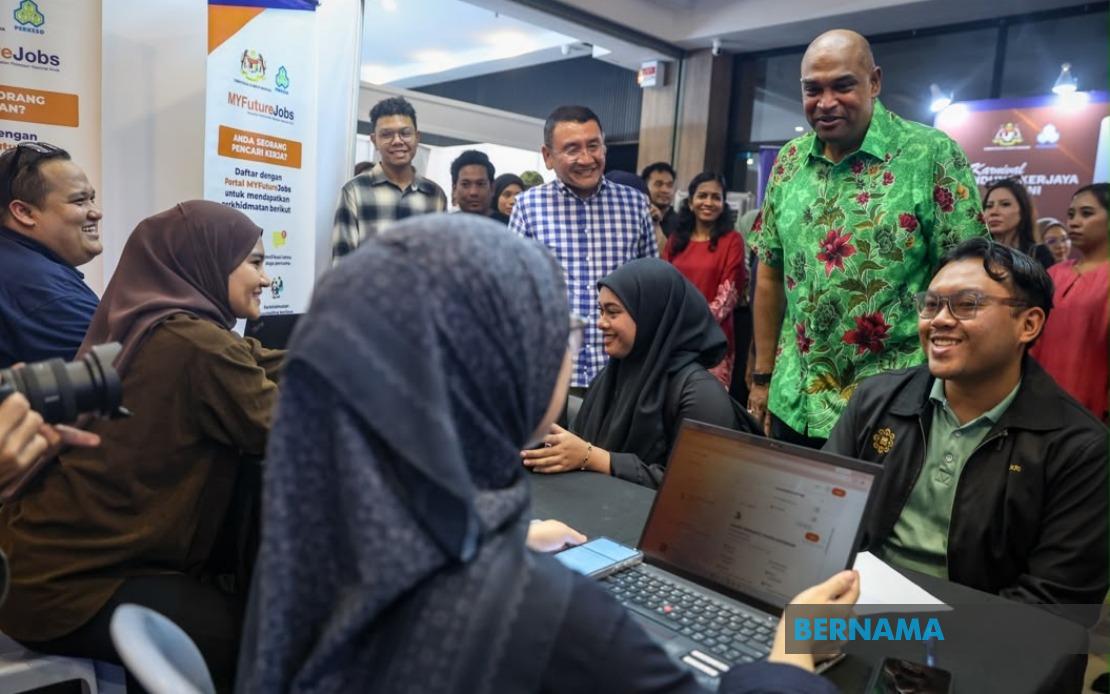
Malaysia is moving forward with legislative action on a comprehensive social security framework aimed at protecting cross-border workers, with Human Resources Minister Datuk Seri R. Ramanan announcing that the Traveller Scheme proposal will be tabled in Parliament as early as tomorrow. The initiative represents a significant policy response to the vulnerabilities faced by hundreds of thousands of Malaysians who traverse the Singapore-Johor border daily for employment, a phenomenon that has long exposed workers to gaps in social security coverage across both jurisdictions.
The Traveller Scheme proposal emerges from collaborative efforts between the Ministry of Human Resources (KESUMA) and the Social Security Organisation (Perkeso), with both bodies currently in the final stages of securing the necessary governmental approvals required for parliamentary presentation. Ramanan indicated that the approval timeline appears promising, with formal clearance anticipated by August, well ahead of the anticipated implementation phase. This expedited schedule reflects the government's recognition of the urgency underlying the issue, as millions of ringgit in economic activity annually flows through the Johor-Singapore corridor, yet workers remain inadequately protected against employment-related contingencies.
The scale of the problem justifies the legislative priority. Approximately 480,000 Malaysians commute daily between Johor and Singapore for work, representing one of the world's largest sustained cross-border labour flows. These workers face unique circumstances that existing social security frameworks—designed primarily for sedentary workforces—fail to adequately address. Income fluctuations, employment instability, and the complexity of navigating two separate social security systems create substantial risks for this population, particularly during economic downturns or personal hardship.
Once tabled, the proposal will undergo parliamentary scrutiny across both the Dewan Rakyat and Dewan Negara. Ramanan has committed to engaging members of Parliament to explain the scheme's benefits, indicating a deliberate educational approach rather than merely technical presentation. This engagement strategy suggests that policymakers anticipate legitimate questions about funding mechanisms, administrative implementation, and the scope of benefits—all legitimate concerns when extending social security to a workforce operating across international borders.
The Traveller Scheme operates through the expansion of Act 789, formally known as the Self-Employment Social Security Scheme administered by Perkeso. By leveraging existing institutional frameworks rather than creating entirely new bureaucratic structures, the proposal demonstrates pragmatic policymaking. Eligible cross-border workers would contribute to the expanded scheme and gain access to eight categories of benefits, though the proposal document does not specify which benefits these are—a detail likely to emerge during parliamentary discussion.
The protection framework addresses a critical gap in Malaysia's social security architecture. Perkeso traditionally focuses on formal sector employees and self-employed individuals within Malaysia's borders. Cross-border commuters fall into an ambiguous category: they maintain Malaysian residency and often Malaysian employment contracts, yet work in Singapore's formal economy. This jurisdictional overlap has historically left them partially unprotected, unable to fully participate in Malaysian schemes due to their foreign employment status, while also restricted in accessing Singapore's Central Provident Fund system as non-residents.
Implementation will require considerable coordination across governmental agencies. Beyond KESUMA and Perkeso, relevant bodies will likely include the Immigration Department, the Inland Revenue Board, and potentially liaison mechanisms with Singapore authorities. The cross-border nature of the workforce means that contribution collection, benefit disbursement, and verification of employment status will require administrative sophistication. Malaysia's experience with other transnational worker programmes provides some institutional foundation, though the scale here is substantially larger.
The economic implications for Johor are substantial. The state functions as Malaysia's primary interface with Singapore, and the stability of its cross-border labour force directly affects both jurisdictions' competitiveness. Workers with inadequate social security protection often experience productivity losses and health-related absences. Conversely, a robust protection framework enhances worker retention, reduces precarious employment arrangements, and potentially allows employers to invest more confidently in training and development. For Johor specifically, the scheme represents a competitive advantage in attracting quality workers who increasingly consider social protection as part of their employment package.
Ramanan's announcement occurred during the LINDUNG Kerjaya MADANI Carnival in Johor Bahru, an event bringing together twenty employers offering more than 2,000 vacancies, including senior positions commanding salaries up to RM16,000 monthly. This context underscores that the Traveller Scheme responds to a workforce already substantially employed in higher-skilled categories, not merely low-wage service workers. The presence of competitive salary offers indicates that cross-border workers increasingly occupy positions of responsibility and economic significance, strengthening the policy argument for comprehensive social security coverage.
Regional significance extends beyond Malaysia-Singapore dynamics. Other ASEAN nations with substantial cross-border labour movements—Thailand, Indonesia, and the Philippines—will likely monitor Malaysia's implementation closely. A successful model could provide template lessons for managing large migrant workforces within ASEAN's ultimately borderless vision. Conversely, implementation challenges would inform policymakers elsewhere about the complexities of extending social protection across international boundaries while respecting both nations' sovereign systems.
The August approval timeline, if met, would position the scheme for implementation within the calendar year. However, parliamentary scrutiny may extend discussions, particularly regarding contribution rates and benefit adequacy. Worker advocacy groups and employer associations will likely submit testimony. The dialogue between parliament and stakeholders will shape not merely this scheme but establish precedents for future cross-border labour policy across Southeast Asia's integration agenda.
%22%2F%3E%3C%2Fpattern%3E%3C%2Fdefs%3E%3Crect%20width%3D%22100%25%22%20height%3D%22100%25%22%20fill%3D%22url(%23ph2cg2vg)%22%2F%3E%3Crect%20width%3D%22100%25%22%20height%3D%22100%25%22%20fill%3D%22url(%23ph2cg2vp)%22%2F%3E%3Ctext%20x%3D%2250%25%22%20y%3D%2250%25%22%20text-anchor%3D%22middle%22%20dominant-baseline%3D%22central%22%20fill%3D%22rgba(255%2C255%2C255%2C0.95)%22%20font-family%3D%22Georgia%2C%20'Times%20New%20Roman'%2C%20serif%22%20font-weight%3D%22700%22%20font-size%3D%22226%22%20letter-spacing%3D%22-0.02em%22%3ELegacy%3C%2Ftext%3E%3C%2Fsvg%3E)

%22%2F%3E%3C%2Fpattern%3E%3C%2Fdefs%3E%3Crect%20width%3D%22100%25%22%20height%3D%22100%25%22%20fill%3D%22url(%23ph4q903g)%22%2F%3E%3Crect%20width%3D%22100%25%22%20height%3D%22100%25%22%20fill%3D%22url(%23ph4q903p)%22%2F%3E%3Ctext%20x%3D%2250%25%22%20y%3D%2250%25%22%20text-anchor%3D%22middle%22%20dominant-baseline%3D%22central%22%20fill%3D%22rgba(255%2C255%2C255%2C0.95)%22%20font-family%3D%22Georgia%2C%20'Times%20New%20Roman'%2C%20serif%22%20font-weight%3D%22700%22%20font-size%3D%22320%22%20letter-spacing%3D%22-0.02em%22%3E24%3C%2Ftext%3E%3C%2Fsvg%3E)