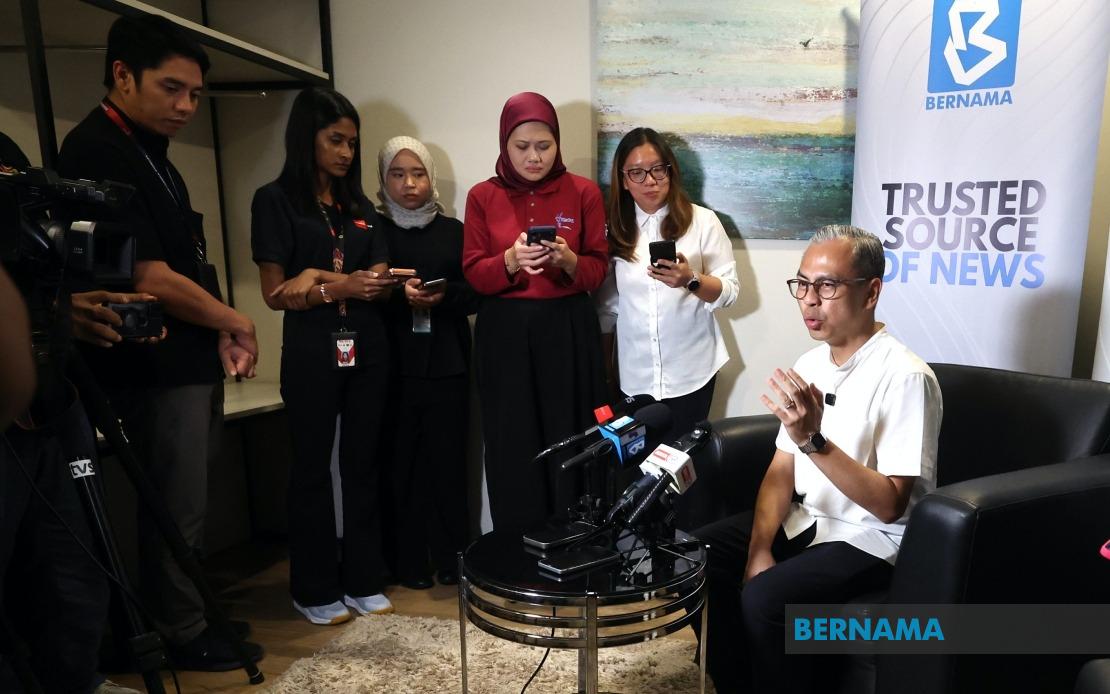
The Malaysian government is moving to reinforce the Malaysian Media Council (MMM) as the country's primary self-regulatory body for media standards, with Communications Minister Datuk Fahmi Fadzil signalling increased state backing during the council's formative years. Speaking in Johor Bahru on July 7, Fahmi outlined an ambitious agenda to deepen industry participation in ethical journalism practices and to address growing concerns about digital content verification and dissemination. The initiative reflects a broader policy shift towards industry-led oversight rather than direct government policing of media conduct, a move that carries significant implications for press freedom and regulatory transparency across Southeast Asia.
Fahmi emphasised that the government would furnish targeted support to accelerate the MMC's institutional capacity while simultaneously enlisting a wider coalition of media organisations and social media operators as members. He framed this expansion as essential to resolving media-related disputes through mechanisms independent of state apparatus, thereby establishing a buffer between journalistic practice and potential political pressure. The minister's remarks suggest an acknowledgment that Malaysia's media ecosystem has become too complex for traditional top-down regulation, particularly as information flows increasingly occur through digital platforms beyond traditional newsrooms. This recognition mirrors trends across the region, where governments and industry bodies struggle to balance press freedom with community standards.
The timing of Fahmi's announcement coincides with a significant policy shift articulated by Prime Minister Datuk Seri Anwar Ibrahim, who declared that complaints against accredited journalists would no longer trigger automatic government action. Instead, the MMM will serve as the first point of adjudication, effectively depoliticising media complaints and removing them from ministerial discretion. This mechanism is designed to insulate journalists from arbitrary prosecution or investigation, a safeguard that advocates for press freedom have long demanded. By channelling complaints through an industry body rather than law enforcement or regulatory agencies, the government aims to introduce procedural fairness and transparency into disciplinary processes—elements frequently absent when political sensitivities intersect with media coverage.
However, the inclusion of social media platforms represents a more contentious frontier for Malaysian media regulation. Fahmi acknowledged that while established news organisations generally adhere to ethical codes, vast quantities of uncurated content circulate on digital platforms without regard for local cultural sensitivities or factual verification. He cited a recent tragic incident in Banting, where a teenager's stabbing of a student prompted widespread sharing of victim details and investigative information across social media channels—content that violated privacy expectations and potentially compromised police operations. The minister's concern reflects a genuine challenge: social media algorithms amplify sensational or emotionally provocative content regardless of accuracy, and platform-specific community standards often fail to account for Malaysia's particular religious, ethnic, and political complexities.
The invitation for social media platforms to voluntarily join the MMM appears designed to bridge this gap by extending self-regulatory principles into the digital sphere. Yet this approach faces inherent limitations. Most major social media companies are headquartered overseas and operate global policy frameworks that may resist localisation. Their business models, premised on engagement maximisation rather than editorial judgment, fundamentally differ from traditional media economics. Persuading platforms to adopt Malaysian content sensitivities alongside thousands of other jurisdictional demands presents a coordination problem that self-regulation alone may struggle to resolve. Fahmi's optimism about voluntary participation must be tempered by the practical difficulty of compelling multinational corporations to subordinate algorithmic priorities to local ethical standards.
The Malaysian Media Council itself remains a relatively nascent institution, having been established to formalise industry standards previously governed through informal professional codes and sporadic government intervention. Its effectiveness depends on the credibility of its leadership, the robustness of its enforcement mechanisms, and the genuine buy-in of member organisations. Critics have questioned whether an industry body can maintain independence when members include state-owned or politically aligned outlets like Bernama, the national news agency. The presence of Bernama's executives—including chief executive officer Datin Paduka Nur-ul Afida Kamaludin and editor-in-chief Arul Rajoo Durar Raj—at Fahmi's announcement underscores this ambiguity. If the MMM is to command legitimacy, it must demonstrate that it can hold all member organisations to equivalent standards regardless of their proximity to state power.
Fahmi explicitly linked the council's strengthening to Malaysia's standing in international media freedom indices, indicating that the initiative partly responds to external criticism of domestic press conditions. Global assessments of Malaysian media freedom have declined in recent years, influenced by concerns about defamation prosecutions targeting journalists, restrictions on religious commentary, and restrictions on coverage of sensitive political issues. By establishing a visible self-regulatory apparatus, the government signals responsiveness to international scrutiny while attempting to reframe the narrative around media control. The strategy suggests that the MMM could serve dual purposes: genuinely protecting journalist interests through fair complaint resolution while simultaneously providing the government with a softer, more publicly defensible regulatory instrument than direct state action.
The implications for Malaysian journalists are mixed. On one hand, the MMM offers protection against arbitrary state action and provides a forum where disputes can be adjudicated by industry peers rather than political appointees. This represents an improvement over previous arrangements where media complaints often wound up in court or before regulators like the Malaysian Communications and Multimedia Commission. On the other hand, industry self-regulation can sometimes be more restrictive than state regulation, as professional bodies may enforce conservative interpretations of ethics codes to preserve industry reputation. Journalists might find themselves subject to peer pressure to avoid controversial stories that an MMM disciplinary panel considers ethically questionable but that remain legally permissible.
The regional context matters here as well. Several Southeast Asian nations maintain ostensibly independent media councils that effectively function as compliance mechanisms for preferred political narratives. Thailand's Media Council, Myanmar's defunct regulatory bodies, and Vietnam's party-controlled journalism associations demonstrate how self-regulatory structures can entrench state interests. Malaysia's MMM must navigate this minefield carefully, demonstrating genuine independence while maintaining the government trust necessary for institutional stability. The appointment of respected industry figures and transparent complaint procedures would help distinguish the Malaysian council from failed predecessors in neighbouring states, but external monitoring will remain essential.
Fahmi's statement that most media organisations already adhere to ethical principles reflects an implicit confidence in professional journalism standards that may not extend to social media participants. The digital ecosystem operates according to different incentive structures: engagement, virality, and monetisation through advertising rather than editorial responsibility. Bringing these platforms into a self-regulatory structure will require establishing consequences for non-compliance, a challenge given their economic power and technical capacity to resist pressure. Perhaps more fundamentally, the Malaysian Media Council will need to develop expertise in algorithmic literacy and platform dynamics that traditional media ethics training does not provide.
The government's support for the MMM during its early years signals recognition that institutional development requires sustained commitment and resources. Building credible regulatory capacity takes time, and premature withdrawal of support could undermine the council's legitimacy. Yet permanent government involvement risks compromising the independence that makes self-regulation valuable. The challenge lies in calibrating support carefully—providing institutional scaffolding initially while establishing mechanisms for the council to develop independent revenue streams, governance structures, and authority over time. Success would require the council to maintain public credibility even when investigating complaints against outlets with political connections or investigating stories that embarrass powerful figures.
The invitation to social media platforms introduces perhaps the most ambitious element of the Malaysian Media Council's evolving mandate. If platforms accept and genuinely engage with the council, Malaysia could pioneer a hybrid regulatory model that addresses digital-era challenges while preserving self-regulatory principles. If platforms decline or participate merely superficially, the council's reach will remain limited to traditional media organisations. Either outcome will shape not only Malaysian media dynamics but potentially influence how other Southeast Asian countries approach platform regulation. The coming months will reveal whether this initiative represents genuine industry evolution or another iteration of managed media governance.

