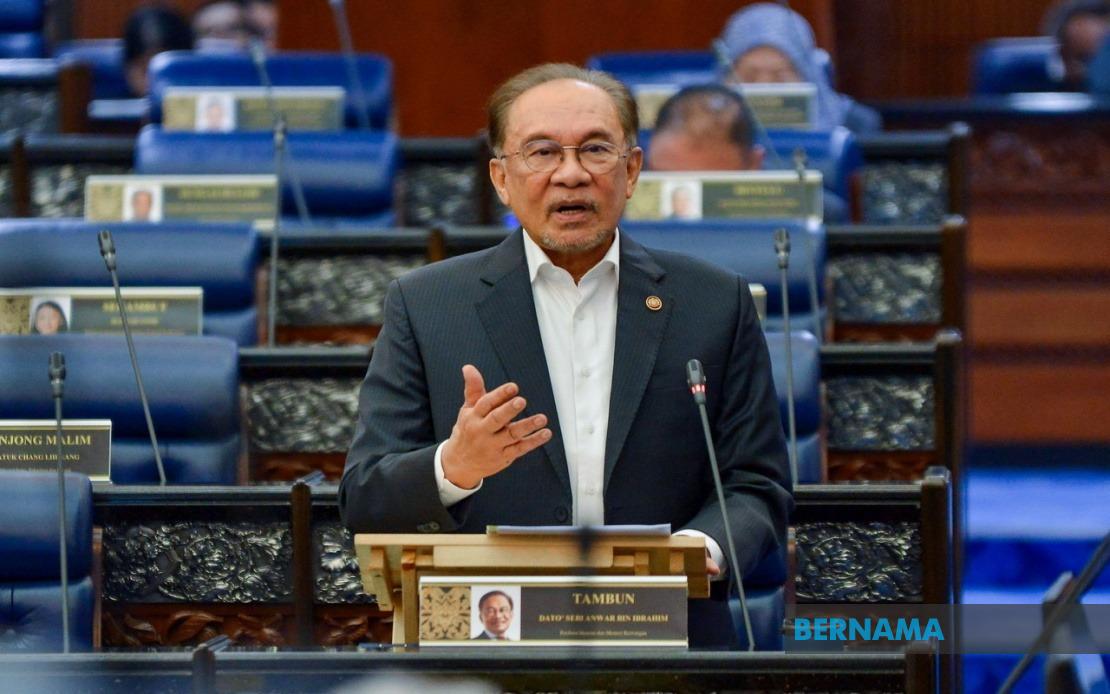
Prime Minister Datuk Seri Anwar Ibrahim has reaffirmed the government's commitment to placing Malaysian workers in available positions whilst undertaking a systematic review of which sectors genuinely require foreign labour. Speaking in Parliament on July 14, Anwar acknowledged a persistent tension in Malaysia's workforce policy: the country has millions of foreign workers already present, yet certain industries continue to face recruitment difficulties that threaten business operations. The challenge, he suggested, lies not in the absence of available workers but in better coordination between employers, regulatory bodies, and existing migrant populations.
The Prime Minister's remarks came in response to a parliamentary query from Khoo Poay Tiong (PH-Kota Melaka) concerning labour shortages affecting small and medium enterprises and the parallel issue of youth employment prospects. This dual concern reflects a broader anxiety within Malaysia's business community and among policymakers about balancing economic competitiveness with social stability. SMEs, which form the backbone of Malaysia's economy, have long complained of difficulty finding workers for lower-wage positions, while young Malaysians struggle to access entry-level opportunities that might launch their careers.
Anwar outlined a more nuanced approach than blanket restrictions on foreign labour. He stated that the government would continue evaluating workforce requirements through established legal channels and regulatory frameworks, but with a clear hierarchy: existing legal foreign workers already in Malaysia should be offered opportunities to fill vacancies before any new recruitment overseas is approved. This sequencing aims to reduce the burden on employers whilst maintaining orderly labour market management. The principle reflects recognition that expelling or preventing recruitment of migrants creates inefficiencies, whereas redeploying those already present can address immediate labour gaps more efficiently.
The Prime Minister also highlighted a secondary but significant concern: the long-standing problem of foreign worker syndicates. These criminal networks have operated for decades in Malaysia, exploiting vulnerable migrants whilst enriching themselves through illegal placement fees, document falsification, and labour trafficking. Anwar characterised syndicates as an institutional burden on the economy and a mechanism for illicit wealth accumulation. By addressing this dimension of the foreign worker issue, he signalled that reform extends beyond simple supply-and-demand calculations to include integrity in recruitment systems themselves.
Government action on foreign workers will require coordination between the Ministry of Human Resources and the Ministry of Home Affairs, Anwar explained, with security considerations forming a critical component of any expansion decision. This inter-ministerial approach acknowledges that labour policy intersects with national security, public health, and social cohesion. The involvement of the Home Affairs ministry suggests that future approvals for foreign workers will be scrutinised not merely for their economic utility but for their broader impact on Malaysia's stability and the wellbeing of communities in which they settle.
Enforcement represents another pillar of the government's approach. Anwar committed to intensifying action against foreign workers who breach local laws, explicitly mentioning the Rohingya population alongside other nationalities. This emphasis on impartial enforcement aims to counter perceptions that certain groups receive preferential treatment or face selective prosecution. The message was clear: compliance with Malaysian law and workplace regulations offers protection; violations trigger consequences, regardless of the worker's origin. Such consistency is essential for maintaining public confidence in a system that permits foreign labour.
A particular concern for the government centres on the misuse of work permits and visa categories designated for skilled professionals. Anwar cited instances where companies have sought approvals to recruit foreign experts in fields such as artificial intelligence or digital technologies, only to deploy those workers in roles unrelated to their purported expertise. This bait-and-switch practice undermines the stated rationale for foreign professional recruitment and deprives Malaysian talent of opportunities to develop expertise in high-value sectors. Stricter entry requirements for foreign professionals, including verification that workers perform tasks aligned with their approved expertise, aim to plug this loophole.
The government's stance reflects lessons learned from Malaysia's previous labour migration experience. Decades of relatively unmanaged foreign worker inflows created dependency in certain sectors, particularly construction, agriculture, and domestic service, where wages and conditions became structured around migrant availability rather than local worker aspirations. Young Malaysians often avoid these positions, viewing them as unsuitable or underpaid, perpetuating reliance on migrant labour and creating a segmented labour market. Breaking this cycle requires deliberate measures to improve conditions and wages in labour-intensive sectors to attract domestic workers, alongside temporary foreign recruitment for genuine gaps.
For Malaysian SMEs, the government's position carries mixed implications. The commitment to study sector-specific needs and streamline approvals for legitimate foreign recruitment may eventually ease labour pressures affecting businesses. However, the emphasis on prioritising existing migrant workers and tightening verification processes could introduce administrative delays. Business associations will likely seek clarity on timelines and procedures for establishing genuine labour shortages. The government appears to be signalling that foreign worker access will remain available but subject to greater scrutiny and conditionality than in the past.
The announcement also carries implications for young Malaysian job seekers. By tightening controls on foreign professional recruitment and ensuring that lower-wage positions filled by migrants do not displace opportunity for locals, the government aims to create more pathways for youth employment. However, success depends on whether employers actually prefer Malaysian workers when regulatory barriers to foreign hiring are raised, or whether structural factors—such as wage expectations, working conditions, or required skills—perpetuate gaps. Government investment in vocational training and wage support for SMEs hiring young workers may be necessary to translate regulatory change into genuine employment gains.
Regionally, Malaysia's recalibration of foreign labour policy warrants attention from other Southeast Asian economies facing similar pressures. Thailand, Vietnam, and Indonesia also contend with tensions between labour shortages in specific sectors and the desire to protect domestic employment. Malaysia's approach—emphasising legal channels, inter-agency coordination, enforcement against syndicates, and professional skills verification—could serve as a template for regional best practice. However, implementation will determine whether the policy achieves its stated objectives or becomes another layer of bureaucracy obscuring underlying economic structural problems.
The government's roadmap suggests a longer-term strategy rather than quick fixes. Anwar's remarks indicate that Malaysia will maintain selective openness to foreign labour whilst substantially tightening the conditions under which it is permitted. This reflects both economic realism—acknowledging genuine sectoral shortages—and political necessity—responding to youth unemployment concerns and public anxiety about migration. The success of this balancing act depends on rigorous implementation of enforcement mechanisms, meaningful improvements in local worker recruitment outcomes, and transparency in how sector-specific labour shortage determinations are made.

