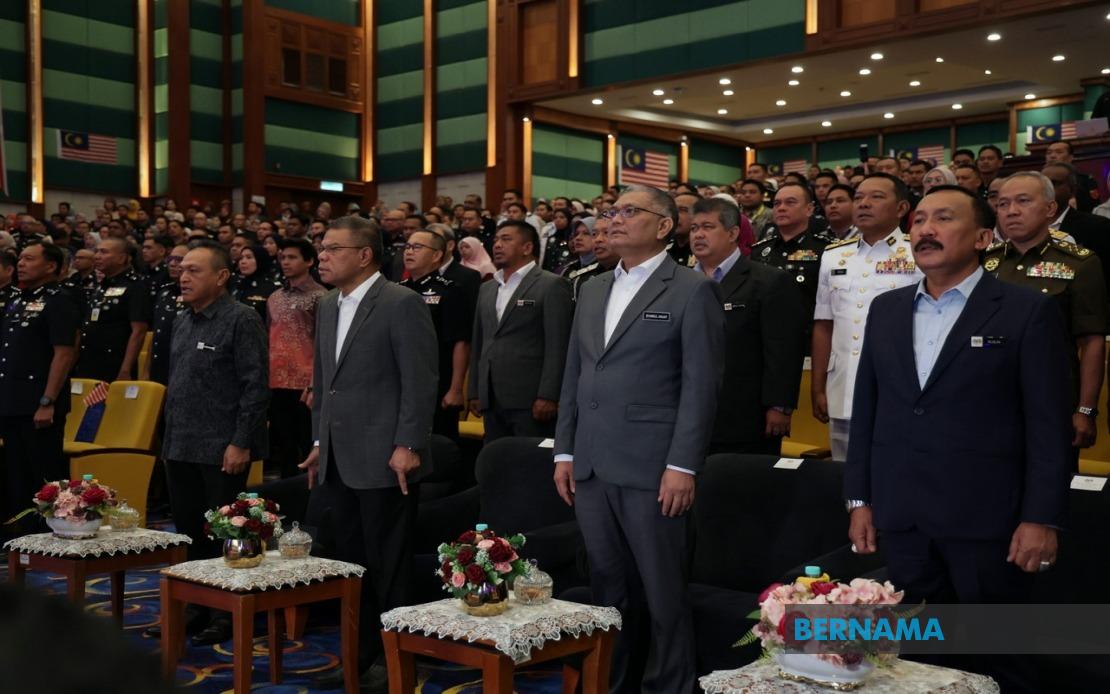
Malaysia's Home Minister Datuk Seri Saifuddin Nasution Ismail will present a comprehensive plan to strengthen security controls across the country's entry points at a Cabinet meeting, in a joint presentation with Transport Minister Anthony Loke. The initiative represents a significant government response to mounting concerns about the effectiveness of existing border management systems, particularly following several high-profile cases involving Malaysian citizens.
The urgency of this undertaking became evident after a Cabinet directive issued just two weeks prior compelled the Home Ministry and Transport Ministry to develop the detailed enhancement plan. Saifuddin Nasution announced the forthcoming presentation during the Home Ministry's monthly assembly in Putrajaya, emphasising that the plan incorporates elements falling under both ministerial jurisdictions, necessitating the joint submission. This collaborative approach reflects the government's recognition that border security cannot be managed in isolated departmental silos, but requires integrated coordination across multiple agencies.
The catalyst for this accelerated policy response stems from a particularly damaging incident in which a Malaysian pilot was detained at Soekarno-Hatta International Airport in Indonesia following the discovery of approximately 25 kilogrammes of MDMA in his possession. This case, combined with other recent smuggling incidents involving Malaysian nationals, prompted serious questioning about the adequacy of current security protocols at Malaysia's airports and other international gateways. Government officials have expressed concern that these breaches not only represent operational failures but also threaten Malaysia's international reputation and competitiveness as a regional transportation hub.
The comprehensive plan addresses multiple dimensions of border security infrastructure and human capacity. Saifuddin Nasution indicated that the initiative examines improvements in personnel training and skills development, ensuring that officers responsible for security operations maintain contemporary expertise. The plan also encompasses technological upgrades, including enhanced closed-circuit television surveillance systems and modernised scanning equipment designed to detect contraband more effectively. These infrastructure investments reflect global best practices in aviation and port security, aligning Malaysia with international standards expected of major regional transport nodes.
Crucially, the planning process involved systematic consultation with relevant agencies operating under the Home Ministry, Transport Ministry, and other government bodies with security responsibilities. This inclusive approach aimed to synthesise operational knowledge and practical experience from frontline personnel who directly manage daily security operations. By drawing on the expertise of agencies responsible for customs, immigration, port authority, and aviation oversight, the plan theoretically captures a holistic understanding of existing vulnerabilities and implementation constraints.
The government's framing of this initiative emphasises comprehensive identification and remediation of weaknesses rather than reactive crisis management. Saifuddin Nasution stated that the plan would systematically evaluate all aspects of entry point controls, identifying specific areas requiring improvement and prioritising investments based on risk assessment. This analytical framework suggests the government recognises that sporadic incidents may indicate systemic vulnerabilities rather than isolated lapses, warranting structural rather than merely procedural adjustments.
The pilot's case remains under active investigation by the Royal Malaysia Police, with cooperation from Indonesian counterparts. Police have conducted interviews with the suspect to determine whether the smuggling operation represents an isolated criminal act or forms part of a broader international trafficking network. Saifuddin Nasution indicated that intelligence gathered during this investigation would inform understanding of how drugs entered Malaysia and subsequently transited through Malaysian airports destined for Indonesia. Such intelligence analysis becomes critical for identifying whether weaknesses exist in departure screening, baggage handling procedures, or staff vetting protocols.
For Malaysia, the implications of these border security failures extend beyond individual criminal cases. As a major aviation hub and trade gateway for Southeast Asia, Malaysia's security reputation directly affects international perceptions of regional transport reliability. Passenger airlines, cargo operators, and international businesses consider border security standards when routing operations through specific hubs. Repeated high-profile smuggling incidents risk degrading Malaysia's competitive position relative to Singapore's Changi Airport or other regional alternatives, with potential consequences for aviation revenue and employment.
The policy response also reflects broader regional security dynamics. Southeast Asia faces persistent challenges with narcotics trafficking, given the region's geographic position relative to production areas in the Golden Triangle and evolving synthetic drug manufacturing hubs. Malaysia's position as a crucial transit point makes it particularly vulnerable to exploitation by trafficking networks. Enhanced border controls may impose operational costs on legitimate commerce and traveller processing, creating potential friction with business communities accustomed to relatively efficient border transit. Policymakers must balance security imperatives against economic efficiency concerns, a tension likely requiring careful stakeholder consultation during implementation.
The two-week timeframe for developing this comprehensive plan reflects political urgency, though implementation timelines remain unspecified. Substantial infrastructure upgrades, such as CCTV system expansions or new scanning equipment at multiple entry points, typically require extended procurement and installation periods. Personnel training programmes similarly need time for proper curriculum development and rollout across all relevant facilities. The Cabinet presentation represents a planning milestone rather than implementation commencement, with actual security improvements likely extending over months or years depending on budget allocation and project scope.

