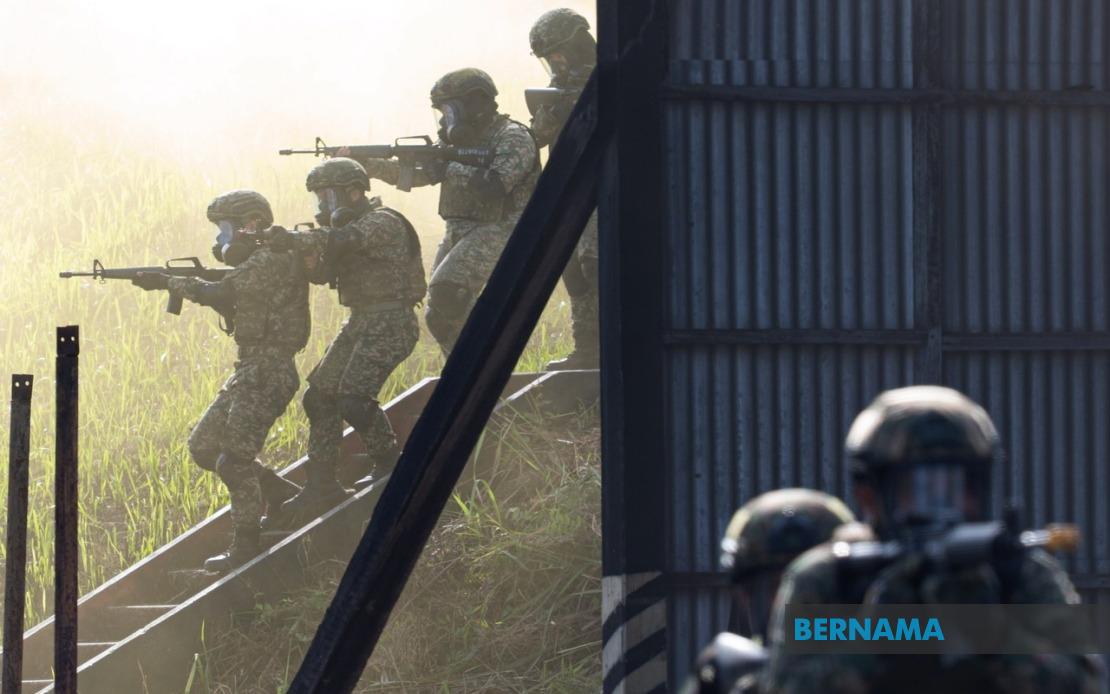
Prime Minister Datuk Seri Anwar Ibrahim has committed to seeking a higher defence allocation in the 2027 budget, signalling the government's intent to bolster the Malaysian Armed Forces' operational capability and enhance conditions for military personnel. Speaking in Melaka on August 7, Anwar, who also holds the portfolio of Finance Minister, underscored that maintaining strong defence readiness was fundamental to preserving national stability, which he characterised as Malaysia's most invaluable resource.
The Prime Minister's declaration reflects a strategic pivot towards prioritising security infrastructure investment at a time when regional geopolitical tensions and transnational security challenges warrant heightened preparedness. Anwar's framing of defence as an anticipatory rather than reactive priority represents a significant shift in messaging, emphasising that military strength must be cultivated continuously rather than hastily assembled in response to imminent threats. His assertion that "conflicts do not occur when expected" underscores the unpredictable nature of security challenges facing the nation, particularly in Southeast Asia's strategically sensitive maritime zones.
Crucially, Anwar stipulated that weapons procurement and military equipment acquisition must adhere to rigorous transparency standards, explicitly cautioning against profiteering schemes and unnecessary commissions channelled to external intermediaries. This emphasis on clean procurement processes addresses longstanding concerns within Malaysia's defence establishment regarding inflated costs and potential corruption in military spending. By publicly committing to systemic and transparent acquisition procedures, the government seeks to demonstrate accountability to both taxpayers and the armed forces themselves, ensuring defence funds translate directly into operational capability rather than enriching middlemen.
The proposed budget expansion will prioritise personnel welfare enhancements, encompassing improved residential quarters, construction of a new military hospital, and sustained maintenance of essential infrastructure including water supply systems. These investments address documented quality-of-life concerns within the armed forces, where ageing facilities and inadequate living conditions have occasionally affected recruitment and retention. By coupling defence readiness with tangible improvements to military life, the government attempts to strengthen morale and operational efficiency simultaneously.
To contextualise the commitment, Anwar highlighted that the MADANI Government has already expanded the Defence Ministry's annual allocation by more than 35 per cent over the preceding three years, a substantial increase that he suggested has received insufficient public recognition. This assertion suggests the government believes its defence investment record merits greater visibility, particularly as it demonstrates fiscal commitment despite competing budgetary demands. The relative invisibility of previous increases may reflect both inadequate communication strategies and the technical nature of defence expenditure, which often escapes mainstream political discourse.
The government's capacity to increase defence spending further rests partly on Malaysia's improving macroeconomic trajectory. Anwar identified a strengthening ringgit, expanding foreign direct investment inflows, and controlled inflation as enabling factors that would permit enhanced defence budgeting. This linkage between economic performance and security spending illustrates how Malaysia's financial health directly conditions its ability to sustain military modernisation and force development programmes. Regional observers will note that Malaysia's economic resilience creates strategic space for defence investments that some neighbouring economies may struggle to afford.
The announcement arrives ahead of the tabling of Budget 2027 in the Dewan Rakyat on October 9, establishing parameters for parliamentary discussion and potential debate regarding defence priorities and spending levels. This advanced notification allows stakeholders, including opposition parliamentarians and civil society analysts, time to formulate positions on defence expenditure before formal budget presentation. The timing also demonstrates government confidence that defence spending increases will command sufficient parliamentary support.
Beyond the headline commitment, Anwar announced more immediate allocations during the Melaka event, including RM147,000 directed to the Armed Forces Family Welfare Association and RM1 million designated for maintenance of mosques and prayer facilities at four military camps in the state: Terendak, Sungai Udang, Masjid Tanah and Bukit Beruang. These disbursements exemplify the government's holistic approach to military welfare, encompassing both material living conditions and spiritual well-being infrastructure.
For Malaysian defence analysts, the commitment reflects recognition that aging equipment, deferred maintenance, and personnel dissatisfaction pose significant operational risks if left unaddressed. The Malaysian Armed Forces have periodically faced capability constraints due to budgetary limitations, affecting everything from training frequency to equipment modernisation timelines. A sustained, transparent increase in defence allocation could accelerate addressing these longstanding deficiencies, potentially enhancing Malaysia's capacity to manage regional security challenges ranging from maritime domain awareness to counterterrorism operations.
From a broader Southeast Asian perspective, Malaysia's defence spending trajectory carries implications for regional balance-of-power considerations and maritime security cooperation mechanisms. Countries across ASEAN increasingly recognise that credible defence capabilities underpin effective diplomacy and contribute to stable regional environments. Malaysia's commitment to defence investment, coupled with transparency pledges, may also influence regional perceptions of Malaysian seriousness regarding defence partnerships and multilateral security initiatives.
The emphasis on personnel welfare alongside equipment procurement represents a sophisticated understanding that military effectiveness depends on satisfied, professionally developed personnel. Countries that neglect service personnel conditions frequently encounter recruitment difficulties and experience attrition among experienced personnel, ultimately compromising operational capability regardless of equipment quality. By addressing both dimensions simultaneously, Malaysia positions itself to develop a more cohesive, capable armed forces.
Moving forward, the success of this defence investment strategy will depend on implementation fidelity, particularly regarding the transparency commitments. Civil society scrutiny of defence procurement processes, parliamentary oversight mechanisms, and media reporting will collectively determine whether increased allocations translate into genuine capability enhancements or dissipate through inefficiency and corruption. The government's public commitment to transparent procurement provides a benchmark against which future performance can be measured and contested.

