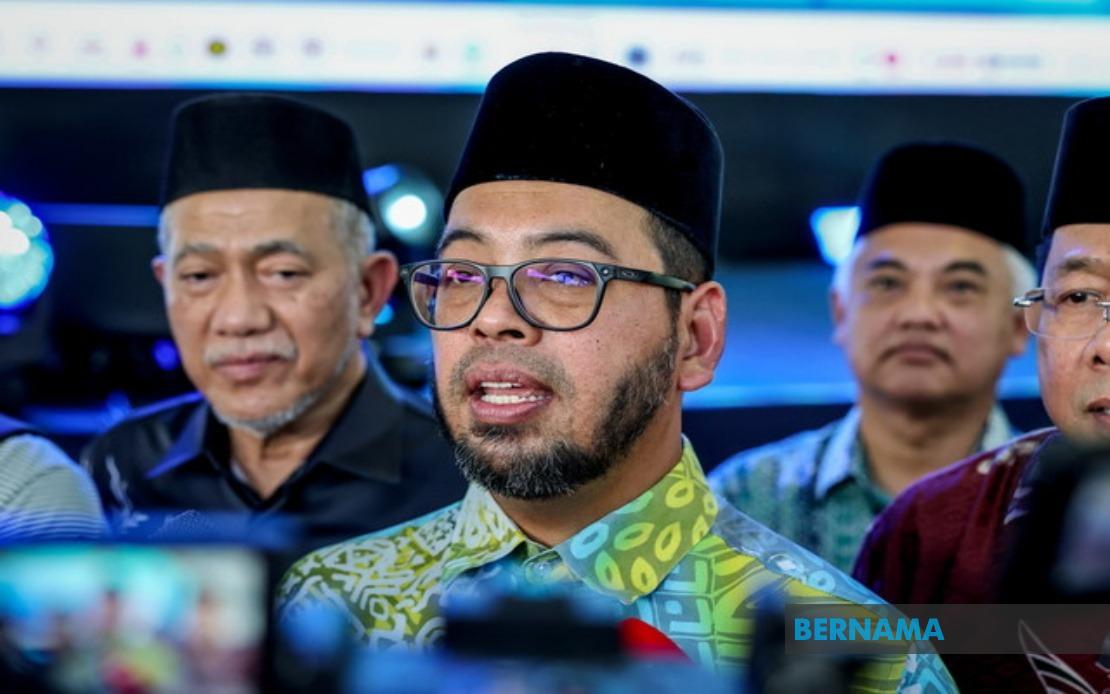
Malaysia maintains a prominent position on the international stage as a model for Islamic affairs management, according to Minister in the Prime Minister's Department (Religious Affairs) Dr Zulkifli Hasan, speaking at an event in Bukit Mertajam on July 5. The minister's remarks underscore the country's multifaceted approach to Islamic governance, which has attracted admiration and study from nations worldwide seeking to strengthen their own religious institutional frameworks.
The international standing Malaysia has cultivated is grounded in measurable outcomes and external validation rather than self-assessment. Dr Zulkifli referenced data, statistical evidence, and acknowledgment from global scholars and observers as the foundation for Malaysia's reputation in this domain. This evidence-based positioning becomes particularly significant in a regional context where questions about religious governance and institutional effectiveness frequently dominate public discourse across Southeast Asia.
During his travels abroad, Dr Zulkifli noted that Malaysia's approach to Islamic affairs consistently attracts the attention and admiration of counterparts from other nations. The minister emphasised that international observers frequently study Malaysia's institutional architecture, recognising both the sophistication of its regulatory frameworks and the integration of Islamic principles within a multiconfessional national system. This international regard serves as a counterpoint to domestic debates about the state of Islam in Malaysia, which occasionally focus on perceived vulnerabilities or challenges.
The minister directly addressed narratives suggesting that Islam faces marginalisation or threat within Malaysia, framing international perceptions as contradicting such claims. Rather than Islam being sidelined, the global view recognises Malaysia as playing an increasingly influential role in advancing Islamic thought, practice, and institutional development across the world. This distinction carries weight for both policymakers and the broader Muslim population seeking reassurance about the security and prominence of their faith within the national framework.
Among Malaysia's most celebrated achievements is its halal certification system, administered through the Department of Islamic Development Malaysia (JAKIM). The system has earned international respect as a standard-bearer for rigorous, scientifically-grounded verification of halal status. For Muslim consumers worldwide and businesses operating in the halal-certified supply chain, JAKIM's certification represents a trust mark that extends Malaysia's soft power across Muslim-majority and Muslim-minority markets globally. The halal industry itself has become economically significant, positioning Malaysia as both a moral authority and a commercial beneficiary of Islamic ethics in commerce.
Islamically compliant finance represents another cornerstone of Malaysia's international standing. The country's Islamic finance sector has maintained its position as the world's largest for eleven consecutive years, demonstrating sustained institutional competence and investor confidence. This achievement reflects not merely the accumulation of capital but the development of sophisticated financial instruments that marry Islamic jurisprudential principles with modern monetary theory. For Malaysian policymakers, this leadership also implies responsibility in setting standards that other nations adopt, amplifying the country's theological and economic influence.
The hajj pilgrimage management through Lembaga Tabung Haji exemplifies another dimension of Malaysia's Islamic governance. The institution has received international recognition for its logistical coordination, financial administration, and pastoral support for Malaysian pilgrims undertaking one of Islam's central obligations. This achievement touches directly on the lived experience of hundreds of thousands of Malaysian Muslims and their families, rendering the international validation of Lembaga Tabung Haji's performance a matter of both national pride and practical consequence.
Islamically-informed education has become increasingly central to Malaysia's strategic positioning. The government is advancing the Kelas Al-Quran dan Fardu Ain (KAFA) curriculum through the KAFA 2.0 initiative, which reorients Islamic education toward practical application and deeper appreciation of Islamic teachings rather than rote memorisation. This pedagogical shift reflects global trends in education reform while maintaining commitment to core Islamic knowledge transmission. The development demonstrates Malaysia's attempt to create graduates who integrate Islamic understanding with contemporary problem-solving capabilities.
The tahfiz education ecosystem represents an area where Malaysia has constructed comprehensive institutional infrastructure. The National Tahfiz Council, a unified policy framework, standardised curricula, and the Malaysia Tahfiz Certificate together create pathways enabling huffaz—Quran memorisers—to pursue advanced studies in professional, technical, and higher education fields. This integration of traditional Islamic learning with modern educational credentials addresses a historical challenge: how to retain religious scholarly traditions while ensuring graduates' economic and social mobility within contemporary labour markets. The government's stated commitment to producing professional huffaz capable of contributing to national development reflects an understanding that Islamic knowledge must translate into tangible societal benefit.
Beyond policy articulation, concrete resource allocation underscores the government's commitment to Islamic institutional development. Yayasan Takwa's contribution of RM280,000 to 28 mosques in Penang, with each institution receiving RM10,000, combined with similar support for selected Islamic schools, demonstrates financial backing for grassroots Islamic infrastructure. While individually modest, such distributions signal systematic investment in the physical and educational spaces where Islamic practice occurs in everyday Malaysian life, from neighbourhood mosques to religious schools serving local communities.
For Malaysian and Southeast Asian observers, the government's framing of Malaysia's Islamic leadership carries implications beyond symbolic prestige. The international recognition cited by Dr Zulkifli provides a narrative counter to both domestic critics who question government commitment to Islam and external actors who suggest Islam struggles within multicultural Malaysia. Simultaneously, the emphasis on institutional excellence, regulatory rigour, and educational innovation suggests that Malaysia's Islamic prominence rests not on rhetorical assertion but on demonstrable institutional capability—a distinction that matters for both domestic legitimacy and international credibility.
The positioning of Malaysia as a global Islamic leader also reflects broader geopolitical considerations within Southeast Asia and the Muslim world. As Islamic governance, Islamic finance, and halal commerce become increasingly significant in international trade and diplomatic relations, nations that demonstrate competence in these domains gain influence disproportionate to their size. Malaysia's investments in Islamic institutional excellence therefore function simultaneously as expressions of domestic religious commitment, economic development strategy, and geopolitical positioning within a world where Islam's role in statecraft and commerce continues expanding.

