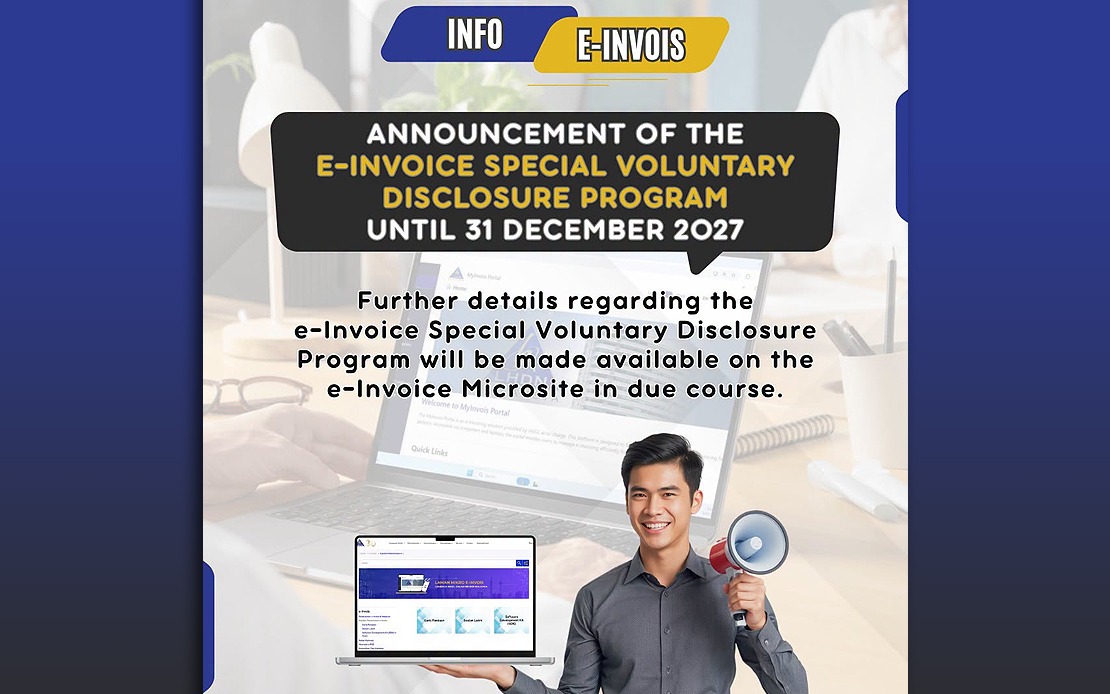
Prime Minister Datuk Seri Anwar Ibrahim announced today the launch of the e-Invoice Special Voluntary Disclosure Programme, extending through December 31, 2027, as a direct response to mounting compliance burdens faced by Malaysia's business community, particularly smaller operators. The initiative represents a significant policy shift, acknowledging that digitalisation demands, while necessary, have created real obstacles for enterprises transitioning to electronic invoicing systems. By establishing a structured window for voluntary correction without financial penalties, the government seeks to balance its digitisation agenda with practical recognition of implementation challenges across the economy.
The Inland Revenue Board detailed that the programme encompasses three distinct categories of taxpayers requiring corrective action. The first group comprises businesses that entirely failed to submit e-Invoices for specific qualifying transactions despite mandatory requirements. The second category includes organisations that did submit electronic invoices but contained substantive errors or fell short of the technical and administrative specifications outlined in regulatory guidelines. The third segment covers taxpayers who neglected their e-Invoice obligations across entire periods dating from when electronic invoicing became compulsory. This tri-partite structure reflects the varied nature of compliance failures across Malaysia's diverse business landscape, from technical oversights to systematic non-implementation.
Central to the programme's appeal is the complete suspension of financial penalties for any updates, revisions, or corrections voluntarily submitted during the designated period. Anwar, who holds the additional portfolio of Finance Minister, emphasised that this penalty moratorium extends across all categories of voluntary disclosure, removing a critical disincentive that might otherwise deter businesses from coming forward. The arrangement essentially creates a risk-free environment for compliance remediation, fundamentally altering the cost-benefit calculus for companies weighing whether to rectify their records.
For Malaysian businesses to successfully navigate this opportunity, the IRB has established clear expectations regarding submission quality. All voluntary disclosures must demonstrate accuracy and strict adherence to both General and Specific e-Invoice Guidelines, meaning that merely submitting corrections carries no guarantee of acceptance if those corrections themselves fail to meet technical standards. This requirement underscores that the programme facilitates compliance correction rather than operating as a blank cheque for non-compliant submissions. Businesses must invest effort in understanding and implementing proper e-Invoice protocols even within the penalty-free framework.
Beyond the penalty waiver, the government has sweetened the offer through accelerated tax incentives designed to offset some digitalisation expenses. Taxpayers demonstrating full compliance with e-Invoice implementation requirements can now claim capital allowances for information and communication technology equipment purchases within a single tax year, rather than spreading deductions across multiple periods. This acceleration applies equally to expenses incurred in developing or modifying computer software specifically deployed for e-Invoice functionality. For small and medium enterprises operating on tight cash flows, compressing deductions into a single year substantially improves liquidity by generating faster tax relief.
The timing of this initiative carries particular significance for Malaysia's small business sector, which has emerged as a critical engine for economic growth and employment. Micro, small and medium enterprises, which form the backbone of Malaysia's domestic economy, often lack dedicated compliance departments and must balance tax obligations against operational demands. The programme acknowledges that these entities frequently struggle not from deliberate evasion but from resource constraints and technical capacity gaps. By providing both a correction window and financial incentives, the government signals recognition that compliance support must accommodate the realities facing smaller operators.
The IRB has established multiple channels through which taxpayers can seek guidance and submit disclosures, reflecting awareness that accessibility influences programme uptake. Dedicated e-Invoice helpdesk services operate at 03-8682 8000, while the MyInvois Live Chat platform provides real-time technical assistance. Taxpayers may also engage directly with IRB offices located throughout Malaysia's major centres. This multi-channel approach recognises that businesses operate across different geographic regions and technological comfort levels, requiring diverse support mechanisms to ensure meaningful access to the programme.
For Malaysia's broader tax compliance ecosystem, the programme carries important implications. By creating incentives for voluntary disclosure rather than relying solely on enforcement and penalties, the IRB aims to shift business culture toward proactive compliance. The initiative sends a message that tax authorities favour cooperation with businesses willing to correct course, potentially improving overall voluntary compliance rates beyond the e-Invoice sphere. This approach aligns with international best practices where revenue authorities increasingly emphasise facilitation and support rather than purely punitive strategies.
The December 31, 2027 deadline provides businesses with nearly three-and-a-half years to evaluate their compliance status, undertake necessary corrections, and implement proper systems. This extended timeline contrasts sharply with typical amnesty windows, which often operate on much shorter timescales. The generous timeframe reflects recognition that systematic compliance improvement requires sustained effort rather than rushed corrections. It also signals government confidence that businesses will respond rationally when provided both penalty relief and adequate time for implementation.
For multinational enterprises and larger Malaysian corporations already possessing sophisticated compliance infrastructure, the programme offers primarily technical utility in resolving residual system errors. However, for the estimated millions of micro and small business operators scattered across Malaysia's cities, towns and rural areas, the initiative potentially represents a transformative opportunity to formalise their digital tax presence without accumulating substantial penalties. Success in achieving widespread voluntary compliance will ultimately depend on effective communication of the programme's benefits and provision of accessible technical support throughout the three-year window.

