Malaysia's legal system continues grappling with the sprawling 1MDB scandal, with courts setting substantial timelines for cases that will extend well into 2027. The full trial of the sovereign wealth fund's US$346 million lawsuit against former first lady Rosmah Mansor is scheduled to commence in June 2027, with a Mareva hearing—a court procedure determining whether assets should be frozen—set for September 28. This protracted timeline underscores the complexity of recovering funds allegedly misappropriated during the scandal that sparked international financial investigations and damaged Malaysia's reputation. The Ministry of Finance confirmed that government liabilities stemming from 1MDB obligations total RM51.4 billion, a figure that continues to weigh on the national budget and raises questions about long-term fiscal capacity.
Amidst ongoing legal proceedings, the government faces fresh allegations regarding the fugitive financier Jho Low. Prime Minister Anwar Ibrahim's administration flatly denied reports suggesting that Low had entered Malaysian territory to discuss repayment arrangements connected to the 1MDB case. Such denials carry particular weight given international pressure surrounding Low's whereabouts and Malaysia's commitment to FATF compliance regarding anti-money laundering standards. The government's swift and categorical response suggests heightened sensitivity to perceptions that officials might be accommodating individuals implicated in the scandal, a concern that resonates across Southeast Asia where financial crime and corruption undermine institutional credibility.
Political controversy extended to the prime minister's personal conduct, as Anwar dismissed claims that he had purchased a new BMW for his own use. These allegations, though denied, reflect broader public unease about official spending and lifestyle that persists even as the government emphasises accountability and transparency. Such concerns have particular resonance in Malaysia, where previous administrations faced sustained criticism over extravagant expenditures, and where restoring public trust in governance remains an ongoing challenge for the Madani administration.
Government contracts awarded to entities with political connections attracted renewed scrutiny from the courts. A company linked to former prime minister Muhyiddin Yassin received a RM141 million government contract, according to evidence presented during proceedings. Such revelations intensify debate about procurement fairness and whether political alignment influences resource allocation—an issue that transcends individual cases to encompass systemic integrity of Malaysia's awarding mechanisms.
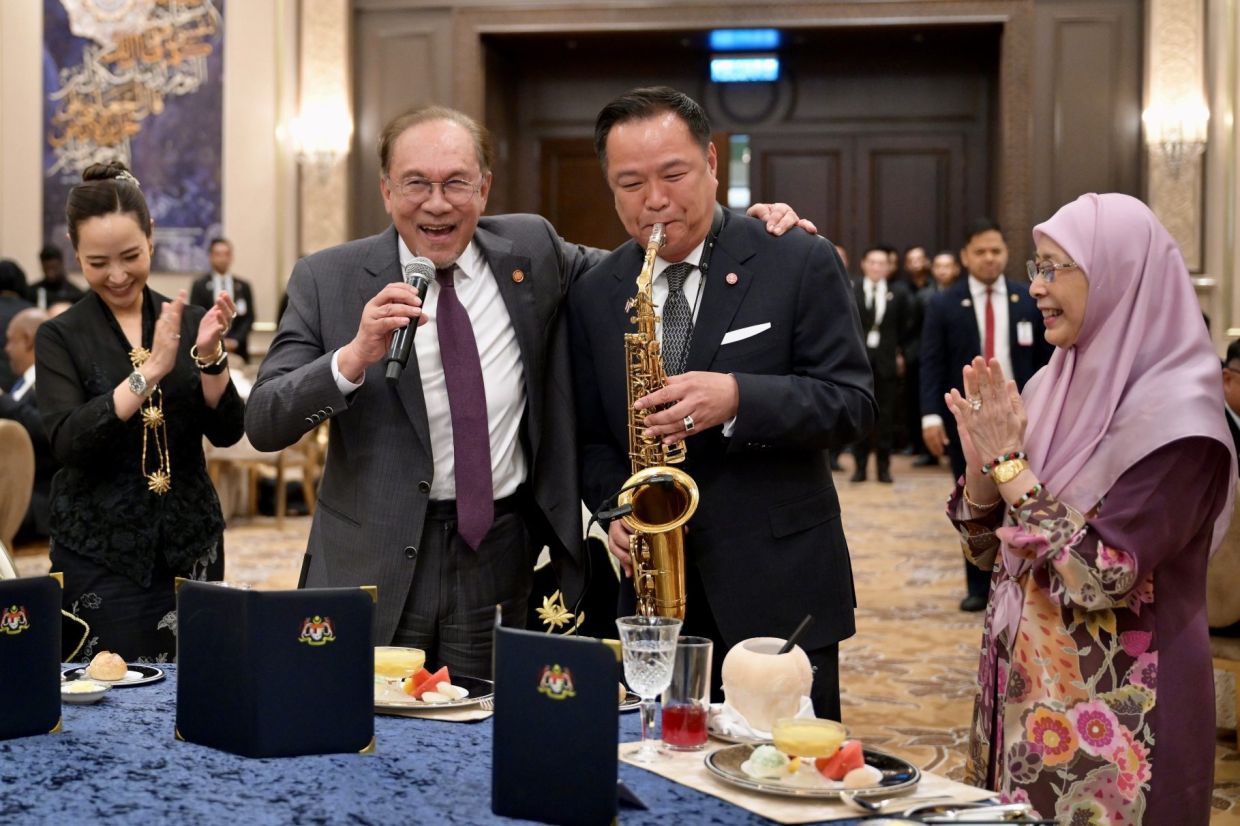
The approaching Johor state elections have become a focal point for competing political narratives and strategic positioning. Opposition coalition Pakatan faces pressure from multiple sides, with Thai deputy prime minister Anutin extending congratulations to Prime Minister Anwar, signalling international interest in Malaysia's political trajectory. Within Bersatu, a key coalition partner, leaders argue that preventing Barisan Nasional from securing a two-thirds supermajority remains crucial for institutional checks and balances—a framing that emphasises governance quality over partisan advantage. Meanwhile, Johor Umno chief Onn Hafiz asserted that no PAS assemblymen would receive nominations if Barisan returns to power, suggesting internal coalition tensions around representation and inclusion.
Barisan National's Khairy Jamaluddin responded to opposition tactics by accusing Pakatan of employing fear-based messaging while insisting his coalition maintains independence from any single party. These rhetorical exchanges reflect substantive disagreements about governance models, with elections serving as vehicles for broader constitutional and institutional questions affecting Malaysian democracy. The NGO sector has mobilised behind voter participation, offering free bus services for Johor residents, while Keretapi Tanah Air doubled train capacity—practical measures enabling electoral access.
Governance beyond electoral politics revealed persistent challenges in administration and accountability. The Malaysian Anti-Corruption Commission announced plans to recommend charges in 69 cases involving PERKESO grant fraud, signalling enforcement action against social security misappropriation. Conversely, the MACC found no evidence linking a former minister to a RM53 million graft allegation stemming from an elephant transfer matter, demonstrating that investigative processes sometimes exonerate rather than implicate. Police successfully disrupted an illegal World Cup betting operation in Kuala Lumpur, arresting eleven individuals and disrupting a RM53 million racket, underscoring organised crime dimensions requiring inter-agency coordination.
International relations showed progress on fisheries disputes, with Prime Minister Anwar announcing resolution of outstanding Malaysia-Thailand maritime issues—an outcome reflecting sustained diplomatic engagement essential for regional stability. Simultaneously, government initiatives addressed social welfare, with over 96,000 Form Six students set to receive Early School Aid, demonstrating continued investment in education infrastructure despite budgetary constraints from 1MDB liabilities.
The government reiterated assurances regarding fuel supply stability through December, while the Ministry of Finance confirmed that a ten-year tax exemption commitment remained honoured following Dr Wee Ka Siong's intervention—instances where officials publicly demonstrated responsiveness to stakeholder concerns. Perlis durian growers maintained resilience amid market gluts, exemplifying agricultural sector adaptability to volatile commodity pricing, while the Indian community registered regaining access to the Nambikei temple under the current administration, suggesting incremental progress on cultural and religious accommodation issues. These disparate developments collectively illustrate Malaysia navigating multilayered governance complexities extending from macroeconomic recovery through 1MDB consequences to granular community-level service delivery and representation.

