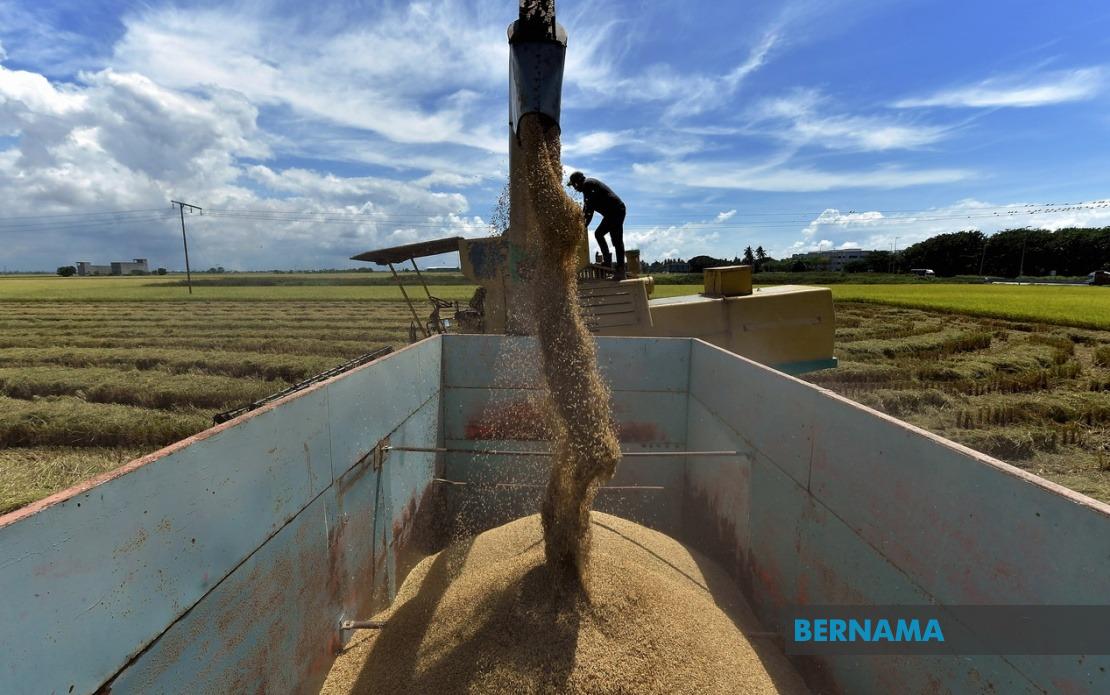
Parliament took a significant step towards tightening government oversight of Malaysia's padi and rice markets when the Control of Padi and Rice Act (Amendment) Bill 2026 underwent its first reading in the Dewan Rakyat on July 7. Agriculture and Food Security Minister Datuk Seri Mohamad Sabu steered the legislation through its initial parliamentary hurdle, with plans to accelerate it through second and third readings during the current sitting—a procedural tempo suggesting the administration views the measures as urgent. The amendment package represents a comprehensive overhaul of Malaysia's regulatory framework governing one of the country's most sensitive commodities, touching directly on consumer food costs and rural livelihoods.
The legislative initiative centres on five distinct amendments to the existing Act 522, each designed to reinforce ministerial and bureaucratic authority over rice supply chains while imposing substantially stiffer consequences for non-compliance. The most immediately visible changes involve financial penalties that dwarf their predecessors, reflecting an apparent recognition that older sanction levels have lost deterrent value amid economic inflation and market complexity. By modernising enforcement mechanisms, policymakers appear intent on discouraging black-market operations, hoarding, and price manipulation that can destabilise supplies during periods of regional agricultural stress—a persistent vulnerability for Malaysia, which imports significant rice volumes.
Under the proposed amendments, individuals and corporate officers who breach padi and rice regulations would face maximum fines climbing from RM15,000 to RM250,000 for first offences, with repeat violations attracting fines up to RM500,000. For corporate entities themselves, the financial exposure escalates even more dramatically: baseline fines would rise from RM25,000 to RM500,000, while repeat infractions could trigger penalties reaching RM1 million. This tenfold to twentyfold amplification signals that Parliament views existing disincentives as insufficient to maintain market discipline. For Malaysian consumers already navigating food inflation, these enforcement upgrades theoretically provide greater assurance that traders cannot easily circumvent rules intended to stabilise retail rice availability and pricing.
The amendment's second major pillar grants the director general—acting under ministerial approval—explicit authority to impose both maximum and minimum prices for padi and rice. This represents a material expansion of state intervention capacity, moving beyond reactive price monitoring towards proactive price-setting mandates. Such powers become relevant during supply disruptions, seasonal volatility, or external shocks when free-market mechanisms might produce affordability crises. Malaysia's experience during pandemic-driven logistics disruptions demonstrated how rapidly rice availability fears can trigger panic buying and retail shortages; empowering officials to enforce price ceilings addresses that vulnerability directly.
Related to this pricing authority, the Minister gains expanded regulatory reach under amended Section 29 to establish rice-grading standards and corresponding price controls for each grade category. The government can now prescribe licensing requirements for padi purchasers and regulate the movement of padi and rice stocks through the supply chain. These interconnected powers create a comprehensive system where authorities can theoretically prevent artificial scarcity and maintain orderly distribution even during market stress. From a practical standpoint, such capabilities prove particularly valuable in a nation where rice remains politically sensitive—price spikes have historically triggered public criticism and electoral consequences, incentivising governments to maintain stable food costs.
The amendment legislation also permits the minister to define specific regulatory violations and prescribe associated penalties through secondary legislation, rather than requiring Parliament to codify each infraction separately. This delegated lawmaking approach accelerates regulatory responsiveness, allowing the government to address emerging evasion tactics or market distortions without legislative bottlenecks. However, it simultaneously transfers substantial discretionary authority to the executive branch, potentially raising concerns among observers who favour legislative specificity and parliamentary oversight. Violations defined through regulation can attract fines to RM15,000 or imprisonment up to six months or both, providing law enforcement with meaningful coercive tools.
For Malaysia's agricultural sector and food-security architecture, these amendments carry several implications. Padi farmers, who form the legislative amendments' ultimate beneficiary class through price-floor protections, may experience greater certainty in guaranteed purchase arrangements. Conversely, traders and millers face heightened compliance costs and legal exposure, potentially narrowing profit margins and competitive flexibility. Retailers must navigate tighter pricing parameters while managing input costs, ultimately affecting consumer purchasing power depending on how officials calibrate maximum prices. The amendments reflect policymakers' conviction that market-led rice trading, without government oversight, risks periodic instability detrimental to food security and social harmony.
The legislative timeline itself warrants attention. By completing all parliamentary readings during a single sitting, the government demonstrates resolve to implement these changes rapidly—suggesting either heightened urgency around domestic rice management or a desire to avoid extended public or stakeholder consultation. Regional context matters here: Southeast Asia's rice markets remain globally significant, and supply disruptions in Thailand, Vietnam, or India regularly transmit price pressures across ASEAN borders. Malaysia's move to fortify domestic price-setting tools partially reflects defensive positioning against external market volatility beyond national control.
Transitional provisions within Clause 5 ensure that investigations or proceedings initiated before the amendments take effect continue under pre-amendment rules, preventing retroactive legal entanglement. This measured approach balances regulatory renewal with legal continuity, reassuring existing operators that their past compliance efforts remain valid. Nevertheless, from the enforcement date forward, the dramatically elevated penalty regime takes immediate effect, signalling a hard reset in the government's approach to rice-market discipline.
Looking ahead, stakeholder groups across Malaysia's rice ecosystem—farmers' associations, miller cooperatives, trader federations, and consumer advocates—will scrutinise how officials exercise these expanded powers. The amendments themselves, now entering the legislative pipeline, represent Parliament's declaration that existing mechanisms proved insufficient. Whether the heightened penalties and price-setting capabilities successfully stabilise markets or instead trigger unintended supply-chain disruptions will become evident once implementation unfolds and market participants adapt their behaviour to the new regulatory landscape.

