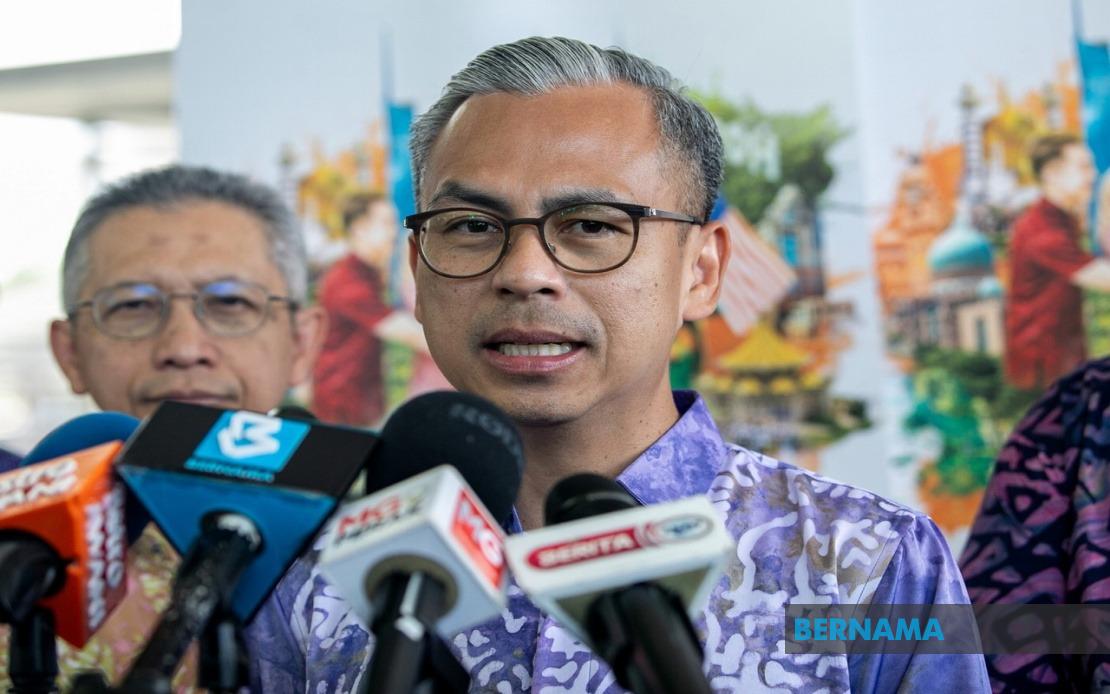
The government has settled on a unifying message for next year's dual patriotic observances, anchoring the 2026 National Day and Malaysia Day festivities around the concept of shared prosperity woven into the broader MADANI framework. Communications Minister Datuk Seri Fahmi Fadzil unveiled the chosen theme—'Malaysia MADANI: Kesejahteraan Dinikmati'—at a formal launch ceremony held at the Sultan Azlan Shah Ministry of Health Training Institute in Tanjung Rambutan, Perak, with Prime Minister Datuk Seri Anwar Ibrahim presiding over the proceedings.
At its core, the thematic direction represents far more than a rhetorical flourish or ceremonial messaging strategy. Fahmi elaborated that the chosen slogan encapsulates the administration's fundamental commitment to channelling the nation's economic advancement, developmental gains and prosperity broadly across the entire Malaysian population in a manner that prioritises fairness and inclusion. The framing deliberately sidesteps narrow definitions of progress centred solely on aggregate economic metrics, instead embedding notions of improved living standards, democratised access to opportunity and systematic fairness in how development benefits distribute themselves throughout society.
The minister underscored a critical philosophical commitment embedded within this messaging: the principle that Malaysia's forward march leaves no segment of the population stranded or marginalised. This inclusivity extends across demographic lines—transcending ethnic, religious, geographical and socioeconomic categorisations—to establish a baseline expectation that prosperity becomes a genuinely shared national inheritance rather than concentrated within particular communities or regions. Such positioning carries particular resonance given Malaysia's historical challenges with regional inequality and the persistent need to ensure that development reaches peripheral areas and traditionally disadvantaged populations.
Fahmi positioned Malaysia's multicultural composition as both historical legacy and contemporary asset deserving active stewardship. The nation's plural character, he suggested, historically furnished the bedrock upon which present-day communal cohesion, reciprocal respect and social tranquillity have been constructed. Rather than treating diversity as a potential liability requiring management, the ministerial framing recast it as a foundational strength warranting conscious preservation and deliberate reinforcement through sustained collective effort.
The launch ceremony itself functioned as a coordinated display of governmental alignment across multiple institutional tiers. Beyond Prime Minister Anwar's official inauguration, the gathering included National Unity Minister Datuk Aaron Ago Dagang and Perak Menteri Besar Datuk Seri Saarani Mohamad, suggesting synchronisation of messaging across federal and state governance structures. This multi-level participation underscores the thematic emphasis on national unity and collaborative stewardship of Malaysia's developmental trajectory.
The communications ministry has designed an expansive calendar of programmatic activities intended to operationalise the patriotic and unifying dimensions embedded within the chosen theme. Centrepiece initiatives encompass the 'One House, One Jalur Gemilang' residential campaign, inviting individual households to display the national flag as visible affirmation of patriotic sentiment, alongside the Kembara Merdeka Jalur Gemilang convoy undertaking, which will travel through communities fostering grassroots engagement with independence commemorations. Such programming aims to translate abstract commitment to unity into tangible, decentralised participation that extends beyond ceremonial occasions into everyday civic consciousness.
From a regional perspective, Malaysia's emphasis on inclusive prosperity carries broader implications for Southeast Asian governance models. As the bloc confronts persistent disparities in development outcomes and growing pressures from economic integration, how individual nations frame their development narratives and distribution mechanisms increasingly shapes not only domestic stability but regional dynamics. Malaysia's positioning of shared prosperity as central to national identity messaging potentially influences how peers conceptualise their own developmental obligations and social contracts.
The reliance on the MADANI framework as the overarching conceptual architecture for national messaging demonstrates continuity with policy frameworks established earlier in the current administration's tenure. By integrating MADANI directly into the independence celebrations' thematic architecture, the government signals that inclusive development represents not peripheral programming but rather core to national identity and legitimacy. This embedding suggests that coming electoral cycles and policy debates will likely continue orbiting around how effectively the administration delivers on the inclusivity proposition embedded within MADANI's foundational logic.
Information dissemination channels for citizens seeking engagement opportunities or celebration details have been structured around digital accessibility through the Merdeka 360 portal and the Information Department's various social media accounts. This digital-first approach recognises contemporary patterns in civic information consumption while potentially expanding reach beyond traditional media channels, though it simultaneously presumes adequate digital infrastructure penetration and technological literacy across all demographic segments.
The 2026 celebration framework arrives at a moment when Malaysian governance confronts persistent questions regarding whether announced commitments to equitable development translate into substantive policy implementation and measurable outcomes. The coming months will provide incremental evidence regarding whether the chosen thematic direction stimulates genuine recalibration of resource allocation mechanisms and developmental priorities or remains confined to ceremonial messaging divorced from fiscal reality. For Malaysian observers and regional peers alike, the gap between thematic proclamation and budgetary commitment will warrant sustained monitoring as the nation approaches its independence commemorations.

