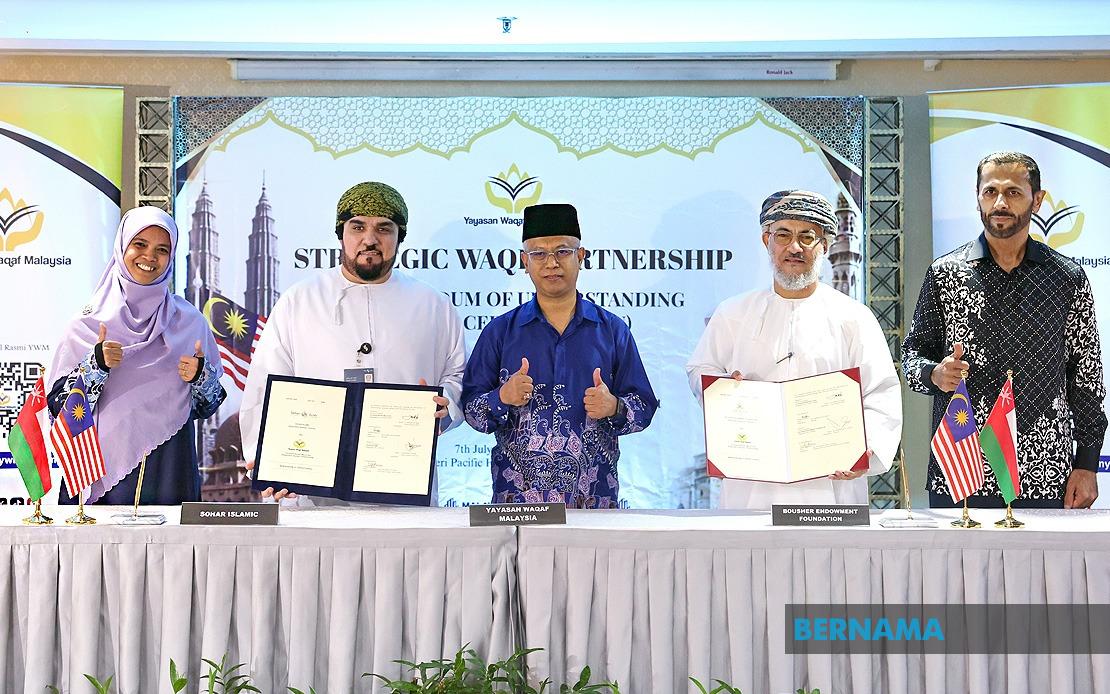
Malaysia has deepened its footprint in Islamic finance by establishing a formal partnership with leading institutions in the Sultanate of Oman, signalling the country's growing influence as a thought leader in waqf asset development across the Muslim world. The collaboration, formalised through a memorandum of understanding between the Malaysian Waqf Foundation (YWM) and both Sohar Islamic and the Boushar Endowment Foundation, focuses on knowledge sharing, technology transfer, and best practices in waqf governance—a recognition that comes as Kuala Lumpur seeks to position itself as a premier hub for Islamic social finance in Southeast Asia and beyond.
The partnership announcement represents a notable shift in Malaysia's international standing. Rather than importing expertise from established Islamic finance centres, the country is now exporting its own methodologies and technical knowledge to counterparts in the Gulf region. This reversal reflects substantial institutional progress over the past decade in structuring waqf mechanisms that balance social impact with financial sustainability. Deputy Minister in the Prime Minister's Department (Religious Affairs) Marhamah Rosli underscored this symbolic importance, emphasizing that the collaboration honours Malaysia's reputation and demonstrates the maturity of its waqf ecosystem to international observers.
The formal arrangement encompasses several complementary dimensions. YWM chief executive officer Dr Ridzwan Bakar, along with representatives from the Omani partners Fahad Akbar Al Zadjali of Sohar Islamic and Malik Hilal Al Yahmadi of Boushar Endowment Foundation, signed the agreement in Kuala Lumpur on July 7. The signing was witnessed by Marhamah and Mohamed Najeeb Al Bulushi, Deputy Head of Mission of the Sultanate of Oman to Malaysia, lending diplomatic weight to what might otherwise be a purely institutional arrangement. The MoU's scope extends beyond ceremonial cooperation, with concrete provisions for expertise exchange and governance frameworks tailored to emerging markets.
Particularly significant is the appointment of Dr Ridzwan as Waqf Adviser to the Sultanate of Oman—a recognition that validates Malaysia's technical capabilities and positions the country's professionals as credible consultants for major Islamic finance reformations. Ridzwan acknowledged that this advisory role emerged from deliberate outreach efforts by YWM, with exploratory visits undertaken in 2023 and 2024 to assess partnership possibilities. The receptiveness of Omani authorities suggests that Malaysia's approach to waqf development, which emphasises both innovation and Islamic authenticity, resonates with policymakers seeking to modernise their own social finance institutions while maintaining religious integrity.
The Oman partnership is part of a broader regional strategy by YWM to establish waqf networks across the Gulf and Middle East. Malaysia is simultaneously cultivating relationships with Kuwait, Qatar, and the United Arab Emirates—jurisdictions with substantial capital reserves and sophisticated financial infrastructure. This multipronged approach allows YWM to leverage relationships across different markets and diversify its international presence. For Malaysia, these connections translate into diplomatic soft power, as Islamic finance expertise becomes a vehicle for strengthening ties with wealthy regional powers and positioning the country as essential infrastructure for cross-border Islamic investment flows.
A critical dimension of this collaboration concerns the potential to attract strategic investment from Arab countries into Malaysian waqf assets. Dr Ridzwan has identified productive waqf development as a magnet for capital deployment, particularly from investors seeking Shariah-compliant instruments with genuine social and economic impact. YWM currently operates three investment products through Kenanga Investors, which function as platforms designed to channel international funds into Malaysian waqf ventures. As global Islamic finance assets continue expanding—with estimates suggesting the sector now exceeds two trillion US dollars—Malaysia's positioning as a trusted intermediary between Gulf capital and Southeast Asian opportunities becomes increasingly valuable.
The economic logic underlying waqf development extends beyond charitable distribution. Both Malaysian and Omani policymakers recognise that endowment assets require careful cultivation and revenue generation before maximum social benefit can be realised. This philosophy—sometimes called productive waqf methodology—treats waqf as a long-term asset development strategy rather than immediate poverty alleviation. Dr Ridzwan articulated this philosophy clearly, explaining that strengthening the waqf economy through asset appreciation creates a foundation for supporting not merely the traditional asnaf (designated beneficiaries) but also middle and lower-income populations in the B40 and M40 brackets.
For Malaysian readers, this partnership carries tangible implications. International recognition of Malaysia's waqf expertise enhances the country's brand in global Islamic finance, potentially attracting more international institutional investors to locally-based Islamic funds and enhancing wealth creation within the domestic financial ecosystem. The influx of external capital into Malaysian waqf ventures could generate employment, strengthen property markets, and create sustainable revenue streams that fund social programs. Moreover, the positioning of Malaysian professionals as regional advisers elevates the country's intellectual standing and creates career opportunities for specialists in Islamic finance, governance, and real estate development.
The collaboration also reflects Malaysia's strategic interest in deepening diplomatic and economic relationships with Gulf states through non-traditional channels. While conventional trade and investment flows remain important, Islamic finance partnerships create institutional linkages that persist across political transitions and economic cycles. For Malaysia's religious establishment and government agencies, the Oman agreement validates years of work developing waqf frameworks, regulatory environments, and educational infrastructure. The Deputy Minister's remarks about Malaysia finally exporting expertise rather than importing it suggest a conscious acknowledgment of institutional maturation and a desire to cement Malaysia's place in the Islamic finance hierarchy.
Looking forward, the success of the Oman partnership will likely shape Malaysia's approach to similar collaborations elsewhere. If the arrangement yields concrete outcomes—substantial capital inflows, successful investment products, or visible social impact—Malaysia can leverage these results to attract additional partners. Conversely, any challenges in implementation or governance would provide learning opportunities for refining Malaysia's waqf methodology. The agreement also sets expectations for future bilateral relationships, establishing templates for how Malaysia engages with institutional partners in other Muslim-majority countries seeking to strengthen their own waqf ecosystems.
From a broader Southeast Asian perspective, Malaysia's emerging leadership in waqf development creates both opportunities and competitive pressures for neighbouring countries. Indonesia, with its larger Muslim population and substantial waqf assets, remains the region's largest Islamic social finance market; however, Malaysia's institutional sophistication and regulatory clarity provide advantages in attracting cross-border investment. Brunei and other smaller Southeast Asian states may look to Malaysia as a model for developing their own waqf frameworks. The Oman partnership thus signals not just bilateral cooperation but Malaysia's ambition to establish regional hegemony in Islamic finance innovation and thought leadership.
The timing of this announcement also reflects Malaysia's broader pivot toward Islamic economy strengthening. As the country navigates economic diversification and seeks to enhance its competitive positioning post-pandemic, Islamic finance emerges as a sector where Malaysia possesses genuine advantages. The country's legal infrastructure, financial expertise, and religious credibility create a formidable combination that few other Muslim-majority nations can replicate. The Oman collaboration, while modest in immediate scale, represents one component of a larger strategy to consolidate and export Malaysia's accumulated expertise in structuring Islamic economic systems that balance profit with purpose.

