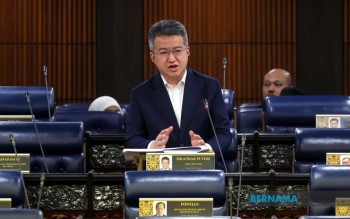
Lawmakers in Kuala Lumpur received the National Trust Fund Bill 2026 on its first reading in the Dewan Rakyat, marking a significant step toward institutionalising Malaysia's long-term fiscal strategy. Deputy Finance Minister Liew Chin Tong presented the legislation, which creates both the National Trust Fund (KWAN) and a corporate entity—the National Trust Fund (Incorporated)—to govern operations and investment decisions. The initiative reflects growing recognition among policymakers that deliberate mechanisms for wealth accumulation across decades are essential to cushion the economy against volatility and ensure equitable resource sharing between current and future Malaysians.
The fund's conceptual foundation rests on a simple premise: governments must deliberately set aside resources during periods of resource abundance to sustain public welfare when commodity cycles reverse or revenue sources deplete. Malaysia, historically dependent on petroleum exports and natural resource extraction, faces a strategic imperative to build buffers against the inevitable decline of such finite assets. The proposed mechanism aims to redirect portions of windfalls into a durable financial instrument rather than allowing them to dissipate through short-term spending or absorb into general budgetary cycles. This aligns with international precedent—Norway's Government Pension Fund Global and similar sovereign wealth vehicles have demonstrated how disciplined accumulation can generate sustained returns over generations.
Contribution mechanisms built into the bill establish a multi-source funding architecture intended to ensure consistent capital inflows. The Federal Government must allocate a minimum 0.1 per cent of its projected annual revenue annually, a baseline commitment that guarantees ongoing infusions regardless of petroleum performance. Beyond this floor, the fund receives no less than two per cent of dividends returned by Petronas, Malaysia's national oil company, capturing a share of resource wealth during profitable years. Equally significant is the requirement to channel no fewer than two per cent of export duties collected on depleting resources—coal, tin, timber, and other finite commodities—into the fund after deducting state-level duty allocations. This three-pillar approach diversifies funding sources and reduces dependency on any single revenue stream.
The legislation also contemplates voluntary contributions from state governments that collect royalties from petroleum extraction or similar resource exploitation within their jurisdictions. This provision acknowledges Malaysia's federal structure and creates incentives for resource-rich states to participate in the collective wealth-building exercise. By permitting discretionary state contributions, the bill encourages cooperative federalism while respecting the constitutional division of powers over natural resources. For petroleum-dependent states such as Sabah and Sarawak, participation could unlock substantial long-term benefits as declining output makes current royalty streams less reliable. The framework thus positions the fund as a vehicle for inter-state fiscal coordination rather than a purely federal instrument.
Operational governance vests responsibility in the National Trust Fund (Incorporated) board, which must develop and maintain a strategic asset allocation framework specifying long-term investment approaches. This requirement guards against reactive, short-termist management and binds the fund to disciplined protocols governing where capital is deployed. Whether investments flow into equities, bonds, real estate, or diversified international portfolios will remain the board's prerogative, but the mandate for transparent strategy creation ensures decisions rest on rigorous analysis rather than political whim. Accountability mechanisms require the board to furnish the Finance Minister with comprehensive returns, reports, and accounting statements detailing asset performance and administrative activities, creating layers of oversight that protect public interest in fund stewardship.
The bill expressly permits fund deployment for board remuneration, operational expenses, and investment costs—practical provisions that acknowledge the truism that wealth management entails professional expertise and associated fees. By explicitly authorising these expenditures within the fund's structure rather than forcing reliance on separate appropriations, the legislation ensures that management capacity can expand or contract based on portfolio growth. This flexibility is particularly relevant given that successful wealth accumulation will generate increasingly complex asset bases requiring sophisticated oversight. The provision prevents artificial constraints that might compromise fund performance or force operational costs to compete with other budgetary priorities.
The anticipated operational commencement depends on a gazette notification issued by the Finance Minister, a procedural trigger that provides administrative flexibility for implementing infrastructure and governance arrangements before the fund begins accepting transfers. Parliament has already scheduled a second reading during the current parliamentary sitting, indicating governmental momentum toward rapid legislative passage. This accelerated timeline reflects acknowledgement that delayed implementation postpones the compounding benefits that long-term capital accumulation generates. Earlier contribution and investment commencement translates directly into superior returns across multi-decade horizons—a mathematical reality that justifies legislative urgency.
For Malaysia's regional position, the fund initiative signals commitment to macroeconomic prudence and intergenerational responsibility at a moment when many Southeast Asian economies face fiscal pressures and demographic transitions. Thailand and Indonesia have grappled with similar challenges of resource depletion and revenue volatility; a successfully implemented Malaysian trust fund could serve as a policy model for peer economies. Furthermore, the fund's anticipated scale—compounding contributions from government revenue, Petronas dividends, and commodity export duties—positions it as a potentially substantial domestic investor. This could strengthen Malaysian capital markets, reduce dependence on foreign institutional investors for large-scale projects, and generate employment in wealth management sectors.
The legislative framework establishes transparent financial reporting requirements that obligate the government to disclose fund contributions in annual parliamentary statements. This transparency architecture reduces opportunities for political manipulation or diversion of designated resources, embedding accountability into the fund's DNA. By requiring explicit parliamentary documentation of contribution flows, the bill creates a constituency of legislative oversight that transcends any single government's tenure. Future administrations cannot casually redirect committed resources without confronting public and parliamentary scrutiny, thereby hardening the fund's insulation against political pressures that historically have undermined Malaysian resource management.
International experience suggests that successful sovereign wealth funds require long time horizons, professional management insulated from political cycles, and genuine commitment to resisting pressure for premature withdrawals. Norway's fund, established in 1990, demonstrates how disciplined accumulation over three decades can generate assets exceeding national GDP. Malaysia's proposed fund embodies similar principles through structural safeguards and mandatory contribution mechanisms. However, ultimate success will depend on political will to maintain contribution discipline during economic downturns when governments face pressure to raid reserve funds and on resistance to mission creep that redirects capital toward short-term spending rather than genuine wealth preservation.
The National Trust Fund Bill 2026 represents a watershed moment for Malaysian fiscal governance, transforming resource revenue management from ad-hoc practices into institutionalised systems designed for multi-generational benefit. Success will require sustained cross-party political consensus, competent professional management, and public understanding that short-term sacrifices in current consumption generate exponentially larger benefits for children and grandchildren. The bill's passage through Parliament will constitute important symbolic and practical commitment to this principle, though the measure's true test will arrive decades hence when either abundantly endowed future generations celebrate the fund's wisdom or regret its insufficiency.

