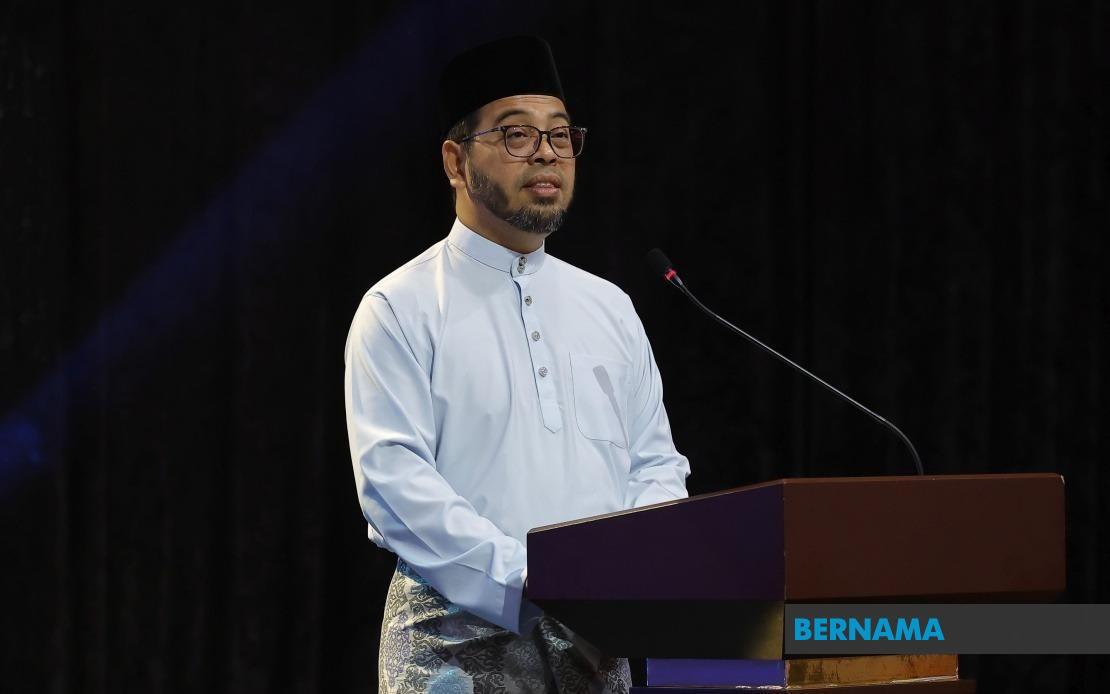
The MADANI administration has reaffirmed its commitment to developing tahfiz education as an integral part of Malaysia's broader educational ecosystem, according to Dr Zulkifli Hasan, Minister in the Prime Minister's Department (Religious Affairs). Speaking at a significant institutional milestone in Kuala Lumpur, Zulkifli emphasised that the government views tahfiz schools not as isolated religious institutions, but as vital components of a comprehensive approach to human capital development that complements conventional academic pathways.
Zulkifli's remarks underscore a philosophical shift in how tahfiz education is positioned within Malaysia's development narrative. Rather than focusing solely on Quranic memorisation as an end goal, the minister outlined a vision where tahfiz institutions produce graduates equipped with intellectual rigour, ethical foundations, and practical skills applicable across diverse professional sectors. This holistic approach recognises that memorisation of the Quran represents just one dimension of Islamic learning, with equal emphasis on cultivating individuals capable of addressing contemporary societal challenges through informed, values-based decision-making.
The government's positioning comes during significant celebrations at Darul Quran JAKIM, which marked its Diamond Jubilee as the institution reached its 60th anniversary since establishment in 1966. The institution has evolved substantially over six decades, expanding from its original mandate to encompass structured academic programmes and professional development pathways. Throughout this period, Darul Quran has maintained its standing as Malaysia's premier tahfiz establishment, recognised regionally for the calibre of its graduates and the rigour of its educational standards.
Statistics presented at the ceremony highlight the institution's measurable impact on Malaysia's religious and professional workforce. Darul Quran has produced 12,633 qualified huffaz who have dispersed across multiple sectors, including education, Islamic judiciary, religious outreach, academic research, public administration, and specialised professional fields. This distribution demonstrates that tahfiz education has successfully transitioned from producing religious scholars in isolation to generating professionals who bring Islamic knowledge and values into mainstream institutional contexts across government and civil society.
The 34th annual convocation ceremony saw 700 graduates receive formal qualifications across multiple pathways. The breakdown reveals the institution's diversified programme structure: 37 graduates earned Bachelor's degrees through a collaborative arrangement with Universiti Sains Islam Malaysia, while 454 completed Diploma qualifications in Quranic studies and recitation disciplines. Additionally, 204 students graduated from the tahfiz certification programme, with five receiving basic tahfiz certificates. This tiered credential system accommodates learners with varying academic backgrounds and career ambitions, from those pursuing advanced Islamic scholarship to working professionals seeking specialised knowledge.
The partnership between Darul Quran and USIM represents a broader strategic approach within Malaysian Islamic higher education, whereby specialised religious institutions collaborate with accredited universities to ensure tahfiz graduates can access mainstream professional recognition and career pathways. This integration model has proven effective in retaining talented individuals within the tahfiz system while simultaneously validating their qualifications within secular professional frameworks that increasingly value religious literacy and ethical leadership.
Zulkifli's emphasis on transformation and future excellence suggests the government recognises tahfiz education faces evolving demands in a rapidly changing Malaysia. As the nation pursues Vision 2050 and competes for global economic relevance, the capacity of institutions to produce culturally grounded yet internationally competitive professionals becomes increasingly valuable. Tahfiz schools positioned to develop critical thinking alongside textual scholarship represent a potential competitive advantage in producing Malaysian professionals with distinctive ethical foundations.
The minister's call to "let the legacy of 60 years inspire us to build the next 60 years with greater excellence" signals governmental confidence in tahfiz institutions' ability to remain relevant and impactful. However, this optimism carries implicit expectations: that these institutions will continue innovating pedagogically, incorporating contemporary educational methodologies while preserving traditional Islamic learning disciplines. The challenge involves balancing fidelity to classical Islamic scholarship with responsiveness to Malaysia's evolving labour market requirements and technological transformation.
For regional Southeast Asian readers, Malaysia's approach to tahfiz education integration offers relevant lessons. Across the region, Islamic educational institutions grapple with similar questions about relevance, accreditation, and graduate employment outcomes. Malaysia's explicit governmental support and structural integration of tahfiz schools into the broader educational framework provides a model worth examining, particularly for countries seeking to honour traditional Islamic scholarship while ensuring economic competitiveness and professional development for graduates.
The government's articulation of tahfiz education's purpose extends beyond religious instruction to encompass nation-building. By positioning huffaz not merely as Quran scholars but as potential leaders, community anchors, and contributors to national development, the MADANI administration reflects broader recognition that Islamic education represents a legitimate pathway for developing Malaysia's human capital. This framing potentially reshapes perceptions of tahfiz education among non-Muslim Malaysians and international observers, presenting Islamic scholarship as compatible with, rather than separate from, development objectives.
Looking forward, the systematic production of qualified tahfiz graduates distributed across professional sectors suggests Malaysia is building institutional capacity that could position the country as a regional centre for Islamic learning that combines traditional scholarship with contemporary professional training. As demand for Islamic finance professionals, Islamic law specialists, and Quran-based research grows across Asia, Malaysia's tahfiz institutions may increasingly serve regional constituencies, enhancing the country's soft power influence.

