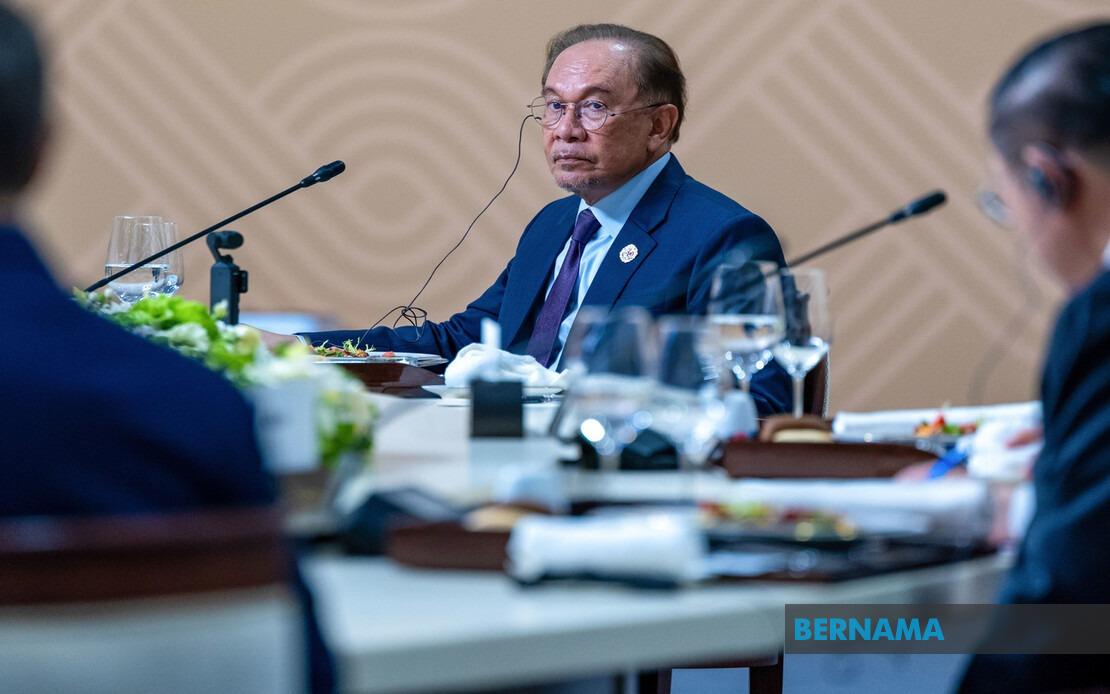
Malaysia's top diplomat has embarked on a strategically significant mission across Central Asia and the Caucasus, visiting three key economic centres in just four days. The lightning tour by Prime Minister Datuk Seri Anwar Ibrahim to Tashkent, Kazan, and Ashgabat demonstrates how adeptly Malaysia is adapting its economic engagement to navigate profound shifts in the global order. These are not routine diplomatic calls but rather carefully orchestrated engagements designed to advance Malaysian interests across multiple sectors in regions that were once considered peripheral to Southeast Asia's economic calculations.
The timing could hardly be more consequential. The international economic landscape is experiencing its most significant structural transformation since the end of the Cold War. Major powers are increasingly deploying trade restrictions, sanctions, export controls, and strategic industrial policies as instruments of statecraft. For nations like Malaysia that depend heavily on open markets and global supply chain integration, these developments pose both existential challenges and unexpected opportunities. The old assumptions about stable, rule-based global commerce no longer hold.
Malaysia's vulnerability in this environment stems from its particular economic model. A mid-sized trading nation whose prosperity rests fundamentally on connectivity and openness cannot afford to have its options constrained by geopolitical competition between larger powers. Maintaining economic opportunity, strategic autonomy, and institutional resilience now requires a fundamentally different approach than the relatively straightforward engagement strategy of the past two decades. Malaysia must operate across multiple spheres simultaneously, building relationships that provide genuine flexibility rather than mere symbolic presence.
The Tashkent stopover initially appeared ceremonial—a courtesy meeting with President Shavkat Mirziyoyev—but quickly evolved into substantive discussions on economic cooperation. Previous engagement from 2024 had laid groundwork in several sectors, and the Prime Minister's visit aimed to convert those initial understandings into concrete deliverables. This illustrates how contemporary diplomatic engagement operates across extended timeframes, with each visit building incrementally toward larger objectives rather than pursuing isolated transactions.
Kazan presented a different but complementary engagement opportunity. Malaysia's participation in the ASEAN-Russia Commemorative Summit served multiple purposes simultaneously. It reinforced ASEAN's commitment to engaging diverse external partners while maintaining strategic autonomy—a principle that has defined the bloc's credibility for decades. Discussions ranged across energy, agriculture, digital technologies, advanced manufacturing, and food security. The new ASEAN-Russia Strategic Programme on Trade and Investment Cooperation 2026-2035 acknowledges that future economic competitiveness depends increasingly on innovation, technological capability, and institutional adaptability rather than on traditional comparative advantages alone.
Particularly noteworthy were bilateral discussions between Malaysia and the Republic of Tatarstan. While Russian federal politics often dominate external perceptions, Tatarstan has emerged as one of the country's most dynamic industrial and technological hubs. Conversations spanning biotechnology, the halal ecosystem, maritime capabilities, Islamic finance, and manufacturing cooperation reveal how contemporary economic diplomacy extends beyond national governments. Regional authorities, industrial clusters, and innovation centres have become critical actors in international economic networks. Building direct relationships with these entities generates practical opportunities that frequently complement and even exceed traditional state-level engagement.
The Ashgabat leg focused on energy cooperation, arguably the most concrete manifestation of Malaysia's long-term strategic commitment to Turkmenistan. Petronas has maintained substantial operations there for three decades, evolving from a foreign investor into an integrated partner contributing to infrastructure development, technological advancement, and human capital growth. The company's cumulative investment of nearly USD12 billion reflects patient relationship-building rather than opportunistic market-seeking. Recent agreements effectively grant Petronas significant stakes in one of the world's largest gas fields while establishing new production-sharing arrangements and expanded exploration rights.
This deepened energy partnership carries implications extending well beyond commercial returns. Recent global disruptions have illustrated how swiftly energy supply interruptions in one region cascade through international markets, affecting transportation networks and production costs globally. For Malaysia, secure access to diverse energy sources through trusted long-term partnerships represents essential insurance against supply volatility. Turkmenistan's position as a major gas producer makes this relationship geopolitically significant, particularly as energy security becomes increasingly central to national resilience strategies across Asia.
The fundamental challenge confronting Malaysia and other middle powers involves positioning themselves effectively within a gradually multipolar global economy. Nations that successfully diversify their external relationships across multiple partners, sectors, and geographic regions enjoy greater flexibility and resilience than those whose options remain narrowly concentrated. Diversification does not diminish existing relationships but rather supplements them by widening available options. For a country whose wealth depends fundamentally on openness and connectivity, resilience increasingly correlates with the breadth and depth of mutually beneficial external networks.
Expanding engagement with Central Asian and Caucasian partners does not displace Malaysia's traditional relationships with established economic partners. Rather, it reflects recognition that economic opportunities exist across a much wider geographic canvas than conventional wisdom suggests. Trade relationships with developed economies remain important, but they should not constitute Malaysia's entire external economic strategy. The multipolar trajectory of global economics means that growth and opportunity will increasingly emerge from multiple centres simultaneously.
Beyond purely commercial considerations, the Prime Minister's discussions emphasised collaboration across education, research, the halal ecosystem, and financial services. These dimensions represent the evolving frontier of economic diplomacy, where technology intersects with food security, energy cooperation overlaps with industrial development, and digitalisation creates simultaneous opportunities and governance challenges. Building mutual trust and confidence through engagement across these multiple domains becomes essential for translating economic opportunities into sustained partnerships.
Soft power—the capacity to persuade and build relationships through personality, credibility, and perceived mutual benefit—has emerged as indispensable to contemporary economic diplomacy. The successful clinching of agreements increasingly depends less on formal negotiations than on establishing genuine personal rapport between leaders and the trust this generates. This explains why the Prime Minister's personal engagement across three countries accomplished objectives that technical delegations might require months to pursue. Economic diplomacy today operates as much through the intangible realm of relationship-building as through concrete commercial terms.
The broader strategic lesson from Malaysia's Central Asian initiative concerns how middle powers navigate contested global environments. Rather than choosing sides in great power competition, Malaysia is deliberately constructing a diversified portfolio of partnerships that preserve autonomy while maximizing opportunities. This approach requires constant diplomatic engagement, deep sectoral knowledge, and willingness to pursue relationships in regions that might initially appear peripheral to core interests. As the global economy continues fragmenting along geopolitical lines, nations that successfully maintain multiple engagement channels will prove most resilient and prosperous.