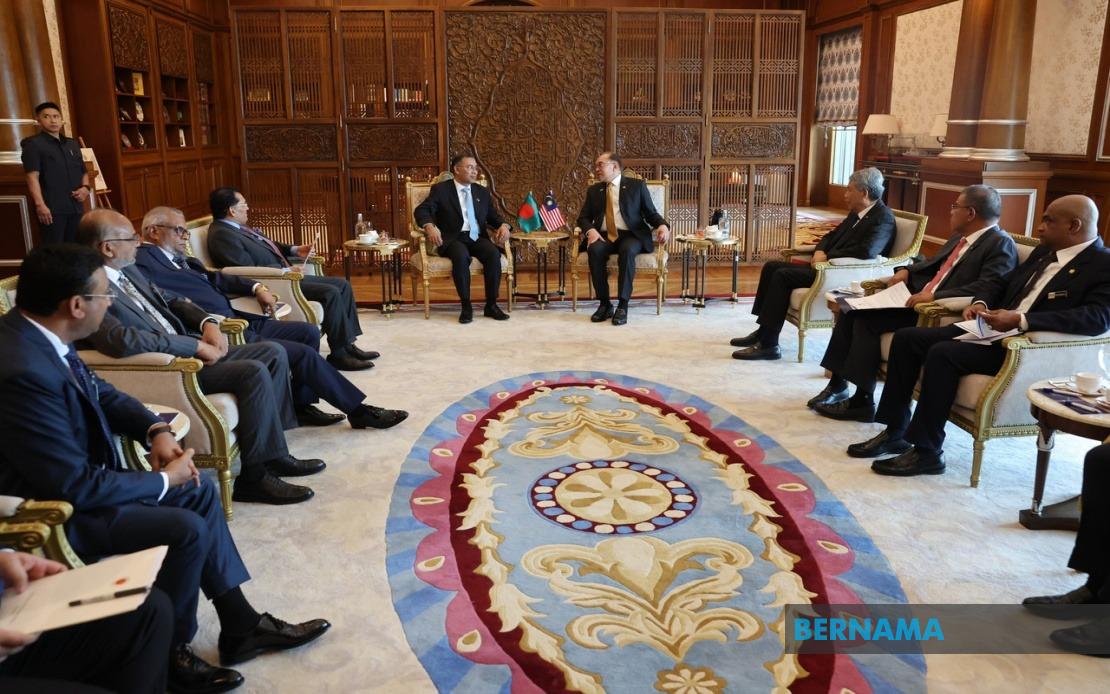
Prime Minister Datuk Seri Anwar Ibrahim and visiting Bangladesh Prime Minister Tarique Rahman have committed Malaysia and Bangladesh to a coordinated approach through ASEAN frameworks to tackle the intractable Rohingya refugee crisis, signalling a renewed diplomatic push on one of Southeast Asia's most pressing humanitarian challenges. Speaking at a joint press conference in Putrajaya, Anwar outlined plans for the two nations to leverage their respective foreign ministries and ASEAN institutional mechanisms to engage with Myanmar authorities in seeking a durable solution to the displacement of hundreds of thousands of Rohingyas across the region.
The Rohingya issue represents one of the region's most significant humanitarian emergencies, with Bangladesh hosting the world's largest refugee camp hosting over 900,000 Rohingyas, while Malaysia shelters approximately 180,000 registered and unregistered Rohingya refugees. Both nations have borne disproportionate burdens in managing the crisis stemming from military-led violence in Myanmar's Rakhine State in 2017, which triggered mass exodus and left many stateless. The emphasis on ASEAN's role reflects recognition that sustainable resolution requires regional consensus and pressure on Myanmar, the bloc's most controversial member regarding the Rohingya situation.
Anwar stressed that Malaysia views the humanitarian predicament of Rohingya populations in both countries as a shared concern requiring sustained collaborative effort. The framing of the initiative through ASEAN platforms is strategically significant, as it positions the issue within Southeast Asia's preferred institutional framework rather than relying solely on external international pressure, which Myanmar has historically resisted as interference in internal affairs. By anchoring the diplomatic initiative within ASEAN structures, Malaysia and Bangladesh hope to enhance Myanmar's receptiveness to dialogue regarding repatriation conditions and accountability measures.
Bangladesh's Prime Minister expressed profound anxiety regarding the deteriorating humanitarian circumstances affecting the Rohingya sheltering in his nation, whilst acknowledging Malaysia's substantive backing for ensuring the return of refugees occurs under conditions guaranteeing their security, human dignity, and long-term sustainability. Tarique's emphasis on "safe, dignified and sustainable repatriation" underscores Bangladesh's insistence that any return process must include verifiable guarantees from Myanmar regarding the fundamental rights and protection of returnees, a precondition that has complicated negotiations in previous years. The statement reflects Bangladesh's determination to avoid repeating patterns where repatriated refugees faced renewed persecution.
The bilateral engagement between Anwar and Tarique occurred during an official visit representing Tarique's inaugural bilateral state visit abroad since his assumption of office in February 2026. The timing carries symbolic weight, suggesting that Malaysia ranks as a priority destination for Bangladesh's early diplomatic engagements and underscoring the significance both nations attach to their partnership. This positioning reflects the reality that Malaysia-Bangladesh relations extend far beyond the Rohingya question, encompassing substantial economic interdependencies and shared regional interests.
Beyond the Rohingya discussions, the two leaders conducted comprehensive bilateral talks reviewing the trajectory of Malaysia-Bangladesh relations and identifying avenues for deepened engagement across multiple economic and technical domains. The conversation encompassed trade and investment expansion, workforce development initiatives, semiconductor manufacturing, energy cooperation, agricultural advancement, and educational partnerships. These domains reflect both nations' recognition that regional stability and shared prosperity depend upon diversified cooperation mechanisms that transcend singular issues.
The substantive economic relationship between the nations proved evident in 2025 performance metrics. Total bilateral trade reached RM12.18 billion, with Malaysian exports comprising RM10.08 billion, predominantly petroleum products reflecting Malaysia's hydrocarbon resources and refining capabilities. Bangladesh contributed RM2.10 billion in imports, primarily textiles, apparel and footwear products where that nation possesses significant manufacturing competitiveness. Bangladesh ranked as Malaysia's 28th largest global trading partner and second most significant commercial partner within South Asia after India, indicating the relationship's relative importance within Malaysia's regional trade architecture.
The two leaders formalised their commitment through several institutional instruments signed during the visit. A Memorandum of Understanding on Cultural Cooperation establishes frameworks for expanding people-to-people exchanges and cultural diplomacy. Additionally, Exchanges of Notes addressed Counter-Terrorism Research collaboration and Investment Promotion and Facilitation mechanisms. These instruments reflect both nations' concerns regarding security challenges in the region whilst simultaneously creating structures designed to attract capital flows and facilitate business environment improvements.
The emphasis on ASEAN mechanisms for addressing the Rohingya situation carries implications extending beyond bilateral Malaysia-Bangladesh dynamics. It suggests both nations believe ASEAN possesses untapped potential for convening dialogue and facilitating settlement of the displacement crisis, despite previous frustrations with the bloc's consensus-based decision-making processes and Myanmar's resistance to external pressure. The strategy implies that sustained diplomatic engagement through regional institutions, combined with bilateral coordination among frontline states like Malaysia and Bangladesh, may ultimately prove more effective than confrontational approaches that have characterised some earlier external interventions.
The initiative also reflects awareness that prolonged refugee situations in Malaysia and Bangladesh impose escalating humanitarian, economic, and security costs on host nations. Bangladesh's camps face deteriorating conditions, overcrowding, and increasing tensions, whilst Malaysia's refugee populations compete for limited resources and face periodic xenophobic reactions. Without substantive progress toward repatriation combined with conditions ensuring safety and dignity, both nations face decades of managing unsustainable displacement situations. The ASEAN-centred diplomatic approach signals commitment to preventing permanent refugee camps from entrenching across the region.
Looking forward, the effectiveness of this strengthened Malaysia-Bangladesh cooperation through ASEAN mechanisms depends significantly upon Myanmar's receptiveness to engagement regarding Rohingya repatriation. Myanmar's military leadership has historically prioritised sovereignty concerns over international pressure regarding refugee return conditions. The Malaysian and Bangladeshi approach banks on patient diplomacy through regional channels, distinguishing it from more confrontational external advocacy. Whether this strategy can overcome Myanmar's resistance to substantive compromises on refugee repatriation remains uncertain, but the deepened bilateral commitment between the two most significantly affected nations represents a necessary foundation for any eventual breakthrough on this entrenched humanitarian crisis.

%22%2F%3E%3C%2Fpattern%3E%3C%2Fdefs%3E%3Crect%20width%3D%22100%25%22%20height%3D%22100%25%22%20fill%3D%22url(%23ph585mog)%22%2F%3E%3Crect%20width%3D%22100%25%22%20height%3D%22100%25%22%20fill%3D%22url(%23ph585mop)%22%2F%3E%3Ctext%20x%3D%2250%25%22%20y%3D%2250%25%22%20text-anchor%3D%22middle%22%20dominant-baseline%3D%22central%22%20fill%3D%22rgba(255%2C255%2C255%2C0.95)%22%20font-family%3D%22Georgia%2C%20'Times%20New%20Roman'%2C%20serif%22%20font-weight%3D%22700%22%20font-size%3D%22272%22%20letter-spacing%3D%22-0.02em%22%3EAnwar%3C%2Ftext%3E%3C%2Fsvg%3E)
%22%2F%3E%3C%2Fpattern%3E%3C%2Fdefs%3E%3Crect%20width%3D%22100%25%22%20height%3D%22100%25%22%20fill%3D%22url(%23ph5gkk3g)%22%2F%3E%3Crect%20width%3D%22100%25%22%20height%3D%22100%25%22%20fill%3D%22url(%23ph5gkk3p)%22%2F%3E%3Ctext%20x%3D%2250%25%22%20y%3D%2250%25%22%20text-anchor%3D%22middle%22%20dominant-baseline%3D%22central%22%20fill%3D%22rgba(255%2C255%2C255%2C0.95)%22%20font-family%3D%22Georgia%2C%20'Times%20New%20Roman'%2C%20serif%22%20font-weight%3D%22700%22%20font-size%3D%22320%22%20letter-spacing%3D%22-0.02em%22%3EMACC%3C%2Ftext%3E%3C%2Fsvg%3E)