%22%2F%3E%3C%2Fpattern%3E%3C%2Fdefs%3E%3Crect%20width%3D%22100%25%22%20height%3D%22100%25%22%20fill%3D%22url(%23ph585mog)%22%2F%3E%3Crect%20width%3D%22100%25%22%20height%3D%22100%25%22%20fill%3D%22url(%23ph585mop)%22%2F%3E%3Ctext%20x%3D%2250%25%22%20y%3D%2250%25%22%20text-anchor%3D%22middle%22%20dominant-baseline%3D%22central%22%20fill%3D%22rgba(255%2C255%2C255%2C0.95)%22%20font-family%3D%22Georgia%2C%20'Times%20New%20Roman'%2C%20serif%22%20font-weight%3D%22700%22%20font-size%3D%22272%22%20letter-spacing%3D%22-0.02em%22%3EAnwar%3C%2Ftext%3E%3C%2Fsvg%3E)
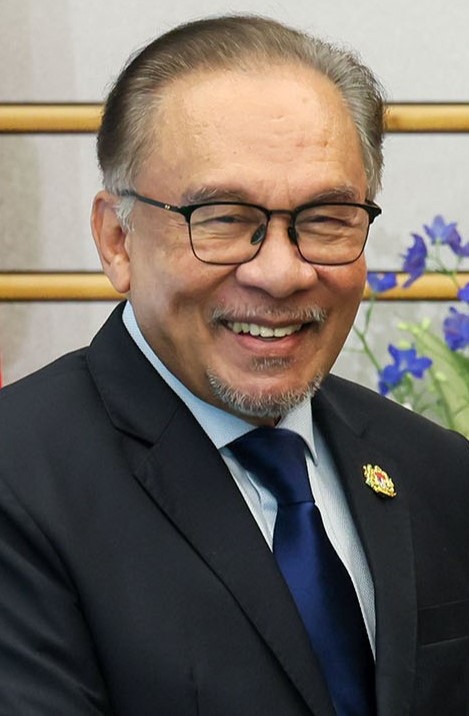
Prime Minister Datuk Seri Anwar Ibrahim welcomed Bangladesh Prime Minister Tarique Rahman with a formal luncheon at the Seri Perdana Complex in Putrajaya on June 22, underscoring Malaysia's commitment to strengthening ties with a key South Asian trading partner. The ceremonial gathering, attended by Malaysia's senior Cabinet ministers and their spouses, reflects the diplomatic significance both nations place on their relationship at a time of shifting geopolitical alliances in the region.
The hospitality extended to Tarique and his delegation carried distinctly Malaysian flavours, with the menu featuring durian and specially imported jackfruit from Bangladesh as dessert. Both leaders arrived together at 11.50 am, and were greeted warmly by students from five schools across Putrajaya and Selangor—Sekolah Kebangsaan Presint 8(2), SMK Dengkil, SMK Agama Sungai Merab, Sekolah Menengah Sains Selangor, and Sekolah Menengah Agama Persekutuan Kajang—who chanted welcomes in English. Performers from Istana Budaya presented traditional Malaysian dance, setting a ceremonial tone befitting a bilateral visit of strategic importance.
Tarique's presence in Malaysia marks a significant diplomatic milestone, representing his first official bilateral trip abroad since he assumed office in February 2026, a period covering roughly five months. The choice of Malaysia as his inaugural destination abroad signals the priority Bangladesh places on engaging with Southeast Asian nations, particularly those with strong economic and historical ties. Arriving at Anwar's personal invitation, Tarique was first received with full ceremonial honours at the Perdana Putra Complex before proceeding to the bilateral meeting and subsequent luncheon.
The Malaysian delegation present at the luncheon included several heavyweight figures from Anwar's Cabinet, demonstrating the administration's serious engagement with the visitor. Foreign Minister Datuk Seri Mohamad Hasan, Home Affairs Minister Datuk Seri Saifuddin Nasution Ismail, Investment, Trade and Industry Minister Datuk Seri Johari Abdul Ghani, Human Resources Minister Datuk Seri R. Ramanan, and Minister in the Prime Minister's Department (Religious Affairs) Dr Zulkifli Hasan all attended. Chief Secretary to the Government Tan Sri Shamsul Azri Abu Bakar was also present, ensuring continuity of government business. The participation of spouses—Dr Zubaida Rahman alongside Tarique and Datuk Seri Dr Wan Azizah Wan Ismail with Anwar—added a personal dimension to what remains fundamentally a diplomatic engagement.
The stated objective of Tarique's visit extends beyond ceremonial niceties. According to a statement from Wisma Putra, the visit aims to deepen bilateral cooperation in areas of mutual interest and strengthen the already close ties between Malaysia and Bangladesh. This language suggests concrete discussions regarding trade, investment, security cooperation, and possibly labour mobility—all areas where the two nations have established patterns of engagement. For Malaysia, Bangladesh represents an important market in South Asia; for Bangladesh, Malaysia offers technological expertise, capital investment, and regional diplomatic weight within ASEAN.
The economic relationship between the two countries provides substantial foundation for political engagement. In 2025, bilateral trade reached RM12.18 billion (US$2.84 billion), placing Bangladesh as Malaysia's 28th largest trading partner globally and second-largest partner within South Asia after India. Malaysia's exports to Bangladesh totalled RM10.08 billion (US$2.35 billion), dominated by petroleum products that represent Malaysia's competitive advantage in energy exports. This export-heavy trade balance reflects Malaysia's positioning as a supplier of energy resources and refined products to Bangladesh's growing economy.
Imports flowing the opposite direction amounted to RM2.10 billion (US$500 million) in 2025, consisting primarily of textiles, apparel, and footwear—sectors where Bangladesh possesses substantial manufacturing capacity and labour-cost advantages. This complementary trade structure suggests little direct competition, allowing both nations to benefit from specialisation. The textile and apparel figures particularly underscore Bangladesh's continuing dominance as a low-cost manufacturer for global markets, though the relatively modest import volumes suggest Malaysian consumers and manufacturers do not heavily source these categories from Bangladesh compared to other countries.
For Malaysian policymakers, Tarique's visit carries implications beyond immediate bilateral commerce. Bangladesh, with over 170 million people, represents a significant population centre in South Asia whose domestic stability and economic trajectory influence regional security and migration patterns. Bangladesh's recent political transitions and Tarique's early tenure suggest a moment of institutional restructuring in Dhaka. Malaysia, as a successful Muslim-majority economy and ASEAN member, may offer lessons or partnership opportunities in governance, financial regulation, and development strategy that appeal to Bangladesh's new leadership.
The timing of this visit also reflects broader regional dynamics. As China expands its Belt and Road Initiative and India consolidates its regional influence, smaller Southeast Asian nations like Malaysia seek to maintain balanced relationships with South Asian partners. Bangladesh, positioned between India and China with significant strategic interests, similarly pursues diversified partnerships. The Anwar-Tarique engagement, therefore, occurs within a context of both nations seeking to expand their diplomatic and economic footprints beyond their immediate neighbourhoods.
From Malaysia's perspective, hosting Tarique at this juncture reinforces Anwar's commitment to deepening regional engagement beyond ASEAN's established frameworks. His government has emphasised pragmatic diplomacy and economic partnerships, and the Bangladesh visit exemplifies this approach. The inclusion of the Investment, Trade and Industry Minister and the emphasis on trade statistics in diplomatic messaging indicate that the visit carries substantive business and economic components beyond protocol-driven interaction.
Looking forward, outcomes from this bilateral engagement may include sectoral cooperation agreements, potential joint ventures in areas like renewable energy or manufacturing, and elevated engagement mechanisms between government agencies. The presence of senior economic ministers suggests discussions on trade facilitation, investment protection, and possibly workforce development initiatives. Bangladesh's garment industry, in particular, may present opportunities for Malaysian companies in logistics, quality control, or financial services.
The broader significance of this visit lies in how it demonstrates Malaysia's active role in South Asian diplomatic engagement and the country's capacity to serve as a bridge between Southeast Asia and South Asia. As regional competition intensifies and supply chains diversify beyond China, nations like Malaysia and Bangladesh recognise mutual benefit in deepened cooperation. Tarique's visit, while ceremonial in appearance, thus represents substantive positioning of both countries within evolving regional hierarchies and economic interdependencies.