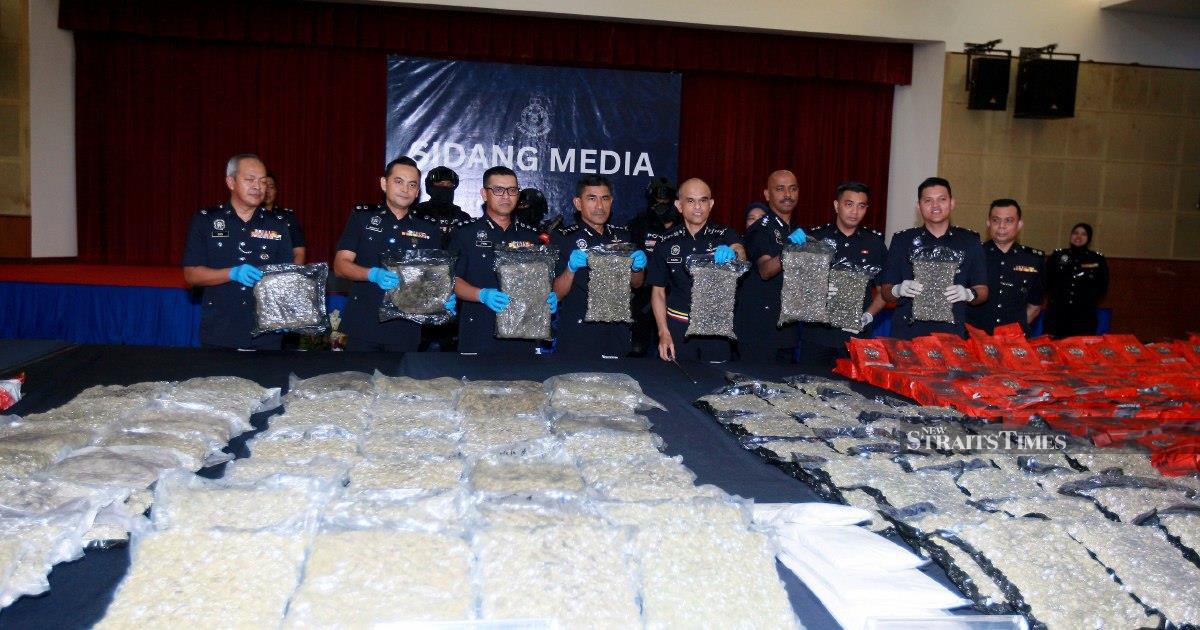
Police in Selangor have struck a significant blow against organised drug trafficking, dismantling six separate operations and seizing some 600 kilograms of various controlled substances worth an estimated RM37.5 million. The coordinated enforcement activity, which resulted in the detention of twelve individuals, represents one of the larger drug hauls reported in the state in recent months and underscores the continuing challenge of narcotics distribution networks operating across the Klang Valley and surrounding regions.
The scale of this operation reflects the evolving nature of drug trafficking in Malaysia, where criminal syndicates have diversified their supply chains and adopted increasingly sophisticated methods to move substances across state and international borders. By targeting multiple networks simultaneously, authorities were able to disrupt supply routes that might otherwise have fed local addiction markets and generated substantial revenue for organised crime groups. The RM37.5 million valuation indicates the high profit margins that drive such criminal enterprises, particularly given that wholesale narcotics prices in Southeast Asia remain significantly lower than street-level retail values.
Selangor, as the nation's economic hub and the location of the Port Klang and Kuala Lumpur International Airport, occupies a critical node in regional drug trafficking patterns. The state's dense population, extensive transportation infrastructure, and concentration of commercial activity make it both an attractive distribution hub and a challenging jurisdiction for law enforcement. Criminal organisations exploit the volume of legitimate cargo and passenger traffic to conceal shipments, while the state's relatively porous internal boundaries with Kuala Lumpur and other nearby jurisdictions complicate enforcement efforts.
The diversity of substances recovered in these raids likely includes methamphetamine, heroin, cocaine, and synthetic drugs—the full spectrum of narcotics that flow through Malaysian markets. Each category represents distinct supply chains and criminal networks, suggesting that police operations targeted multiple tiers of the distribution hierarchy rather than isolated street-level dealers. Dismantling supply operations at the mid-to-wholesale level proves more challenging than apprehending consumers or street pushers but ultimately yields greater disruption to trafficking organisations.
The arrest of twelve suspects provides opportunities for law enforcement to develop intelligence about broader criminal networks, distribution methods, and financial flows. Police typically pursue follow-up investigations into the sources of these shipments, potentially leading to international cooperation with foreign law enforcement agencies. The tracing of narcotics supplies often extends beyond Malaysia's borders, involving coordination with authorities in Thailand, Myanmar, and other countries along major trafficking corridors.
For Malaysian policymakers and enforcement agencies, sustained success against trafficking requires balancing supply reduction efforts with demand management and prevention strategies. While seizures grab public attention and demonstrate operational capability, long-term progress depends on disrupting the financial incentives that make drug trafficking profitable. Money laundering suppression, asset seizure programmes, and international coordination on financial flows merit equal emphasis alongside street-level enforcement.
The timing and scale of this operation may also reflect intensified enforcement campaigns ahead of key dates or events. Malaysian authorities periodically concentrate resources on specific regions or criminal commodities based on intelligence assessments of trafficking patterns and public order priorities. Such targeted operations, when publicised, serve both genuine crime-fighting purposes and deterrent functions, signalling law enforcement commitment to the public.
Regional security analysts have noted that Southeast Asian trafficking networks adapt rapidly to enforcement pressure, often relocating operations to jurisdictions perceived as offering lower interdiction risks. Selangor's continued prominence in drug seizure statistics suggests either that trafficking volume remains high in the region, or that enforcement intensity has maintained consistent pressure on criminal operations. Understanding which factor predominates requires analysis of broader trafficking trend data and street-level drug availability indicators.
The suspected individuals detained in these operations will face prosecution under Malaysia's drug laws, which carry severe penalties including lengthy imprisonment and, in certain cases involving large quantities, capital punishment. The Malaysian legal framework takes trafficking offences seriously, reflecting the government's declared commitment to maintaining a drugs-free society. However, observers have noted that the relative stability of heroin and methamphetamine prices on Malaysian streets over recent years suggests that enforcement, while significant, has not substantially constrained supply.
Looking forward, this operation exemplifies the resource-intensive nature of effective drug enforcement. Coordinating six simultaneous raids across a sprawling conurbation requires substantial police capacity, intelligence development, and operational planning. Sustaining such capability while maintaining routine law enforcement duties remains challenging for Malaysian police forces, particularly given competing demands on personnel and budgets.
The success reported in Selangor may encourage police in other states to intensify their own drug enforcement activities, potentially yielding additional seizures in coming weeks. Federal and state authorities continue to refine intelligence-sharing protocols and cross-jurisdictional coordination mechanisms to enhance their collective enforcement capacity against trafficking organisations that typically operate across multiple administrative boundaries.

