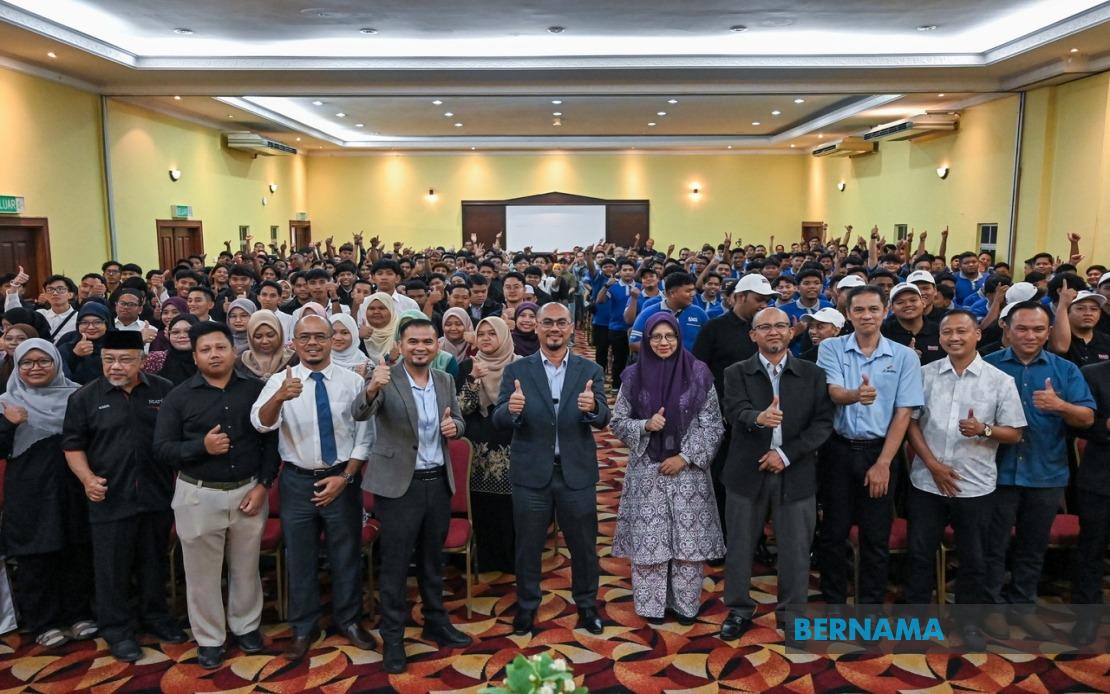
The Perak Islamic Religious and Malay Customs Council (MAIPk) is channelling RM10.9 million this year towards vocational training initiatives targeting 1,200 asnaf participants across the state, marking a significant investment in skills development within the region. The programme, which drew 340 participants to its launch ceremony in Ipoh on July 13, represents a strategic allocation from zakat funds directed at equipping disadvantaged and deserving segments of society with market-relevant technical competencies.
According to MAIPk chief executive officer Syamsul Hazeman Md Salleh, the financial commitment addresses multiple dimensions of participant development beyond instruction alone. The allocation encompasses direct training delivery, professional certification costs, and supplementary educational requirements that enable graduates to obtain recognised qualifications upon programme completion. This comprehensive approach recognises that vocational advancement in Malaysia's competitive labour market increasingly demands formal credentials alongside hands-on expertise.
The breadth of training tracks available reflects deliberate sector selection aligned with Perak's economic priorities and national labour demands. Participants can pursue qualifications in construction trades, upstream petroleum and gas operations, industrial automation systems, welding specialisations, maritime logistics, healthcare support services, and hospitality sectors. Training duration varies substantially—from intensive one-month modules to extended nine-month diplomas—allowing flexibility for candidates with different employment situations and learning paces. This modular design potentially enables participants to balance immediate income needs with credential acquisition.
The programme's infrastructure involves six distinct training institutions spanning academic and private sector providers. The roster includes Akademi Binaan Malaysia Wilayah Utara, which specialises in construction disciplines, alongside SRC Global Resources Sdn Bhd and Kulim Advanced Technologies Sdn Bhd, which serve industrial and technical sectors. Vision University College and Northwestern Institute of Advanced Technical Skills contribute higher-level qualifications, while Haaza Centre of Excellence rounds out the network. This institutional diversity ensures geographic accessibility and sector-specific pedagogical quality across Perak's landscape.
The application volume—approximately 10,000 submissions received this year—vastly exceeds available spots, underscoring substantial demand for subsidised vocational pathways among eligible asnaf populations. MAIPk's selective approach, filtered through published criteria and eligibility conditions, presumably prioritises candidates demonstrating strongest employment prospects and genuine financial need. Such stringent gatekeeping, while necessary given resource constraints, inevitably leaves thousands of applicants unserved, suggesting the true underlying demand for supported skills training significantly exceeds current provision.
The asnaf framework itself—Islamic terminology denoting eight categories of zakat recipients including the poor, indigent, and those burdened by debt—creates both targeted benefits and potential equity concerns. By reserving zakat resources exclusively for this constituency, MAIPk addresses genuine vulnerabilities within Muslim communities, yet the approach simultaneously limits access for non-Muslim disadvantaged populations and Malaysians outside traditional asnaf categories. This sectarian funding model reflects religious institutional prerogatives but also illustrates broader fragmentation in Malaysia's vocational training landscape across state agencies, private providers, and faith-based organisations.
From a regional development perspective, MAIPk's investment carries implications extending beyond individual beneficiary outcomes. Perak has historically lagged more prosperous peninsular states in manufacturing value-added and services sector concentration. By systematically upgrading asnaf human capital in construction, industrial automation, and logistics—sectors foundational to infrastructure development and manufacturing hubs—the council contributes indirectly to state economic competitiveness. Skilled graduates entering the workforce potentially reduce employer reliance on external migrant labour for semi-skilled positions, supporting broader Keluarga Malaysia narratives around shared prosperity.
The initiative also addresses a documented skills gap in Malaysia's technical education ecosystem. While TVET expansion features prominently in national economic transformation agendas, many aspirants face financial barriers to entry. By subsidising training through zakat mechanisms, MAIPk circumvents purely market-driven provision that typically excludes lower-income cohorts. This quasi-social-investment model demonstrates how religious institutional resources can be deployed toward secular economic objectives—workforce development and poverty alleviation—bridging historical divides between faith institutions and developmental economics.
Syamsul Hazeman's framing emphasises human capital development as pathway to ummah empowerment and economic contribution, reflecting contemporary Islamic institutional discourse that integrates social welfare with productivity narratives. This positioning—that asnaf training generates not mere dependency relief but competitive economic agents—carries psychological weight in contexts where welfare assistance carries social stigma. By constructing vocational credentials as vehicles for dignified economic participation rather than charity, MAIPk arguably enhances programme attractiveness and graduate self-perception.
Looking forward, sustainability questions emerge around programme scale and replication. The RM10.9 million annual allocation, while substantial, serves only 1,200 participants—a rounding error against Malaysia's broader unemployed youth populations and those underemployed in low-skill roles. Extrapolating current costs across Perak's estimated asnaf populations would require multiples of current funding. Additionally, employment outcomes data for programme graduates remains unspecified in available information, leaving unclear the conversion rate from certification to secure, adequately-remunerated employment. Rigorous impact evaluation would strengthen accountability and inform whether resource deployment genuinely advances socioeconomic mobility or primarily generates credential inflation.
The programme exemplifies how Malaysian state religious councils increasingly function as quasi-development agencies, mobilising zakat revenues toward human capital objectives traditionally claimed by secular government ministries. This institutional evolution reflects partly fiscal limitations in state government capacity and partly the substantial zakat resource base available to religious authorities. As asnaf TVET initiatives proliferate across states, opportunities emerge for systematic knowledge-sharing, curriculum standardisation, and employment outcome tracking—mechanisms that could multiply developmental impact across the federation while maintaining institutional autonomy that religious councils jealously guard.

