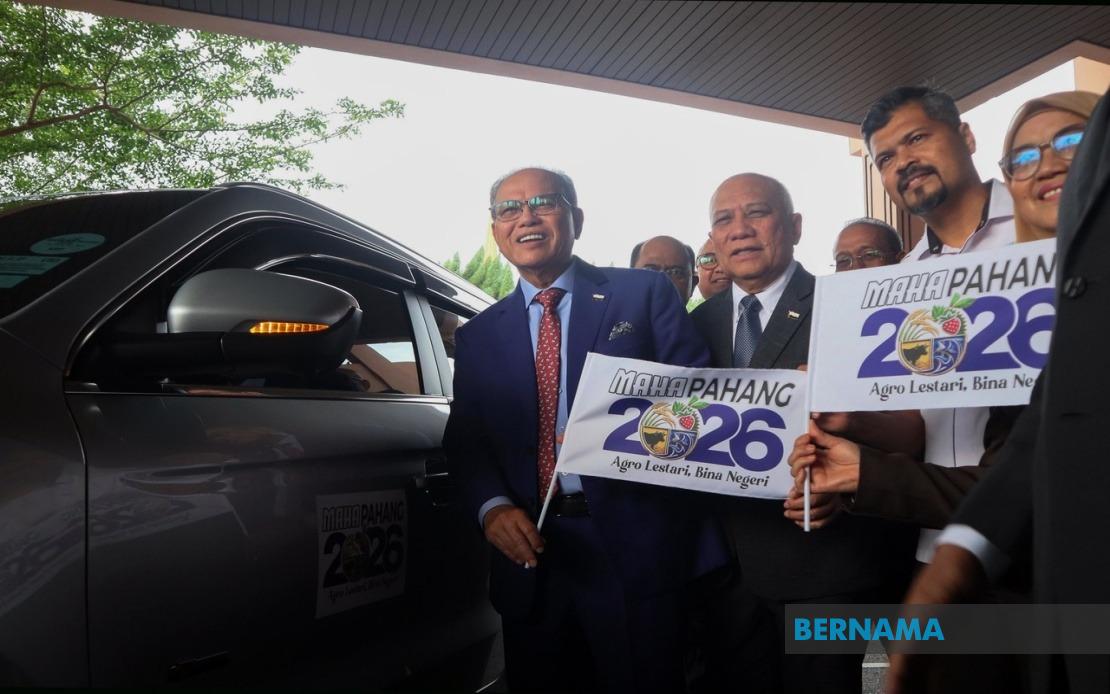
Pahang is gearing up for one of its largest agricultural showcases this year, with state leadership outlining ambitious targets for MAHA Pahang 2026. Menteri Besar Datuk Seri Wan Rosdy Wan Ismail announced that the four-day event, scheduled for July 30 to August 2 at Dataran Raub, expects to welcome more than 100,000 visitors while generating RM1.3 million in sales through the participation of approximately 100 entrepreneurs. The scale of these projections underscores the state government's commitment to promoting its agricultural sector and supporting rural economic development during a period when agribusiness visibility remains crucial for domestic producers.
The event represents a significant promotional opportunity for Pahang's farming community and food industry operators. By concentrating such a diverse range of entrepreneurs in a single venue, MAHA Pahang 2026 creates a concentrated marketplace where buyers, consumers, and industry stakeholders can discover new products and establish business connections. The timing of the event during the latter part of the year positions it strategically to capture consumer interest ahead of the festive season, when purchasing patterns typically increase across the region.
To incentivise attendance and boost crowd numbers, the Pahang state government has instituted an attractive lucky draw programme. The grand prizes reveal the premium nature of the offerings: a Wagyu cow and a Perodua Bezza vehicle head the list of rewards, with additional prizes distributed to fortunate visitors throughout the event period. Such substantial giveaways demonstrate a willingness to invest meaningfully in event success and reflect confidence in the anticipated turnout. These prizes also serve a psychological function, creating word-of-mouth marketing that extends the event's reach beyond immediate geographical proximity.
The official launch activities commenced with ceremonial fanfare when Wan Rosdy flagged off a convoy of twenty vehicles representing various government departments and agencies from the Bera District and Land Office. This coordinated mobilisation of state resources signals institutional support across multiple sectors and illustrates how agricultural promotion has become a cross-departmental priority for Pahang administration. The symbolic nature of such launch events helps establish momentum and media interest ahead of the main showcase.
Wan Rosdy acknowledged the crucial contributions of Agriculture and Food Security Minister Datuk Seri Mohamad Sabu and the committee chairman responsible for organising the event. This inter-governmental coordination between state and federal levels reflects the collaborative approach that has become standard practice for major agricultural initiatives in Malaysia. The minister's involvement signals federal backing for Pahang's agricultural development agenda, potentially opening avenues for policy support or resource allocation beyond the immediate event.
Educational components form an integral part of MAHA Pahang 2026's programming. Beyond commercial transactions, the event will function as an information platform where visitors gain exposure to emerging agricultural technologies and innovative crop varieties. Such knowledge dissemination serves long-term sectoral interests by familiarising farmers and agribusiness operators with options that could enhance productivity or sustainability. In an era when Malaysian agriculture faces pressures from climate variability and evolving consumer preferences, platforms that facilitate technology transfer become increasingly valuable for competitiveness.
The venue selection at Dataran Raub positions the event centrally within Pahang, making it reasonably accessible to populations across the state while maintaining symbolic connection to Raub's established role in regional commerce. Raub's historical significance as a tin-mining and plantation centre lends historical resonance to hosting an agricultural showcase, representing a transition in the district's economic identity toward diversified agribusiness. The four-day duration allows sufficient time for varied programming, multiple visitor waves, and sustained media coverage across the event period.
From a regional perspective, MAHA Pahang 2026 exemplifies how individual states within Malaysia's federal system pursue distinctive agricultural promotion strategies aligned with local comparative advantages. Pahang's agricultural sector encompasses oil palm, rubber, vegetables, livestock, and increasingly, aquaculture and specialty crops. A consolidated showcase allows these diverse subsectors to present unified narratives about Pahang's food and agriculture brand while individually capturing buyer interest within specialised segments.
The participation target of 100 entrepreneurs suggests organisers expect broad sectoral representation, potentially encompassing primary producers, agro-processors, input suppliers, technology providers, and value-added manufacturers. Such diversity enriches the visitor experience by offering comprehensive supply-chain visibility and demonstrating agriculture's integration with downstream industries. For smaller operators, participation in state-level showcases provides affordable marketing channels compared to international exhibitions, making such platforms critical for rural entrepreneurship development.
The RM1.3 million sales projection, while substantial, reflects realistic expectations based on visitor numbers and average transaction values at comparable Malaysian agricultural events. Achievement of this target would validate the business case for annual repetition and potentially justify expanded future editions. Success metrics extending beyond immediate sales—such as business leads generated, partnerships formed, and awareness metrics—often prove equally significant for long-term sectoral development, even when not formally announced during launch phases.
Wan Rosdy's invitation to the public to explore displayed products and exhibitions represents the culminating narrative appeal of the event announcement. This framing positions MAHA Pahang 2026 not merely as a commercial transaction platform but as an accessible engagement opportunity where ordinary Malaysians can connect directly with agricultural producers and discover regional food offerings. Such accessibility remains strategically important for sustaining public interest in domestic agriculture at a time when imported food options proliferate in Malaysian retail environments.
As Malaysia navigates evolving food security challenges and emphasises self-sufficiency in critical commodities, state-level agricultural showcases like MAHA Pahang 2026 become increasingly relevant for policy implementation. Events of this scale demonstrate governmental commitment to supporting local food systems while providing empirical data about market demand patterns, entrepreneurial vitality, and sectoral health. The success or underperformance of targeted visitor numbers and sales figures will likely inform subsequent state agricultural strategies and investment decisions for emerging initiatives.

