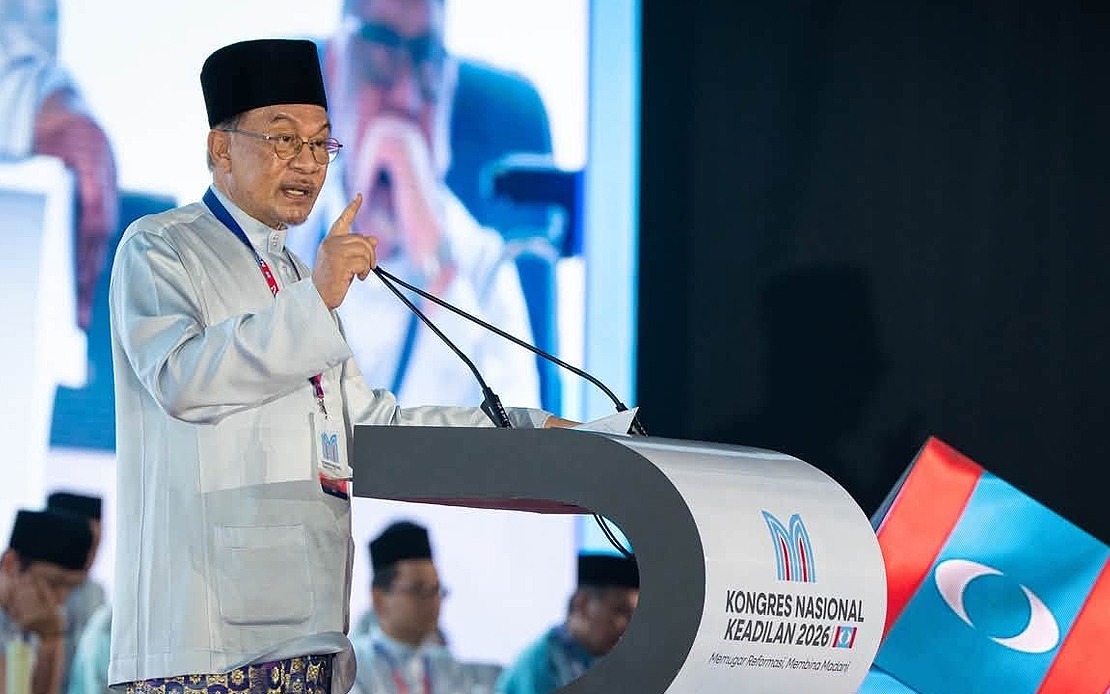
Malaysia's reform-driven administration faces a critical challenge: translating policy achievements into public perception and tangible benefits, according to Prime Minister's Senior Political Advisor Tengku Datuk Seri Zafrul Tengku Abdul Aziz. Speaking at the 2026 PKR National Congress in Melaka, he underscored that impressive economic statistics and legislative reforms amount to little if ordinary citizens remain unaware of their impact on daily life.
The MADANI Government has implemented numerous initiatives over its tenure, ranging from institutional reforms to economic stimulus measures, yet a communications shortfall threatens to undermine political capital gained through these efforts. Tengku Zafrul's candid assessment suggests the ruling coalition recognises that policy success in boardrooms and parliamentary chambers does not automatically translate into votes or public confidence. This disconnect represents one of the most persistent challenges facing elected governments globally—the gap between what administrators believe they have accomplished and what voters perceive they have achieved.
Economic growth provides a compelling case study. Malaysia's economy expanded by six percent, a figure that exceeded forecasts and demonstrates macroeconomic competence. However, such headline growth statistics often mask unequal distribution across income levels and regions. Workers in declining industries, those in lower-income sectors, and residents in economically marginalised areas may see little improvement in their circumstances despite impressive GDP figures. Unless government messaging explicitly connects national growth to household purchasing power, wage improvements, and job creation in disadvantaged communities, citizens reasonably question whether the administration's successes benefit them directly.
PKR President Datuk Seri Anwar Ibrahim's policy address at the congress highlighted several substantive reforms meriting greater public visibility. The abolition of the Universities and University Colleges Act (AUKU) represents a genuine transformation in academic freedom and student activism rights, fundamentally altering the landscape of higher education in Malaysia. The rehabilitation of the Federal Land Development Authority (FELDA), long plagued by mismanagement and corruption, could restore livelihood opportunities for thousands of smallholders and their families. Upcoming budgetary measures promise additional economic support, though details require public clarification to demonstrate how households and small enterprises will benefit.
Tengku Zafrul's admission that poor communication represents "our own delivery shortcoming" rather than public ignorance reflects intellectual honesty often absent in political discourse. Government officials frequently blame citizens for failing to appreciate accomplishments, yet this approach inverts responsibility. Democratic governments bear the duty to inform constituents about policy changes and their consequences. When citizens remain uninformed, the fault lies with institutional communication failures, not voter apathy or ingratitude. This recognition suggests the MADANI administration intends to strengthen its public information apparatus, though specific mechanisms remain unclear.
The congress theme—"Reviving Reform, Building MADANI"—indicates party leadership views ongoing momentum as fragile rather than consolidated. Two years into office, the administration still frames itself as reform-oriented rather than establishment-secure, suggesting it recognises that maintaining public mandate requires continuous demonstration of progress. This positioning reflects political reality: without sustained positive messaging and visible benefits distribution, electoral coalitions fragment. PKR, the dominant coalition party, faces particular scrutiny given its ideological commitment to institutional reform and social justice, making the perception gap especially damaging to party credibility.
Regional implications warrant consideration for Malaysian policymakers. Across Southeast Asia, governments face rising citizen expectations regarding transparency and tangible service delivery. Thailand's economic management, Indonesia's infrastructure spending, and Singapore's meritocratic claims all rest partly on public perception of effective governance. Malaysia's MADANI administration competes for domestic legitimacy within this regional context. Failure to communicate achievements effectively risks ceding political narrative to opposition parties and independent media, potentially undermining support for continued reform implementation.
The strategic focus on party machinery improvement and solidarity reflects recognition that top-down messaging alone proves insufficient. PKR must strengthen internal organisational capacity to disseminate information through grassroots networks, community leaders, and local representatives. This ground-level engagement carries greater persuasive force than centralised government announcements, as neighbours and respected community figures often prove more credible information sources than distant bureaucrats. Effective campaigns require coordinated messaging across multiple channels targeting diverse audience segments with varying media consumption patterns.
Tengku Zafrul's emphasis on translating reforms into "spillover effects" across all societal strata addresses inequality concerns central to the MADANI platform. Economic growth concentrating among elite groups contradicts the social equity promises underlying the ruling coalition's mandate. The administration must demonstrate how reforms and growth benefit middle-income earners, workers in traditional sectors, rural communities, and urban poor populations. Without such visible distribution, reform rhetoric rings hollow regardless of technical accomplishment.
Future policy communication demands integration of quantifiable, human-scale metrics alongside macroeconomic indicators. Citizens comprehend wage improvements, reduced utility costs, improved public services, and enhanced livelihood opportunities more readily than GDP growth rates. Government communication should spotlight such tangible outcomes in accessible language, illustrating how specific policies—AUKU abolition, FELDA rehabilitation, budget initiatives—generate measurable improvements in identified communities and demographic groups.
The acknowledgment of ongoing struggle ahead, despite substantial progress, positions the MADANI Government for realistic assessment rather than triumphalism. Malaysian voters increasingly demonstrate sophistication in evaluating governance, distinguishing between genuine achievement and marketing hype. Authentic communication acknowledging remaining challenges while demonstrating concrete progress likely resonates more effectively than exaggerated claims. This approach could strengthen public trust in administration credibility, essential for securing continued electoral mandate.

