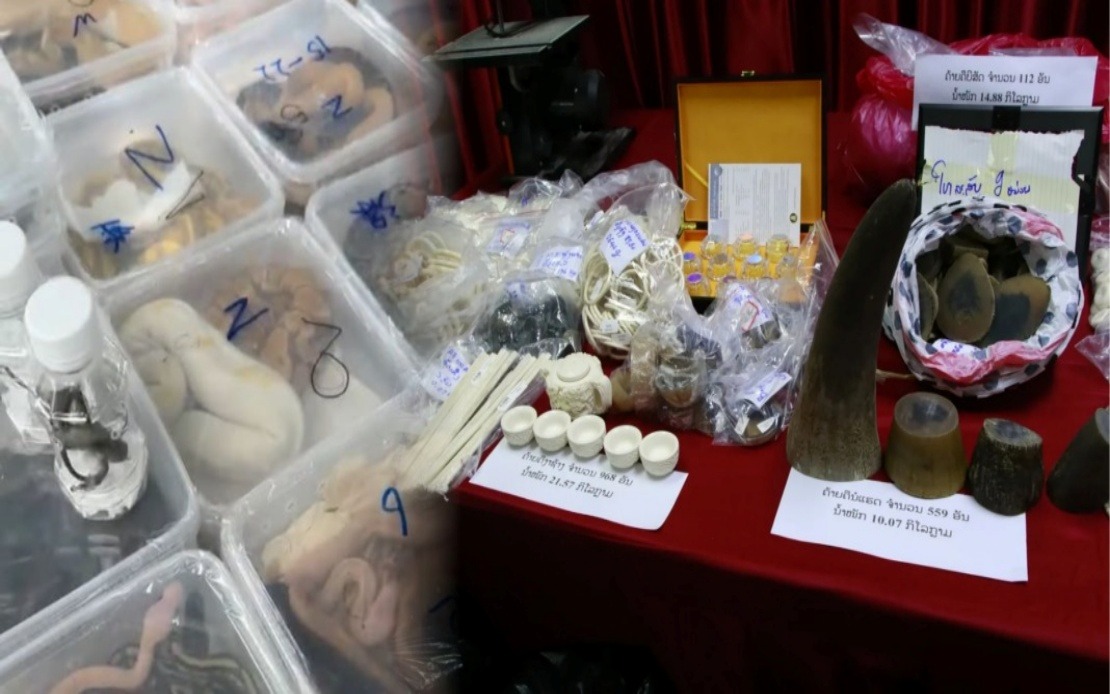
Authorities in Laos have exposed a sprawling wildlife trafficking operation that highlights the persistence of endangered animal smuggling across Southeast Asia's borders. A series of coordinated enforcement actions in late May and June have resulted in the rescue of approximately 294 live animals and the seizure of substantial quantities of illegal wildlife products, according to reports from The Laotian Times. The operations underscore how the Mekong region remains a critical transit point for contraband destined for regional and international black markets, with implications for both environmental conservation and regional security.
The most significant breakthrough came when wildlife rangers intercepted 294 live animals at the Vang Tao International Checkpoint in Champasak Province, which serves as a crossing point between Laos and Thailand's Ubon Ratchathani Province. The confiscated animals included turtles, pythons, green snakes, gold-ringed cat snakes, and various lizard species—all of which are non-native to Laos, suggesting they had been sourced from elsewhere in the region and were being transported toward international markets. The sheer volume of animals captured in a single operation demonstrates the industrial scale of trafficking networks operating in the area, which continues despite decades of international enforcement efforts.
Parallel operations in Luang Prabang, a major tourist hub in northern Laos, revealed the sophisticated nature of modern wildlife smuggling. The Lao Wildlife Enforcement Network discovered 60 kilogrammes of suspected illegal wildlife products, including items that command extraordinary prices on traditional medicine markets. Authorities confiscated elephant skin powder, bear gallbladder, pangolin scales, and what were identified as rhino horn fragments, alongside tubes of herbal preparations suspected of containing wildlife ingredients. The diversity of contraband seized suggests that smuggling networks operate integrated supply chains capable of sourcing multiple endangered species simultaneously and converting them into finished products for end consumers.
These recent busts form part of a broader pattern of trafficking activity detected along the Laos-Thailand border. Just weeks earlier, on May 27, Thai authorities arrested a woman operating a traditional medicine and souvenirs shop in Nakhon Phanom in northeastern Thailand, recovering more than 100 protected wildlife remains believed to have originated in Laos. Earlier that month, on May 16, enforcement officials dismantled another smuggling attempt involving 130 kilogrammes of cut elephant ivory and animal carcasses at the Thai-Lao border, according to Traffic Southeast Asia. The frequency and scale of these seizures within a compressed timeframe suggest that enforcement agencies have intensified surveillance and intelligence-sharing, but they also reveal the enormous volume of contraband transiting the region.
Laos occupies a particularly vulnerable position in the trafficking network due to its geography and economic circumstances. The country shares land borders with five nations—Cambodia, China, Myanmar, Thailand, and Vietnam—making it a natural transit corridor for wildlife destined for consumer markets throughout Asia. Wildlife experts have noted that Laos's strategic location, combined with porous borders and limited enforcement resources, creates ideal conditions for trafficking organizations. The country's relatively modest economic development means that rural communities dependent on wildlife poaching face few alternative income sources, ensuring a steady supply of captured animals and body parts to feed trafficking networks.
The role of traditional medicine demand in driving this trade cannot be overstated. Products like bear gallbladder, elephant skin, and pangolin scales command premium prices in markets across China, Vietnam, and Thailand, where traditional medicine practices remain deeply embedded in healthcare and cultural systems. These products are not incidental byproducts but rather the primary targets of organized trafficking networks that invest in sourcing, processing, and distribution infrastructure. The seizure of packaged herbal medicines suggests that traffickers have integrated wildlife products into legitimate-appearing consumer goods, complicating enforcement efforts and enabling sales to unwitting consumers.
The United Nations Office on Drugs and Crime provided sobering context for these findings in its World Wildlife Crime Report 2024. The UNODC estimates that global illegal wildlife trade generates nearly US$10 billion (RM41 billion) annually, placing it on par with human trafficking, narcotics smuggling, and arms trafficking in terms of profitability and criminal organization. The report emphasizes that wildlife trafficking persists despite two decades of coordinated international and national interventions, identifying corruption as a fundamental enabler. Officials at border crossings, in law enforcement agencies, and within government wildlife management bodies can be compromised by traffickers, facilitating the movement of contraband across jurisdictions.
For Southeast Asian nations including Malaysia, these developments carry direct implications. Wildlife trafficking networks operate regionally, meaning that animals sourced in Laos may ultimately be destined for Malaysian markets or transit through Malaysian ports and airports. Malaysian enforcement agencies therefore have a stake in disrupting these networks at their source. Additionally, the sophistication evident in these operations—integrated sourcing, processing, and distribution—suggests that regional cooperation remains essential. Information-sharing between Laos, Thailand, Malaysia, and other ASEAN members can help identify trafficking routes, smuggler networks, and destination markets.
The rescue of nearly 300 animals represents a conservation victory in the short term, as these creatures can potentially be rehabilitated and released. However, experts caution against viewing individual seizures as ultimate solutions. Each confiscation represents merely a fraction of animals actually trafficked. The Lao Wildlife Enforcement Network's success in detecting and intercepting contraband owes partly to operational capability but also to increased vigilance, potentially driven by international funding and technical support. Sustaining and enhancing these enforcement efforts requires sustained investment and political commitment.
Longer-term solutions demand action on multiple fronts. Demand reduction initiatives targeting consumers in traditional medicine markets could diminish economic incentives for poaching. Community-based conservation programs offering alternative livelihoods to rural populations could reduce supply-side pressure. International cooperation on intelligence, extradition, and prosecution of trafficking kingpins could disrupt organizational structures. Laos has demonstrated willingness to cooperate through coordinated enforcement actions, but capacity and resources remain constrained. The pattern of seizures in late May and June 2024 suggests that coordinated regional enforcement can yield results, yet the persistence of trafficking organizations indicates that enforcement alone cannot solve the problem without corresponding action on demand and economic development fronts.
%22%2F%3E%3C%2Fpattern%3E%3C%2Fdefs%3E%3Crect%20width%3D%22100%25%22%20height%3D%22100%25%22%20fill%3D%22url(%23ph1h9cdg)%22%2F%3E%3Crect%20width%3D%22100%25%22%20height%3D%22100%25%22%20fill%3D%22url(%23ph1h9cdp)%22%2F%3E%3Ctext%20x%3D%2250%25%22%20y%3D%2250%25%22%20text-anchor%3D%22middle%22%20dominant-baseline%3D%22central%22%20fill%3D%22rgba(255%2C255%2C255%2C0.95)%22%20font-family%3D%22Georgia%2C%20'Times%20New%20Roman'%2C%20serif%22%20font-weight%3D%22700%22%20font-size%3D%22136%22%20letter-spacing%3D%22-0.02em%22%3ETerengganu%3C%2Ftext%3E%3C%2Fsvg%3E)