Three major bodies governing Islamic finance and wealth management have partnered to elevate professional standards in estate planning and wealth governance across Malaysia. Labuan IBFC Inc, the Association of Shariah Advisors in Islamic Finance Malaysia (ASAS), and the Society of Trust and Estate Practitioners (STEP) Malaysia convened the Islamic Wealth & Legacy Forum 2026 in Kuala Lumpur to examine how practitioners can better serve Muslim families navigating complex cross-border wealth structures while remaining compliant with Shariah principles.
The collaborative initiative reflects a growing recognition among Malaysian financial institutions that Islamic wealth planning requires sophisticated expertise spanning multiple disciplines. Rather than viewing estate administration through a single lens, the forum brought together Shariah advisers, trust specialists, wealth managers and legal practitioners to examine how different professional perspectives could be integrated into comprehensive solutions. This multidisciplinary approach acknowledges that modern high-net-worth Muslim families operate across jurisdictions and require tailored structures that honour both Islamic principles and contemporary wealth management realities.
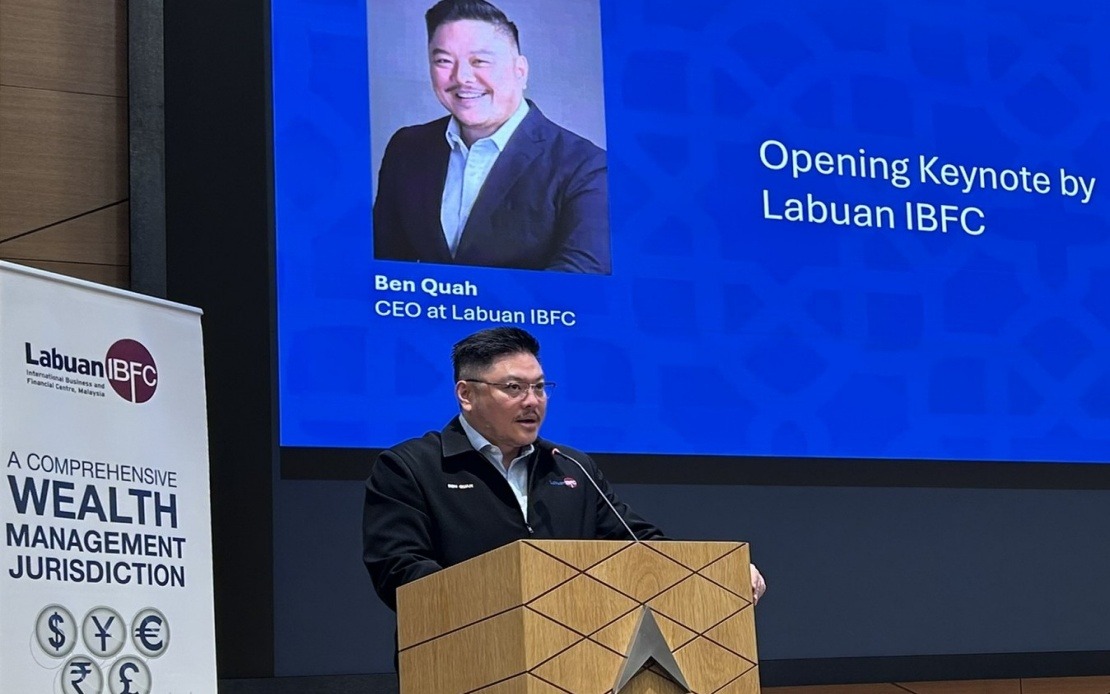
Labuan IBFC, which functions as the international financial centre's official marketing arm, positioned itself as a crucial hub for crafting cross-border Islamic wealth solutions. In his keynote remarks, chief executive Ben Quah emphasised that as family wealth increasingly transcends national borders, flexible frameworks become essential for asset protection and ensuring continuity across generations. Labuan's regulatory environment and established infrastructure provide the technical foundation for structuring complex arrangements that might otherwise be difficult to execute within a single jurisdiction. This positioning is particularly relevant for Malaysian families with business interests throughout Southeast Asia seeking to consolidate assets and plan succession in ways that respect Islamic inheritance principles while maintaining international tax efficiency.
A central theme of the forum was the concept of planning "beyond faraid"—moving past the traditional Islamic law of inheritance to encompass broader estate administration strategies. This distinction is critical because while faraid establishes the foundational Islamic framework governing asset distribution, it represents only one component of comprehensive estate planning. Practical wealth management for affluent families requires layering additional structures including trusts, takaful insurance, and various corporate vehicles that can work harmoniously with faraid principles rather than displacing them. STEP Malaysia's branch chair Farah Deba articulated this balance in her welcome address, emphasising that transcending traditional faraid frameworks does not mean abandoning Islamic principles but rather developing more sophisticated applications of Islamic law to modern circumstances.
The forum's substantive programming examined the operational challenges practitioners encounter when translating theoretical estate planning intentions into enforceable arrangements. A dedicated session explored how proper documentation and governance mechanisms ensure that wealth plans function consistently with Shariah requirements throughout implementation. This practical focus addresses a significant gap in the Malaysian Islamic finance ecosystem, where sophisticated planning expertise exists but coordination between Shariah advisers and operational practitioners remains inconsistent. By bringing these professionals into structured dialogue, the forum aimed to identify procedural improvements that could reduce friction and enhance outcomes for wealthy Muslim families.
The afternoon sessions concentrated on implementation mechanics, demonstrating how different structural tools serve specific wealth preservation and transfer objectives. Liquidity planning, takaful products, trust mechanisms and alternative financial structures were examined as complementary instruments rather than competing options. Panellists illustrated how combining these tools strategically could address multiple challenges simultaneously—managing investment risk, facilitating intergenerational wealth transfer, providing flexibility for changing family circumstances, and ensuring compliance with evolving regulatory environments across different jurisdictions. For Malaysian practitioners serving clients with regional business networks, understanding these combinations is increasingly essential.
Shariah governance emerged as a unifying theme throughout the forum's deliberations. ASAS exco member Yusaini Yusof framed proper Shariah governance as the mechanism ensuring that family legacies are appropriately structured, successfully implemented and ultimately serve the broader purposes of Shariah (Maqasid Shariah). This framing moves beyond narrow compliance to embrace governance as a positive force ensuring that wealth arrangements actively reflect Islamic values. For Malaysian families, this perspective is particularly significant given the country's position as a global Islamic finance centre and the rising expectations among affluent Muslim individuals that their wealth management arrangements reflect their faith commitments.
The tripartite collaboration formalises a strategic partnership that addresses current fragmentation in Malaysia's Islamic wealth planning landscape. While individual practitioners possess deep expertise in their respective domains, comprehensive client service requires seamless coordination that has historically been difficult to achieve. Labuan IBFC Inc's memorandum of understanding with ASAS, combined with enhanced engagement with STEP Malaysia, creates institutional mechanisms for ongoing professional dialogue and standards development. This structure enables practitioners to reference shared best practices and consult colleagues across disciplines when clients present complex multi-jurisdictional situations requiring integrated solutions.
For Malaysian wealth managers, estate planners and Shariah advisers, the forum signalled a maturing professional ecosystem increasingly capable of competing with international competitors in serving sophisticated Muslim clients. Malaysia's advantages—including its Islamic finance expertise, stable regulatory environment, Labuan's international framework, and growing cadre of trained professionals—remain latent unless practitioners can coordinate effectively. The forum demonstrated commitment among leading organisations to building such coordination mechanisms. This collaborative approach should enhance Malaysia's appeal as a preferred jurisdiction for Muslim families seeking to structure complex cross-border wealth arrangements.
The initiative also carries implications for Southeast Asia's broader financial architecture. As wealth accumulates among Muslim entrepreneurs and professionals throughout the region, demand for coordinated Islamic wealth planning services will grow substantially. Malaysian institutions, drawing on decades of Islamic finance development, are positioned to become regional hubs serving this expanding market. However, this requires exactly the kind of professional standards elevation and cross-disciplinary collaboration the forum aimed to catalyse. By establishing governance frameworks and professional standards applicable to complex cross-border situations, Malaysia can strengthen its competitive positioning while ensuring that regional wealth continues flowing through Islamic finance channels aligned with Shariah principles.

