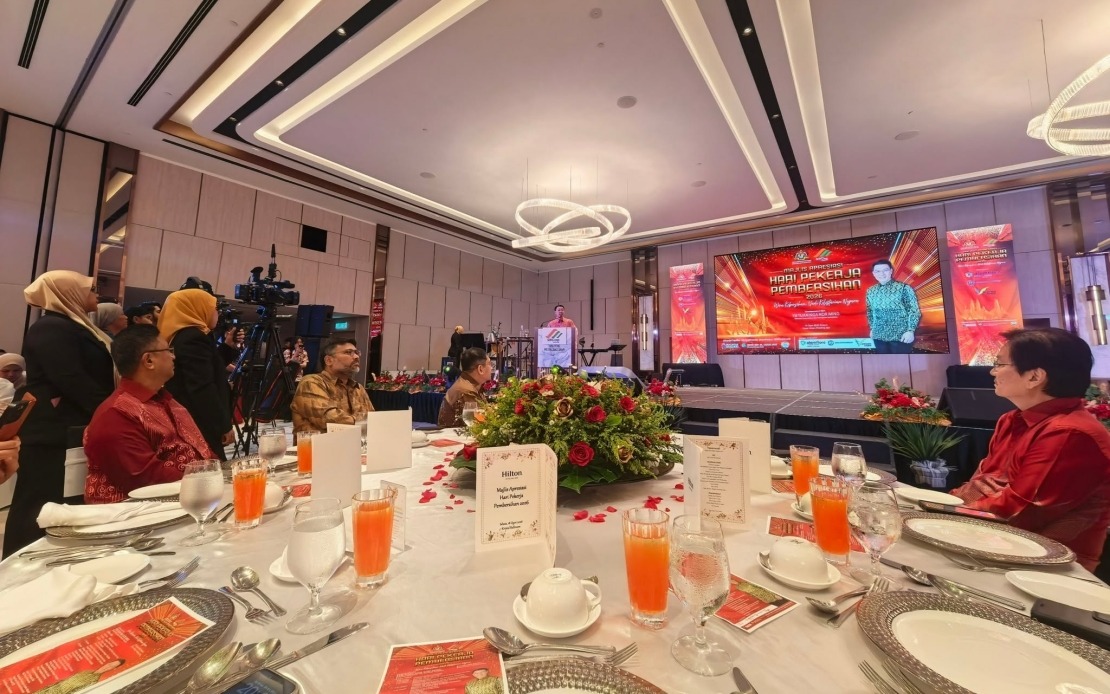
The Housing and Local Government Ministry (KPKT) has announced plans to nominate recipients of the 2026 Cleaning Workers Award for state honours, elevating recognition of the nation's sanitation workforce. Minister Nga Kor Ming revealed the initiative during the 2026 Cleaning Workers Appreciation Day ceremony in Petaling Jaya, signalling a significant step toward formalising respect for workers often overlooked despite their essential role in maintaining Malaysia's public spaces.
Nga explained that the proposal emerged from discussions with KPKT secretary-general Datuk Dr Wira M Noor Azman Taib, with the intention of ensuring this cohort receives formal recognition from state rulers. The nominated recipients will be presented to their respective state palaces for honours ceremonies, representing an expansion of recognition mechanisms that have historically been limited in scope. Deputy Housing and Local Government Minister Datuk Aiman Athirah Sabu was also present at the event, underscoring the ministry's commitment to the initiative.
The ministry drew inspiration from Penang, where state government recognition of cleaning workers has been standard practice for nearly a decade. Nga stressed that this proven model demonstrates the feasibility of honouring sanitation professionals across all states, not merely selected jurisdictions. He articulated the view that Malaysia's other state governments should adopt similar approaches to recognise their own cleaning workforces, creating a nationwide culture of appreciation for this critical sector.
The scale of Malaysia's cleaning workforce underscores the magnitude of this recognition effort. Currently, 26,889 workers employed by concessionaires support the nation's solid waste management and public cleaning operations. Among these professionals, tenure varies significantly: many have served over a decade, while some have dedicated nearly three decades to the sector. This longevity indicates both career commitment and the systemic reliance on experienced personnel to maintain operational standards across urban and suburban areas.
Nga emphasised the multifaceted contributions of cleaning workers to Malaysian society. Beyond the visible removal of waste and maintenance of public areas, these workers ensure environmental hygiene, public safety, and community comfort. Yet their contributions frequently occur outside public consciousness, performed in early mornings and late hours when most citizens remain unaware of the labour sustaining their surroundings. The formal honour system aims to counterbalance this invisibility by placing recognition at the highest civic level.
The ministry articulated a broader vision extending beyond worker recognition to encompassing societal responsibility. Nga stressed that maintaining public cleanliness cannot remain the exclusive burden of sanitation workers; rather, it demands shared commitment across all demographics and social strata. This perspective reframes cleanliness as a collective civic duty rather than a service provided by designated professionals, implying systemic change in how Malaysians conceptualise environmental responsibility.
To operationalise this cultural shift, the ministry invoked the aspirational framework of 'Malaysia Bersih, Rakyat Sejahtera' (Clean and Prosperous Malaysia), positioning environmental cleanliness as integral to national prosperity and citizen wellbeing. This messaging attempts to establish cleanliness as a national priority rather than mere municipal housekeeping, elevating the political and social standing of efforts to maintain public spaces. The framing suggests that collective cleanliness translates into tangible improvements in public health, economic productivity, and quality of life.
Enforcement mechanisms complement cultural messaging through the Solid Waste Management and Public Cleansing Corporation (SWCorp) implementation of Community Service Orders (PKM). As of August 17, SWCorp had issued 14,807 offence notices in 2026, with 548 individuals ordered to perform community service across states adopting Act 672. Of these, 419 have completed their obligations while 129 remain in active service. These figures demonstrate systematic enforcement of anti-littering regulations, creating consequences for negligent behaviour toward public spaces.
The ministry reconceptualised the Community Service Order framework, positioning it not merely as punitive but as an educational mechanism. Nga articulated that such orders instil discipline, foster responsibility, and cultivate awareness regarding public cleanliness obligations. This perspective transforms enforcement from simple punishment into behaviour-modification strategy, theoretically converting offenders into advocates for environmental maintenance. The approach assumes that direct participation in cleaning activities generates empathy for sanitation workers and internalises norms regarding personal environmental stewardship.
At the award ceremony, seven workers received the 2026 Cleaning Workers Award, comprising two recipients from Alam Flora Sdn Bhd and five from SWM Environment Sdn Bhd. Beyond award presentation, the ministry distributed contributions to three recipients as expressions of support and acknowledgement of their welfare concerns. These gestures indicate complementary approaches to worker recognition, combining ceremonial honours with material support addressing economic vulnerabilities within the sanitation sector.
The initiative carries implications extending beyond Malaysia's borders. Regional governments increasingly grapple with waste management challenges and worker dignity concerns within sanitation sectors. Malaysia's formalisation of recognition through state honours potentially establishes a regional model, demonstrating how Southeast Asian nations might systematically acknowledge essential workers whose contributions remain culturally undervalued. Such recognition could inspire analogous policies in other ASEAN member states, gradually reshaping regional attitudes toward sanitation employment.
Looking forward, this honours initiative signals governmental acknowledgement of historical neglect regarding sanitation workers' status. By integrating award recipients into state ceremonial recognition systems, the ministry attempts to elevate occupational prestige associated with cleaning work. This reframing may gradually influence recruitment patterns, retention rates, and working conditions within Malaysia's waste management sector, though sustained implementation across all states remains essential for achieving the intended cultural transformation regarding environmental responsibility and worker dignity.

