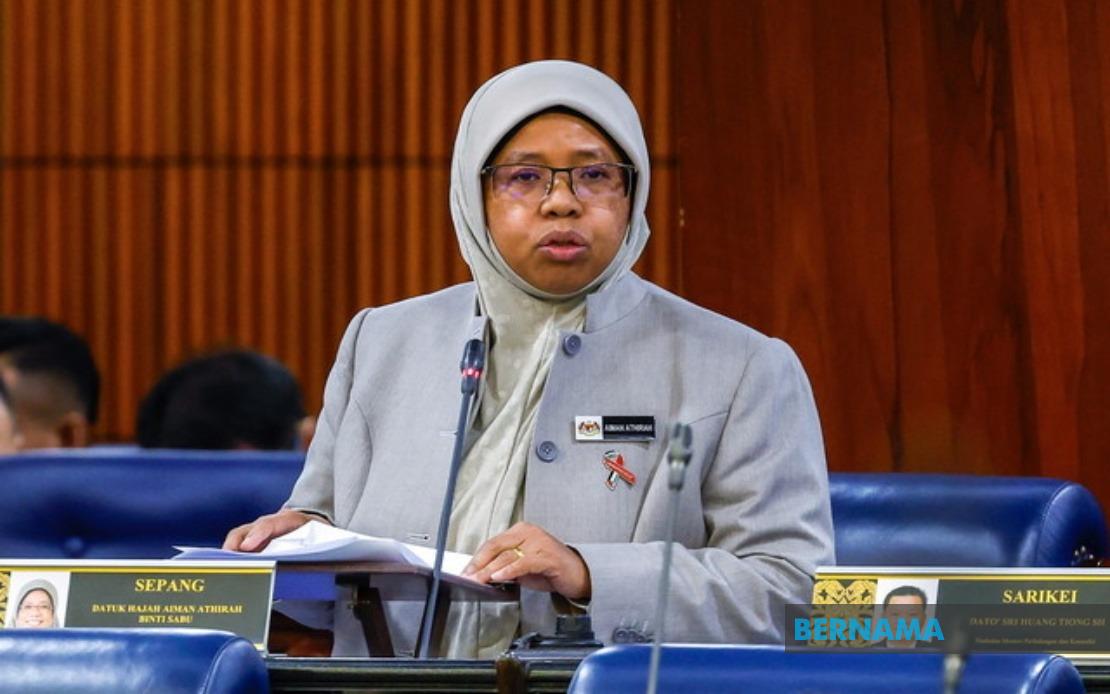
The Ministry of Housing and Local Government has given the go-ahead for nearly 600 development projects aimed at upgrading living conditions in Chinese new villages and Indian traditional villages across Malaysia, representing a significant commitment to community infrastructure and welfare. Through its Department of Local Government, KPKT has approved 573 projects targeting Chinese new villages alongside 21 projects for Indian villages, with the total annual budget allocation reaching RM73 million. Deputy Minister Datuk Aiman Athirah Sabu outlined the scope and progress of these initiatives during parliamentary proceedings, providing lawmakers with an overview of how the ministry is channelling resources into communities that have historically faced infrastructure gaps and developmental challenges.
Within the Chinese new village portfolio, infrastructure development comprises the largest component, with 366 projects authorised for implementation. Of these, nearly 150 have already reached completion, demonstrating measurable progress on the ground, while the remaining 218 continue under active construction. This dual-track approach—simultaneously completing mature projects while advancing newer initiatives—reflects the ministry's effort to maintain momentum in its development agenda. The infrastructure focus is critical, as many Chinese new villages, established decades ago in the post-independence era, require updated utilities, improved road networks, enhanced water supply systems, and better drainage infrastructure to meet contemporary living standards.
Beyond physical infrastructure, the ministry has also prioritised residential improvement through two dedicated assistance programmes. The Housing Repair Assistance Programme has secured approval for 197 individual projects, with approximately one-quarter already completed and the majority still progressing. These initiatives enable residents to address critical housing defects and safety concerns without bearing the full financial burden themselves. Complementing this effort, the New Village Housing Construction Assistance Programme has received approval for ten projects, though none have commenced implementation as yet. This phased approach suggests careful planning and coordination to ensure resources are deployed effectively and construction capacity is not overstretched.
For Indian villages, the scope of intervention is more concentrated but expanding. Aiman Athirah identified 18 villages across six states—Johor, Melaka, Selangor, Kuala Lumpur, Perak and Negeri Sembilan—as beneficiaries of coordinated development efforts totalling RM2 million this year. The focus encompasses infrastructure modernisation, public amenities such as community centres and recreational facilities, and safety enhancements including improved lighting and security measures. Current progress shows five projects completed, thirteen actively under construction, two in procurement stages awaiting supplier finalisation, and one remaining in the planning phase. This varied status reflects the complex nature of community development work, which must navigate procurement regulations, design refinement, and community consultation.
The parliamentary question posed by S. Kesavan, representing the Sungai Siput constituency, underscores growing political attention to the development needs of these communities. These villages, which emerged from Malaysia's unique historical circumstances—Chinese new villages as part of colonial-era resettlement policies and Indian traditional villages tied to plantation economies and immigration patterns—have often been overlooked in mainstream development discourse. By bringing such matters to parliamentary scrutiny, legislators are ensuring accountability and maintaining pressure on the ministry to deliver tangible improvements that residents can observe and utilise.
Looking at the trajectory of investment, the government has substantially escalated its commitment to Chinese new villages in recent years. Since 2023 through the previous year, RM328.9 million has been allocated to development projects across 613 Chinese new villages nationwide, demonstrating a systemic approach rather than ad-hoc interventions. This scale of spending indicates recognition that comprehensive community development requires sustained financial commitment and multi-year planning horizons. The fact that the beneficiary villages number in the hundreds suggests coverage across most peninsular states and likely reflects demographic distribution of these settlements.
Indian villages have historically received less structured development attention, but this dynamic is shifting. The ministry began channelling special allocations to Indian villages specifically in 2025, with an initial commitment of RM15 million. This dedicated funding stream is a watershed moment, suggesting policy recognition that Indian communities require targeted intervention comparable to that extended to Chinese new villages. The allocation structure reveals sophisticated targeting, with resources directed to 50 identified Indian villages encompassing 22,144 household members across 87 discrete projects. This specificity indicates the ministry has conducted community mapping and needs assessment rather than applying blanket approaches.
The funding split between two main initiatives demonstrates coordination across government agencies. KPKT itself is administering RM10 million through 54 projects from its 2025 budget, while a further RM5 million flows through the Indian Community Socioeconomic Development Programme via the Malaysian Indian Transformation Unit (MITRA). This dual-channel approach leverages institutional expertise and ensures community needs are addressed through complementary pathways. MITRA's involvement signals integration with the government's broader Indian community development agenda, creating synergies between village infrastructure work and wider socioeconomic initiatives.
For Malaysian readers monitoring development equity, these figures suggest a meaningful shift towards recognising communities beyond the three major ethnic categories typically dominant in development discourse. The historical marginalisation of Chinese and Indian villages in mainstream urban planning has created infrastructure deficits that compound over decades. A RM73 million annual investment, while substantial, must be understood within the context of total infrastructure spending and the accumulated backlog of deferred maintenance and modernisation across these 663 villages collectively. The completion rates shown for individual programmes—approximately 40 percent of Chinese new village housing repairs done, roughly one-third of infrastructure projects finalised—indicate this is multi-year work requiring sustained political will and budgetary support beyond single fiscal cycles.
The parliamentary framework through which this information emerged is significant for transparency. By responding to direct questions in the Dewan Rakyat, the Deputy Minister has created an official record of commitments, progress metrics, and timelines. This accountability mechanism allows constituents and advocacy groups to track implementation and hold the ministry to stated objectives. For the regions containing these villages, the data provides concrete evidence that development attention is flowing toward their communities, potentially reducing the sense of abandonment that often characterises peripheral settlements in Malaysian urban hierarchies.
Looking forward, the doubling down on Chinese new village development—with RM328.9 million committed over just two years—and the initiation of structured funding for Indian villages suggest policy momentum that may accelerate. The projects approved but not yet commenced, particularly the ten housing construction initiatives in Chinese new villages, represent a development pipeline that could generate significant local employment and economic activity once tender and construction processes begin. For residents in these villages, visible infrastructure improvements and housing assistance deliver tangible quality-of-life enhancements that can demonstrate government responsiveness to their specific needs and circumstances.

