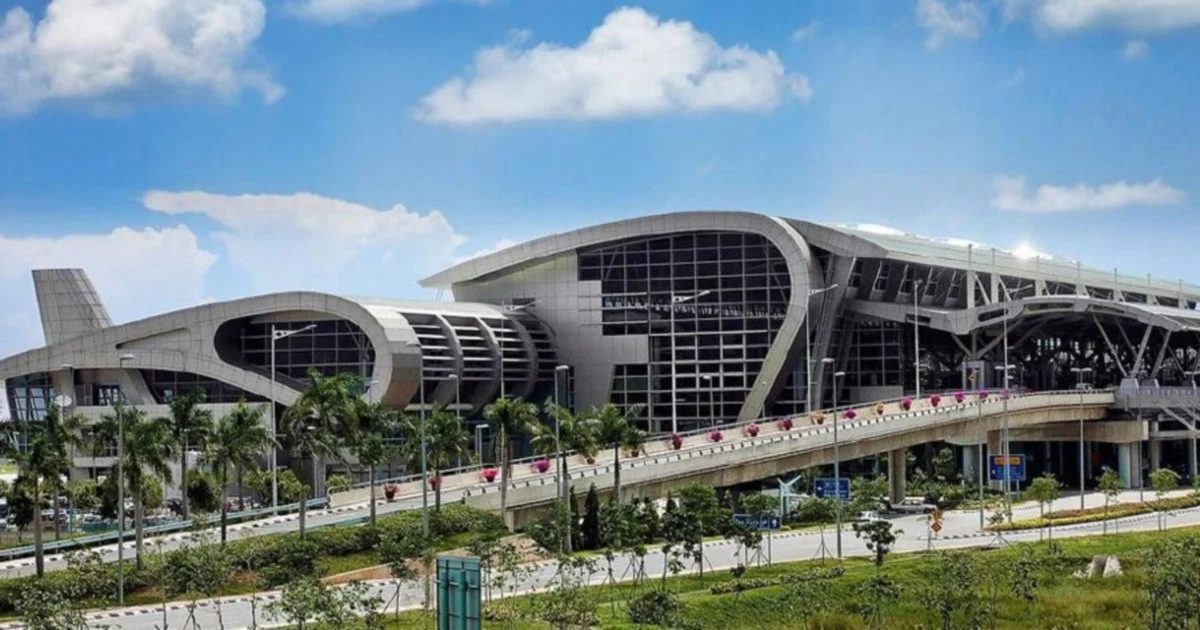
The long-awaited expansion of Kota Kinabalu International Airport remains stalled, with nearly RM500 million in planned improvements hanging in limbo until outstanding disputes over land ownership and site matters are settled with the Sabah state administration. Datuk Hasbi Habibollah, serving as Deputy Transport Minister, outlined this constraint as the primary obstacle preventing construction from commencing on the terminal development initiative.
The project represents one of the most significant infrastructure undertakings for Sabah in recent years, designed to bolster the state's aviation capacity and enhance connectivity for tourists and business travelers. KKIA currently serves as a critical gateway for the East Malaysian tourism sector, handling hundreds of thousands of passengers annually and supporting the regional economy through improved accessibility to Sabah's natural attractions and commercial hubs. An expanded terminal would accommodate growing passenger volumes and modern service standards demanded by international carriers.
Land acquisition complications have emerged as the central impediment to moving forward. Such issues are not uncommon with major infrastructure projects in Malaysia, where coordinating between federal agencies, state governments, and private landowners can involve protracted negotiations spanning multiple quarters. The Sabah government retains substantial authority over land matters within its jurisdiction, requiring alignment between federal transport ministry objectives and state-level land administration protocols.
The specific nature of the site complications has not been detailed in official statements, but in Malaysian airport development contexts, challenges typically encompass title verification, compensation determinations for affected proprietors, environmental clearances, and zoning confirmations. These procedural steps, while essential for project legitimacy and community relations, frequently consume considerable time before actual groundbreaking becomes feasible.
Economically, the delay carries implications for Sabah's tourism recovery trajectory and regional competitiveness. Neighboring states and international destinations have been progressively enhancing airport infrastructure, and postponing KKIA's modernization risks diminishing Sabah's relative appeal to airlines expanding regional networks. Enhanced terminal capacity directly influences carrier investment decisions, affecting flight frequency and route expansion potential.
For Malaysian aviation stakeholders more broadly, the situation underscores the complexities inherent in coordinating major projects across federal-state administrative boundaries. While Putrajaya maintains oversight of air transport policy and national aviation infrastructure planning, Sabah possesses proprietary interest and governance prerogatives over land resources. Establishing harmonious working relationships between these governmental tiers remains crucial for project advancement.
The RM500 million financial allocation suggests a comprehensive redevelopment encompassing terminal expansion, modern check-in facilities, enhanced security systems, and improved passenger amenities. Such infrastructure investments typically generate employment during construction phases and operational benefits spanning decades, influencing regional development trajectories substantially.
Officers at the federal transport ministry and their Sabah counterparts presumably remain in dialogue addressing the outstanding complications. Previous Malaysian infrastructure initiatives have demonstrated that patient negotiation, creative problem-solving regarding compensation frameworks, and transparent communication with affected stakeholders can ultimately overcome similar impasses. The resolution pathway likely involves documented commitments from both governmental levels regarding procedural timelines and responsibilities.
The airport expansion initiative reflects recognition of Sabah's strategic positioning within Southeast Asian aviation networks and the necessity for updated facilities supporting contemporary travel demands. International tourists, particularly from regional markets and beyond, increasingly select destinations partly based on airport accessibility and terminal quality assessments. Modern facilities communicate professionalism and investment commitment to overseas visitors.
Until the land and site matters reach satisfactory conclusion, contractors cannot mobilize equipment, workforce, and materials essential for construction commencement. This hiatus period, though frustrating, allows project teams to finalize detailed engineering specifications, secure necessary permits, and coordinate supply chain logistics. However, prolonged delays risk budget overruns and inflation impacts on ultimate project costs.
Regional observers will monitor how expeditiously the federal and state authorities resolve these complications, as the resolution demonstrates governmental capacity for inter-level collaboration on priority infrastructure. Successful navigation of current challenges could establish precedents facilitating future major development undertakings across Malaysian states, while protracted deadlock might discourage similar ambitious initiatives.
The transport ministry's public acknowledgment of the issue signals transparency regarding project status and conditions requiring attention. Stakeholders including airlines, tourism operators, and travelers await clarity on revised timelines. As Datuk Hasbi has indicated, substantive progress hinges on tangible land settlement outcomes rather than procedural forecasts.

