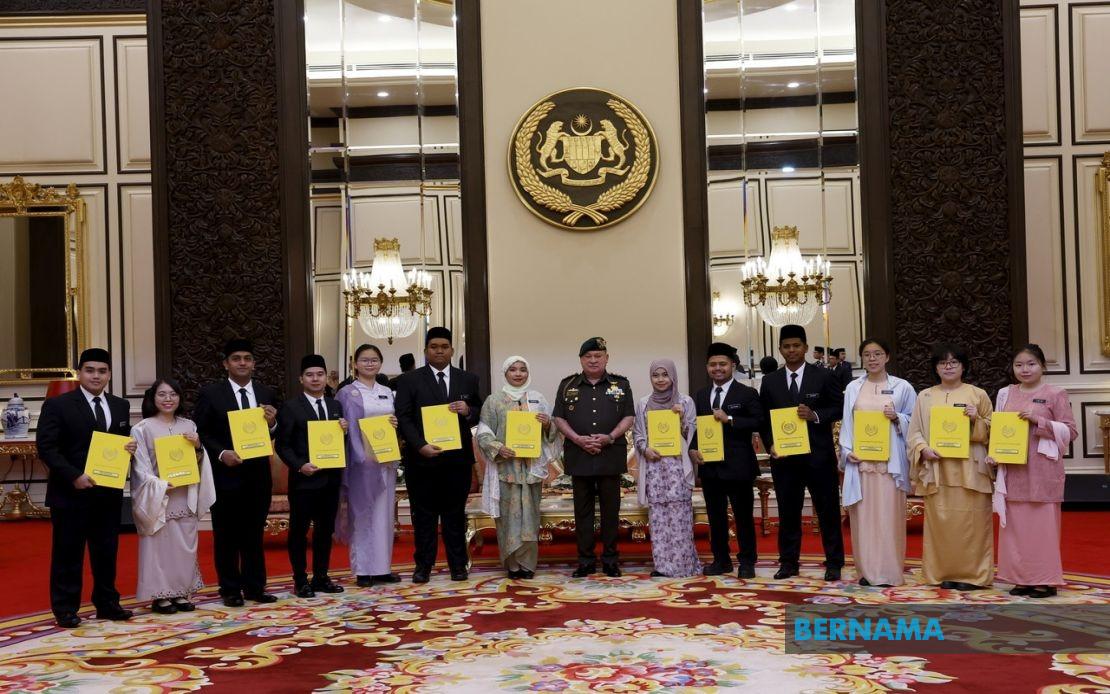
His Majesty Sultan Ibrahim, King of Malaysia, has presented the 2026 Yang di-Pertuan Agong Scholarships (BYDPA) to 14 recipients during a formal ceremony at Istana Negara in Kuala Lumpur. The event underscores the nation's continued commitment to developing high-calibre human capital through investment in advanced postgraduate education, both domestically and on the global stage.
The 2026 cohort comprises two distinct groups pursuing different levels of postgraduate qualification. Seven scholars have been selected to undertake doctoral research, positioning them for careers at the forefront of academic and professional innovation. The remaining seven recipients will embark on Master's degree programmes centred on original research, allowing them to contribute specialised expertise across various sectors of the Malaysian economy and society.
Geographic distribution of the scholarships reflects a strategic balance between internationalising Malaysian talent and strengthening local research capacity. Four of the 14 scholars will pursue their studies at prestigious universities outside Malaysia, gaining exposure to world-class research environments and international networks that will enhance their competitive advantage globally. The majority, comprising 10 recipients, will conduct their postgraduate research at Malaysia's leading research universities, ensuring that advanced scholarship and knowledge creation remain rooted within domestic institutions.
The BYDPA stands as one of Malaysia's most distinguished scholarship programmes, delivering funding levels unmatched by other government-sponsored education awards. This premier status reflects the government's recognition that developing world-class researchers and academics requires substantial financial support, removing barriers that might otherwise prevent talented Malaysians from accessing elite postgraduate opportunities. The scholarship's prestige derives not merely from its funding generosity but from its rigorous selection process, which identifies candidates demonstrating exceptional academic merit and research potential.
Tan Sri Wan Ahmad Dahlan Abdul Aziz, the Director-General of the Public Service, highlighted the programme's significance when addressing reporters following the presentation ceremony. His remarks emphasised that the BYDPA occupies a uniquely elevated position within Malaysia's scholarship landscape, commanding the highest allocation of resources among all government scholarship schemes. This distinction underscores governmental prioritisation of postgraduate research as essential infrastructure for national development and competitive positioning in knowledge-intensive sectors.
The ceremony's attendance by senior royal household officials, including Tan Sri Dr Azmi Rohani as Comptroller of the Royal Household, Istana Negara, reflected the formal significance attributed to the scholarship presentation. Such high-level participation signals that royal patronage extends meaningfully to educational advancement and research excellence, reinforcing cultural messaging that scholarly achievement represents a valued national priority aligned with the institution of the monarchy.
For Malaysian stakeholders, the BYDPA represents a critical pipeline for producing researchers capable of addressing complex challenges spanning science, technology, engineering, medicine, social sciences, and humanities. Scholars pursuing doctoral degrees particularly contribute to expanding Malaysia's research output and intellectual property generation, prerequisites for transition toward high-value manufacturing and innovation-driven economic models. The four recipients studying internationally will likely become transnational knowledge networks, facilitating collaboration between Malaysian and foreign institutions while building reputational recognition for Malaysian scholarship abroad.
The 2026 scholarship round arrives amid broader regional competition for postgraduate talent. Southeast Asian nations increasingly recognise that retaining and developing advanced human capital determines long-term prosperity and competitiveness. Malaysia's sustained investment in flagship scholarship programmes demonstrates governmental understanding that brain drain prevention requires not merely opportunity creation domestically, but also ensuring that opportunities match or exceed those available internationally. The BYDPA's pre-eminence among government schemes signals a commitment to attracting and retaining Malaysia's brightest minds.
Recipients of the BYDPA typically advance to influential positions within academia, research institutions, government agencies, and private sector research divisions. The network of alumni scholars itself becomes a resource, facilitating knowledge exchange, collaborative projects, and mentorship relationships that extend the impact of individual scholarship awards across professional ecosystems. Institutional investment in these 14 recipients thus generates returns extending far beyond the immediate funding provided, influencing research directions and professional trajectories across multiple sectors for decades.
The timing of the 2026 scholarship presentation arrives as Malaysia navigates post-pandemic recovery and restructuring of innovation priorities. Postgraduate scholars funded through the BYDPA will likely focus on research domains deemed critical for national transformation, from renewable energy and biotechnology to advanced manufacturing and digital infrastructure. Their research outputs and eventual career contributions will substantially influence Malaysia's capacity to meet ambitions outlined in medium-term development frameworks and sectoral transformation initiatives.
For successful BYDPA recipients, the scholarship carries not merely financial benefits but symbolic recognition of exceptional potential and a mandate to contribute meaningfully to national advancement through rigorous research and professional excellence. The prestige associated with BYDPA selection historically translates into enhanced career prospects, expanded international collaboration opportunities, and platforms for disseminating research findings to global audiences. This year's 14 recipients join a distinguished cohort of previous scholars who have gone on to shape academic disciplines, drive innovation initiatives, and advise governmental policy across diverse fields.