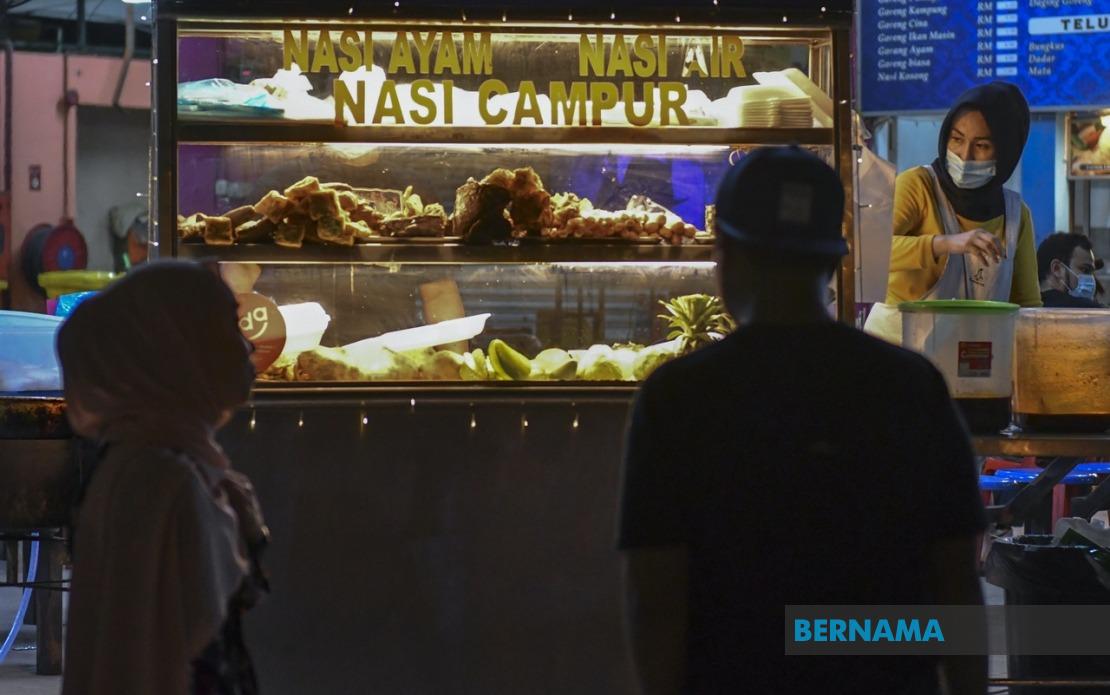
The Kelantan state government has pledged to enhance its oversight of food establishments across the state in response to growing public concerns about whether some premises are properly maintaining halal standards. The commitment comes after allegations regarding the halal status of certain food businesses—particularly those operated by non-Muslim proprietors—gained traction on social media platforms, sparking debate among consumers and raising questions about regulatory vigilance in the eastern Malaysian state.
Mohd Asri Mat Daud, chairman of the Kelantan State Islamic Development, Dakwah, Information and Regional Relations Committee, outlined the government's strategy during remarks following an event celebrating halal certification achievements in Kota Bharu on July 15. He indicated that heightened monitoring represents a precautionary measure to prevent compliance lapses from spreading throughout the state's food service sector. The state administration views the recent social media disclosures not as isolated incidents but as a potential indicator of systemic vulnerabilities in how halal requirements are enforced across different types of food operations.
While the exact scope and nature of the allegations remain somewhat vague, the trigger point was a Facebook user's public disclosure questioning the halal certification credentials of multiple food premises owned by non-Muslim operators that serve predominantly Muslim customer bases. This post resonated widely across social networks, generating diverse reactions from consumers concerned about the integrity of halal standards and operators worried about reputational damage. The digital spread of these concerns underscores how quickly food safety and religious compliance issues can mobilise public opinion in Malaysia, where halal certification carries significant cultural and commercial weight.
Mohd Asri clarified that the Kelantan Islamic Religious Affairs Department holds primary responsibility for enforcement activities in this domain, and his office will work in coordination with that body to investigate any credible complaints. However, he acknowledged that as of the announcement date, the state government had not formally received official reports detailing specific violations. This distinction is important: the allegations are circulating through informal social media channels rather than through established complaint mechanisms, which may explain why formal action has not yet been triggered. The state intends to follow established procedures before escalating any response.
The official position emphasises that increased inspections will activate only if credible doubts about halal compliance emerge. This graduated approach reflects the tension between responding to public concern and avoiding unnecessary disruption to businesses that may not have committed violations. By framing enhanced monitoring as a conditional response dependent on substantiated concerns, authorities seek to maintain proportionality while signalling commitment to consumer protection. The statement also reveals that preliminary investigations are underway to gather more substantive information before determining whether systemic problems exist or whether isolated cases are being generalised.
Mohd Asri directed a pointed message to food premise operators, urging them to prioritise religious and legal compliance over profit maximisation. He contended that cutting corners on halal standards—whether through sourcing non-certified ingredients, employing improper handling procedures, or misrepresenting premises' credentials—ultimately corrodes consumer confidence in the broader halal ecosystem. This concern carries practical implications: if Muslims become sufficiently distrustful of halal certification, they may reduce consumption of affected products or seek alternatives outside the formal market economy, damaging both business viability and regulatory reach.
The state administration also seized this moment to encourage food operators to pursue Malaysia's formal Halal Certification, positioning it as both a compliance mechanism and a competitive advantage. Kelantan authorities stated their commitment to processing applications within thirty days, contingent on the applicant establishment's readiness and adherence to prescribed guidelines. This timeline is designed to reduce bureaucratic friction and make certification accessible. The underlying strategy is that widespread adoption of formal certification would reduce information asymmetries between operators and consumers, making misrepresentation more difficult and creating a clearer market distinction between compliant and non-compliant premises.
The incident highlights a broader challenge facing Malaysian regulators across multiple states: the gap between formal compliance frameworks and actual consumer perception. Even where licensing and inspection systems exist, social media can rapidly amplify concerns about individual establishments or categories of operators, sometimes outpacing official verification processes. In Kelantan, where Islamic affairs carry particular political and cultural significance, such allegations gain immediate traction and demand swift governmental response.
From a regional perspective, this situation reflects patterns visible across Southeast Asia where halal certification has become simultaneously a religious requirement, a consumer protection mechanism, and a source of commercial competition. Indonesia, Brunei, and Singapore all grapple with similar questions about how to maintain public confidence in halal standards while ensuring that certification processes remain credible rather than becoming mere bureaucratic formalities. Kelantan's response—combining investigation, enhanced monitoring, and positive incentives for certification—represents a pragmatic middle path.
The emphasis on preliminary investigation before escalation also suggests official caution about overreacting to social media allegations without verified evidence. This stance may frustrate consumers demanding immediate corrective action, yet it reflects recognition that overly aggressive enforcement against potentially innocent operators could generate business community backlash and accusations of political targeting. The delicate balance Kelantan authorities are attempting to strike involves protecting religious compliance and consumer confidence while avoiding the appearance of arbitrary or disproportionate regulatory action against particular business categories.
Looking forward, this episode may accelerate Kelantan's broader halal governance modernisation. Digital platforms that enable rapid public disclosure of compliance concerns also create opportunities for more transparent reporting mechanisms and real-time inspection data-sharing. If authorities can harness such tools effectively, they might transform reactive crisis management into proactive system improvement. The state's acknowledgment that more intensive monitoring may be necessary suggests willingness to invest additional enforcement resources, provided the public concerns prove substantiated through investigation.

