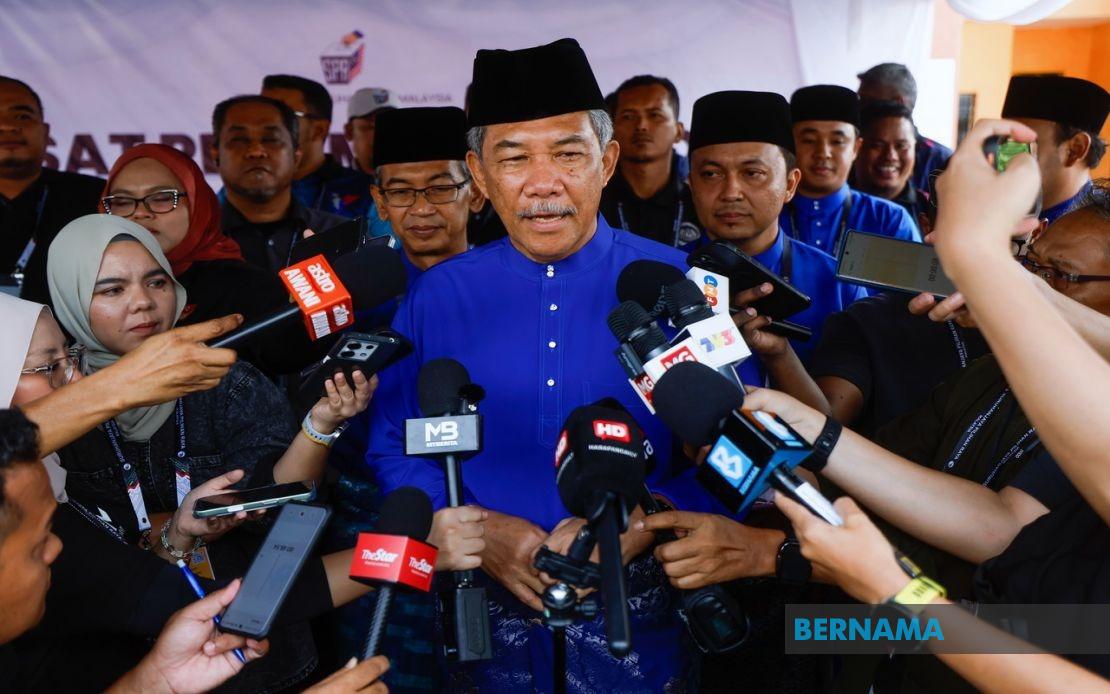
Barisan Nasional deputy chairman Datuk Seri Mohamad Hasan has issued a clear directive to party operatives not to weaponise Negeri Sembilan's adat institutions during the state's upcoming election campaign, emphasising that preserving respect for traditional customs is essential to maintaining democratic harmony. Speaking in Rembau after the nomination process, the UMNO deputy president stressed that customary matters must remain insulated from electoral politics, cautioning that any attempt to exploit such sensitivities would only generate avoidable discord across the state.
The admonition comes as Negeri Sembilan prepares for its 16th state election, with polling scheduled for August 1 following early voting on July 28. The timing of Mohamad's warning suggests heightened awareness within BN leadership that adat-related controversies could inflame communal tensions or alienate voter blocs if allowed to become campaign fodder. Negeri Sembilan's adat framework, which governs aspects of Malay-Muslim customary law and governance, carries considerable symbolic and practical weight in the state, making it particularly vulnerable to politicisation during competitive electoral periods.
Mohamad's repeated emphasis that candidates and party machinery must completely avoid adat-related campaign materials underscores the potential explosiveness of the issue. By publicly reminding supporters that traditional customs should not be leveraged for electoral advantage, the deputy chairman appears to be preempting potential overreach by over-zealous party members or candidates who might otherwise see cultural and religious sensitivities as useful mobilisation tools. This preventive approach reflects lessons learned from previous Malaysian elections where similar issues have occasionally surfaced and caused unnecessary friction within coalitions or across communities.
The Negeri Sembilan Legislative Assembly was dissolved on June 5, triggering the electoral process that will determine control of all 36 state seats. The state has historically been a BN stronghold, though recent Malaysian electoral patterns have shown that voter preferences remain volatile and that missteps during campaigns can shift outcomes. By establishing clear boundaries around what constitutes acceptable campaign discourse, Mohamad is attempting to ensure that BN's messaging strategy remains focused on substantive governance issues rather than cultural or religious triggers that could backfire.
Mohamad's guidance also reflects BN's broader strategic positioning in an increasingly fragmented Malaysian political landscape. The party coalition has invested considerable effort in rebuilding credibility and voter confidence following the 2018 electoral shock, and campaign discipline—including restraint on sensitive cultural and religious matters—has become a hallmark of its efforts to appear as a responsible, mainstream governing force. Any deviation from this disciplined approach, particularly in a state election, could undermine the larger narrative BN is attempting to construct heading into future national contests.
Regarding electoral cooperation, Mohamad confirmed that BN and Perikatan Nasional will maintain their existing understanding to maximise combined support across constituencies without formally merging into a unified coalition structure. This arrangement echoes patterns seen in other states but remains distinct from the deeper integration attempted in Johor. Under this framework, BN and PN will coordinate strategically to avoid splitting opposition votes in constituencies where only one coalition is fielding candidates, thereby enhancing prospects for both sets of candidates across Negeri Sembilan's 36 seats.
The electoral understanding between BN and PN represents a pragmatic accommodation rather than ideological alignment. Both coalitions view Negeri Sembilan as winnable territory, and neither wishes to squander votes through intra-coalition competition. For Malaysian observers, this arrangement demonstrates how even ideologically distinct blocs can find common ground on vote-maximisation strategies when electoral mathematics favour cooperation. The distinction from Johor's formal merger suggests that BN and PN leadership wishes to preserve flexibility and organisational independence while achieving coordination benefits.
For Negeri Sembilan voters, the implication is that the election will fundamentally be contested between established coalitions with substantial resources and historical presence, rather than presenting radically transformative choices. BN's continued dominance of state machinery and administrative capacity gives it inherent advantages, while PN's cooperation denial strategy—rather than direct competition—suggests realistic assessments by Perikatan leadership about the state's political alignment. This dynamic typically favours incumbent coalitions and reduces the likelihood of dramatic electoral upheavals.
Mohamad's directive regarding adat also carries implications for how Malaysian political parties more broadly approach culturally sensitive subjects. As Malaysia's electoral environment becomes more competitive and polarised, the temptation to exploit religious and customary sensitivities has grown. Senior leaders like Mohamad recognising the need to impose discipline on such tendencies indicates awareness that short-term electoral gains from incendiary messaging may generate longer-term costs to institutional stability and social cohesion. This restraint, if genuinely enforced, could set positive precedents for campaign conduct across Malaysian states and federal elections.
The reminder that adat institutions must be respected and remain insulated from political instrumentalisation also reflects constitutional provisions protecting Malay-Muslim customary frameworks. Negeri Sembilan's Yang di-Pertuan Besar and associated adat councils possess defined roles within the state's governance architecture, and treating these institutions as campaign props risks undermining their legitimacy and functional effectiveness. By instructing BN machinery to respect these boundaries, Mohamad is reinforcing the principle that some institutions must transcend partisan electoral competition to preserve their institutional integrity and public standing.
For Malaysian observers monitoring state-level electoral dynamics, Mohamad's stance represents a conscious choice by BN leadership to compete on governance records and policy platforms rather than cultural flashpoints. Whether this discipline holds throughout the campaign period remains uncertain, particularly if opposition parties test boundaries or if grassroots activists deviate from central messaging. Nonetheless, the public articulation of such standards signals that at least senior BN figures recognise the costs of allowing Negeri Sembilan's election to devolve into adat-centred controversy.

