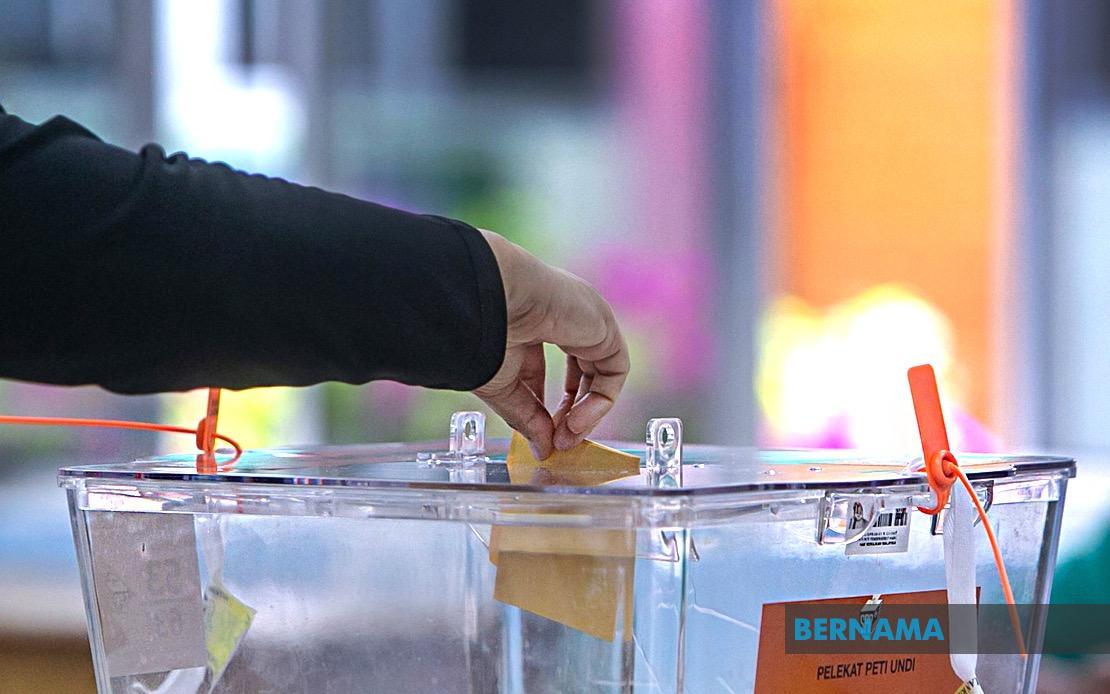
The Ministry of Youth and Sports has moved to remove barriers preventing student voters from exercising their democratic rights, issuing formal guidance that directs all Youth and Sports Skills Training Institutions to make accommodations for those needing to participate in elections. The directive, distributed through the ministry's Youth Skills Development Division, reflects growing recognition that training commitments should not force students into an untenable choice between fulfilling educational obligations and performing their civic duty at the ballot box.
Under the new framework, students enrolled at these institutions can now formally apply for special leave whenever general elections, state elections or by-elections are scheduled. The application process requires students to submit their requests directly to management at their respective training centre, initiating a consideration process that takes several practical factors into account. Rather than a blanket approval system, each request will be evaluated individually, with institution directors weighing the distance to the voter's designated polling centre, the reasonable time needed for travel, and the capacity to rearrange training schedules without compromising educational objectives.
This policy shift carries particular significance for Malaysia's youth engagement agenda. Young Malaysians have increasingly demanded greater avenues for political participation, and the current measure addresses a concrete friction point that has historically complicated their ability to vote. By removing the administrative obstacle of requiring students to choose between their training and their franchise, the ministry acknowledges that democratic participation and skills development are complementary national priorities rather than competing demands.
The ministry has emphasised that applications will remain subject to individual director approval rather than becoming automatic entitlements, allowing institutions to maintain systematic attendance records while prioritising student welfare and safety protocols. This measured approach reflects the reality that training institutions must balance institutional needs with student rights. Directors will retain discretion to assess each case, considering factors such as whether the student's absence would jeopardise critical training components or compromise cohort learning outcomes.
Advance notification and early application represent key operational elements of this initiative. The ministry has instructed all training institutions to inform eligible student voters well in advance of election dates, allowing sufficient time for applications to be processed and for students to arrange transportation to their polling areas. This emphasis on planning reflects a pragmatic understanding that logistical coordination benefits all parties. Students gain certainty about their approval status and can book travel arrangements confidently, while institutions can manage staffing levels and training schedules systematically rather than responding to last-minute requests.
The directive extends to all categories of elections, encompassing not only federal general elections but also state assembly elections and by-elections. This comprehensive scope recognises that democratic participation operates across multiple levels of governance, and that students' interest in voting should not be dismissed based on an election's administrative tier. Particularly for by-elections, which often occur without extensive advance notice, the advance notification requirement becomes crucial for ensuring students have realistic opportunities to participate.
For Malaysia's vocational and skills training ecosystem, this policy represents a subtle but meaningful shift in how institutions conceptualise their relationship to broader national priorities. Rather than viewing themselves as purely technical or vocational entities operating independently from civic life, training institutions are now explicitly positioned as participants in Malaysia's democratic infrastructure. This reframing suggests growing policy recognition that developing skilled workers and developing engaged citizens are interconnected objectives.
The ministry's statement emphasised that every vote constitutes a voice shaping the nation's future, articulating a vision where young people in training programmes remain connected to democratic processes rather than being temporarily sequestered within institutional walls. This framing appeals to students' identity as citizens first and trainees second, positioning electoral participation as a fundamental responsibility that training schedules should accommodate rather than obstruct.
Implementation will likely reveal practical challenges that the policy framework must navigate. Some training programmes may have genuine scheduling constraints that make absences genuinely disruptive, potentially creating situations where directors must deny applications despite student eligibility. Conversely, institutional cultures may develop where approval becomes formulaic, with little genuine assessment of the relevant factors. The success of this initiative will depend substantially on how directors in different institutions interpret and implement their discretionary authority.
The policy also intersects with broader demographic trends affecting Malaysian electoral participation. Youth turnout has been a consistent concern for election administrators and democratic observers, with younger voters participating at lower rates than older cohorts. Removing bureaucratic obstacles to student voting, while modest in itself, contributes to an enabling environment where participation requires less personal cost and logistical ingenuity. Whether this translates into measurably higher turnout among student voters will only become apparent when elections occur under the new framework.
Regionally, Malaysia's approach offers a template that other Southeast Asian nations might consider, particularly those operating large vocational training systems. Countries throughout the region maintain substantial skills training institutions, and many grapple with the same tension between institutional requirements and student civic participation. Malaysia's pragmatic solution—neither eliminating leave requirements nor automatically granting blanket absences, but rather implementing a structured application process—may offer a politically and administratively feasible model.
The initiative also reinforces messaging about institutional respect for student rights and agency. Training institutions that actively facilitate rather than obstruct voting participation send signals that resonate beyond electoral participation, suggesting to students that their broader roles as citizens matter to the institutions educating them. This cultural messaging, while difficult to quantify, may contribute to longer-term democratic engagement patterns among programme graduates.

