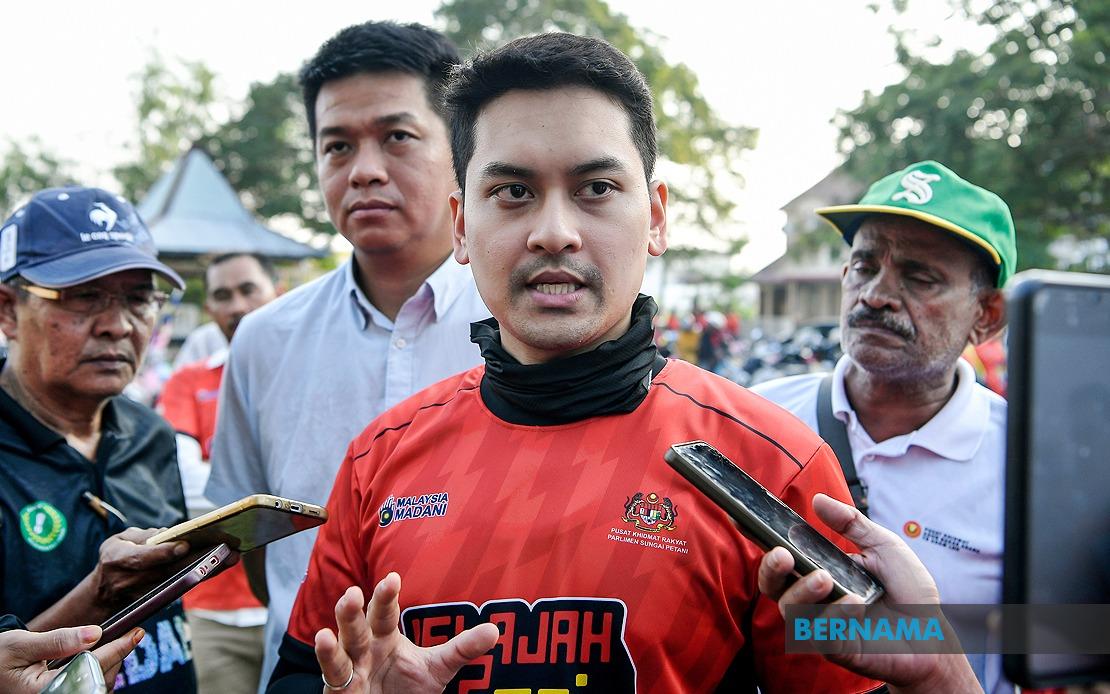
The Ministry of Youth and Sports (KBS) has commenced an extensive consultation exercise designed to capture the aspirations and concerns of Malaysia's youth population before the government tables Budget 2027 in October. The initiative, branded as the MADANI Youth Budget Tour, will traverse the country through six distinct geographical zones, beginning with the northern corridor encompassing Kedah, Penang, and Perlis before expanding to other regions over the coming weeks.
Youth and Sports Minister Dr Mohammed Taufiq Johari unveiled the tour structure at a culminating event for Sahabat MADANI Merdeka Eve celebrations held at Universiti Teknologi MARA (UiTM) Penang branch in Bukit Mertajam. The occasion was graced by Prime Minister Datuk Seri Anwar Ibrahim and Penang Chief Minister Chow Kon Yeow, underscoring the government's commitment to incorporating youth perspectives into budget formulation. The ministerial team had already initiated proceedings in Kedah at the Kedah Youth and Sports Complex, establishing momentum for the broader consultation push.
The methodological approach centres on direct engagement through town hall sessions and interactive forums where young people can articulate their perspectives, needs, and policy recommendations without intermediaries. Dr Mohammed Taufiq emphasised that this participatory model reflects a fundamental shift in how government perceives youth involvement, moving beyond token representation to genuine co-creation of policy frameworks. The consultation process serves multiple strategic purposes: it legitimises youth voices in democratic deliberation, generates substantive policy intelligence from demographic segments often excluded from formal budget discussions, and builds institutional accountability by making government responsiveness to youth concerns explicit and measurable.
The minister observed that contemporary Malaysian youth demonstrate markedly different engagement patterns compared to previous generations. Rather than passive recipients of government information, today's young people actively challenge, question, and propose alternatives within structured forums. This assertiveness, Dr Mohammed Taufiq suggested, should be channelled productively into policy formation rather than confined to social media activism. The town hall approach acknowledges this shift by creating legitimate spaces where youth can translate grievances into concrete budgetary proposals that might address issues ranging from employment prospects to educational accessibility to mental health support.
Beyond fiscal matters, the minister articulated a broader ideological purpose for youth engagement. He positioned young Malaysians as crucial guardians of national cohesion, emphasising their role as bridges spanning religious, ethnic, and socioeconomic divides. This framing carries particular significance in Malaysia's contemporary political context, where concerns about polarisation and communal fragmentation frequently dominate discourse. By highlighting youth responsibility to maintain social unity whilst advancing their material interests, the government signals that budget allocations for youth programmes should advance not merely economic but also social stability objectives.
The launch coincided with the national-level expansion of Sahabat MADANI, a grassroots volunteerism initiative that has mobilised 11,060 registered volunteers nationwide. This parallel programme extends beyond budget consultation to encompass community service, mutual respect building, and direct government-citizen dialogue channels. Prime Minister Anwar Ibrahim's personal involvement in inaugurating Sahabat MADANI at this juncture suggests that the administration views youth mobilisation as integral to implementing its broader MADANI governance agenda rather than as a discrete policy exercise confined to budgetary cycles.
For Malaysian youth observers, the timing of this consultation merits close attention. Budget 2027 represents a critical opportunity to address persistent structural challenges affecting younger demographics, including graduate unemployment, housing affordability, skills mismatches in emerging sectors, and mental health infrastructure deficiencies. The consultation tour's six-zone structure theoretically ensures that regional variations in youth priorities—whether distinct labour market conditions in manufacturing-heavy Penang versus service-oriented federal territories, or different educational provision across rural and urban areas—receive systematic documentation and analysis.
The regional sequencing commencing in the northern zone also reflects political calculation. Penang and Kedah have emerged as competitive political battlegrounds in recent electoral cycles, and direct engagement with youth constituents signals responsive governance whilst simultaneously affording opportunities to highlight administration achievements in these states. For Penang particularly, where a non-federal government operates, the consultation exercise provides a framework for coordinating youth policy across state-federal lines, potentially smoothing implementation of youth-oriented initiatives.
The consultation methodology itself warrants scrutiny from governance transparency perspectives. The effectiveness of the exercise depends substantially on whether KBS establishes clear mechanisms for converting collected feedback into budgetary allocations, and whether outcomes are publicly documented and linked to specific Budget 2027 provisions. Without such institutional linkages, the tour risks devolving into performative consultation—creating appearances of youth participation whilst maintaining actual decision-making authority entirely within executive circles. Malaysian civil society observers should monitor whether the government publishes comprehensive reports detailing received feedback, implementation decisions, and the rationale for funding choices that either accept or reject youth recommendations.
From a Southeast Asian comparative perspective, Malaysia's structured youth budget consultation demonstrates sophisticated engagement approaches. Whilst other regional governments occasionally conduct youth consultations, the institutional embedding of such exercises within formal budget cycles and the commitment to six-zone nationwide coverage suggests systematic rather than sporadic commitment. This approach potentially positions Malaysia's youth policy-making within international best practices, though actual outcomes will depend on implementation fidelity.
The MADANI Youth Budget Tour ultimately represents both genuine governance innovation and strategic political investment. Young Malaysians will determine through their participation levels and the substantiveness of government responses whether this exercise constitutes meaningful co-governance or elaborate consultation theatre. The coming months will reveal whether Budget 2027 contains provisions explicitly tracing to youth consultation sessions, thereby converting participation into tangible policy outcomes or confirming longstanding cynicism about government responsiveness to younger demographics.

