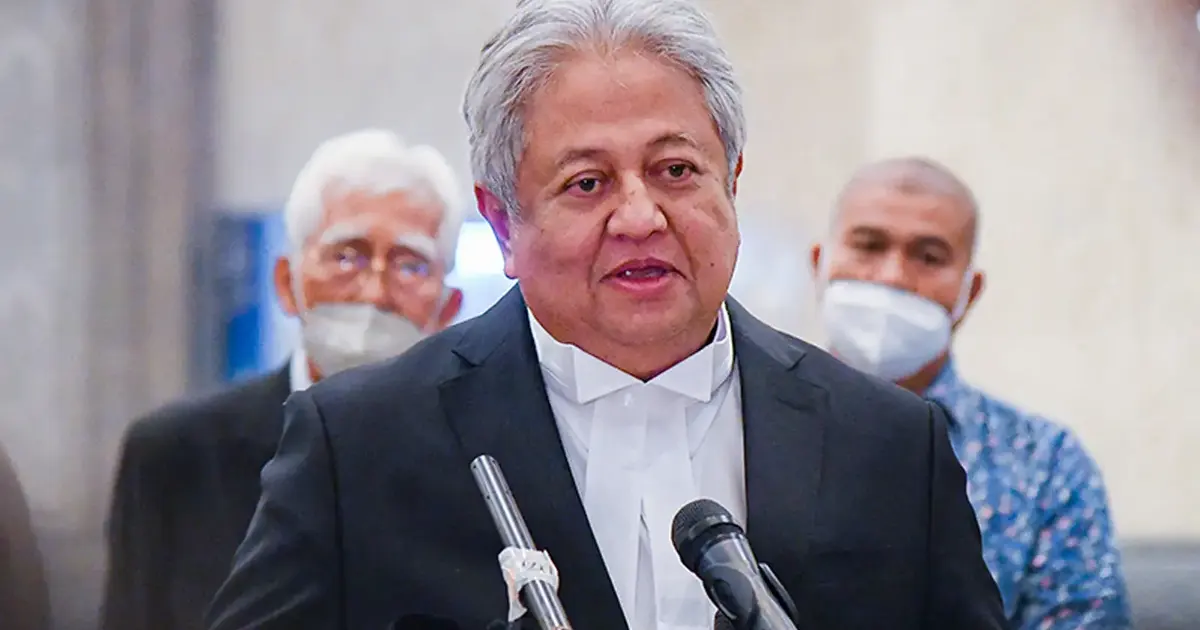
The Court of Appeal will reconvene on July 13 for case management proceedings to establish a fresh hearing date before a different judicial panel, following Justice Latifah Tahar's decision to withdraw from adjudicating the defamation appeal between Zaid Ibrahim and Malaysian Bar lawyers. The recusal removes one of the original judges scheduled to hear the contentious matter, requiring administrative reshuffling to ensure the case proceeds with an impartial bench.
Zaid Ibrahim, a prominent legal figure and former law minister, is central to this ongoing dispute that has drawn attention within Malaysia's legal community. The appeal centres on defamation claims arising from statements or actions involving the Malaysian Bar, the statutory body responsible for regulating the legal profession nationwide. Such cases are inherently sensitive, touching upon professional reputation and the intersection between legal practice, institutional governance, and personal standing.
Justice Latifah Tahar's withdrawal from the case reflects the judicial system's commitment to ensuring that proceedings maintain public confidence through the appearance and reality of impartiality. While the specific reasons for her recusal remain undisclosed, such withdrawals are typically motivated by potential conflicts of interest, prior involvement in related matters, or concerns about perception. The decision to step aside demonstrates a principled approach to case management, prioritizing the integrity of appellate proceedings over continuity of judgment.
The July 13 case management session will serve as an administrative checkpoint rather than a substantive hearing. During this session, the Court of Appeal will assign a fresh three-judge panel to hear the appeal on its merits. The court will also establish a new hearing schedule, which may differ from the originally planned timeline. This procedural adjustment, while necessary for proper judicial administration, may extend the duration before final adjudication reaches the matter.
For the Malaysian legal profession, this appeal carries significance beyond the individual parties involved. Defamation cases involving prominent lawyers and Bar-related institutions touch upon broader questions of professional conduct, institutional accountability, and the boundaries of permissible speech within legal circles. The outcome could influence how legal professionals navigate public commentary about the Bar and its operations, and whether institutional criticism enjoys protection or faces liability.
Zaid Ibrahim's profile as a former law minister adds political and historical dimensions to the case. His tenure in government, his subsequent roles in the profession, and his public positions on legal reform have kept him in the public eye. A defamation appeal involving him naturally attracts interest from fellow legal practitioners, policymakers, and observers of Malaysian governance. The Malaysian Bar itself, as the professional regulating body, has institutional stakes in how defamation disputes are resolved, particularly when they involve the organization or its representatives.
The recusal also raises practical questions about judicial resource allocation and case scheduling within the Court of Appeal. High-profile appeals require careful management to ensure appropriate judicial capacity while maintaining public confidence. Reassigning cases to different panels adds complexity to court administration, particularly when original judges have already engaged with preliminary matters or case documents. However, such administrative inconvenience must yield to the fundamental requirement that judges not sit on cases where their impartiality might reasonably be questioned.
Malaysian lawyers and legal observers will be monitoring how the new panel approaches the substantive issues once appointed. The defamation appeal will likely grapple with evidentiary questions, the applicability of legal principles governing defamation within professional contexts, and potentially the intersection between free speech and professional reputation. These elements make the case legally intricate and professionally consequential for the wider legal community.
The July 13 date provides a concrete timeline for stakeholders to anticipate, though the eventual hearing date before the new panel remains to be determined. Parties to the appeal—Zaid Ibrahim on one side and the Malaysian Bar lawyers on the other—will need to prepare for re-presentation of their cases to unfamiliar judges, which may necessitate strategic reconsideration of arguments and evidence. The fresh panel will approach the matter without any prior engagement, requiring comprehensive briefing on the case background and legal complexities.
This procedural development underscores the Malaysian judicial system's adherence to fundamental fairness principles. While recusals can appear to complicate cases, they ultimately strengthen the legitimacy of appellate decisions by ensuring that judgments emanate from panels without apparent bias or conflict. For the Malaysian legal profession and the broader public, such procedural integrity matters as much as the substantive outcomes themselves, reinforcing confidence in the appellate process even when it introduces administrative delays.
The case management session in July will mark a transition point, moving the appeal from its initial panel toward a new phase of adjudication. As Malaysian courts continue handling high-profile professional disputes, the handling of this matter will likely inform how similar cases are managed administratively and how judicial integrity concerns are balanced against procedural efficiency.

