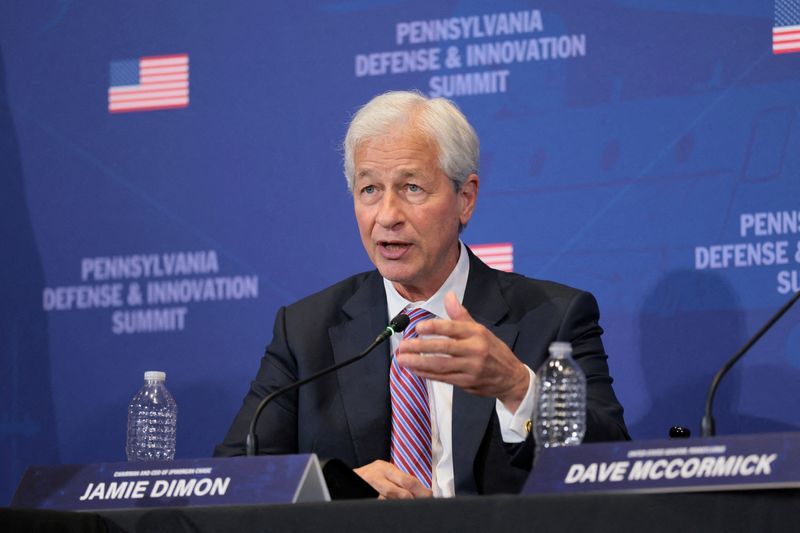
Jamie Dimon, chief executive of JPMorgan Chase, is mobilising business leaders across America's most essential sectors to collaborate on managing the expanding risks posed by artificial intelligence adoption. The effort, which commenced last month, represents a recognition among senior executives that the rapid deployment of AI technologies across critical industries requires a coordinated, cross-sector response that transcends traditional competitive boundaries.
Dimon has personally contacted chief executives at major banks, regional financial institutions, and technology firms to participate in an expanded initiative being built upon the foundations of the Alliance for Critical Infrastructure, an organisation that JPMorgan helped establish alongside other major corporates. The ACI, which originally focused on coordinating resilience planning and threat response across sectors including finance, energy, water management, telecommunications, aviation and rail, is now recalibrating its mission to prioritise artificial intelligence governance.
The scope of this corporate mobilisation is substantial. The ACI has begun outreach to more than forty organisations representing the full spectrum of industries that depend critically on advanced technology systems for their operations. Throughout August, the participating companies are scheduling discussions to explore collaborative frameworks that could establish industry standards for AI deployment, risk assessment, and security protocols. The group has not yet publicised any concrete outcomes from these conversations, but the sheer scale of participation suggests serious momentum behind the initiative.
For Malaysian and Southeast Asian observers, this development carries significant implications. As multinational corporations headquartered in these industrial sectors expand their regional operations, the governance frameworks they adopt in their home markets often influence their practices elsewhere. A cohesive American industry standard on AI risk management could eventually shape how foreign subsidiaries and regional partners approach technology deployment and security obligations. This is particularly relevant for Malaysian businesses integrated into global supply chains within finance, energy, and telecommunications.
The timing of this effort reflects genuine concern among corporate leadership. Recent cyberattacks targeting water infrastructure systems in Minnesota and other American states have crystallised anxieties about how artificial intelligence could be weaponised against vulnerable infrastructure. Unlike previous cybersecurity threats that required substantial technical expertise and resources, AI systems potentially lower barriers to launching sophisticated attacks, enabling malicious actors with fewer resources to cause widespread disruption. This reality has convinced corporate leaders that information sharing and coordinated defence mechanisms are essential rather than optional.
Dimon himself has become one of America's most prominent corporate voices warning about artificial intelligence risks. His public statements comparing advanced AI capabilities to ballistic missiles in untrained hands reflect deeper concerns about concentration of computational power and its potential for misuse. His description of Anthropic's advanced models as exceptionally dangerous tools underscores that concerns about AI governance are not hypothetical but grounded in assessments of current technological capabilities. This positioning by JPMorgan's chief executive lends credibility and urgency to the entire collaborative effort.
The ACI's approach involves developing shared understanding across participating companies about how AI technologies are currently being deployed within their respective operations, what specific vulnerabilities such deployment creates, and which safeguards are both technically feasible and economically sustainable. Rather than imposing top-down regulations, the industry group seeks to establish common language and frameworks that allow competitors to address shared vulnerabilities without compromising proprietary systems or competitive advantages. This peer-to-peer knowledge exchange model has proven effective in previous infrastructure crises and appears to be the preferred approach among corporate leaders.
Significantly, this private-sector initiative is explicitly designed to coordinate with the Trump administration's approach to AI governance. Rather than proceeding independently, the ACI intends to position itself as a information-sharing partner for federal agencies developing policy responses to artificial intelligence risks. This alignment reflects recognition that sustainable solutions to technology governance require collaboration between industry actors and government regulators rather than confrontation. The U.S. government's own recent launch of the Gold Eagle initiative, which brings together AI developers, infrastructure operators and federal agencies to coordinate responses to AI-discovered vulnerabilities, suggests receptivity to this collaborative model.
The ambitious timeline articulated by participating parties indicates confidence in the undertaking's viability. The group aims to have the restructured and expanded ACI fully operational by year-end, suggesting that planning work and framework development are already well advanced. This compressed schedule reflects the pace at which artificial intelligence capabilities are advancing and the corresponding urgency surrounding governance arrangements.
For regional audiences, several dimensions warrant attention. First, the frameworks developed through this American exercise will likely establish global baselines that multinational corporations operating across Southeast Asia will be expected to follow. Malaysian subsidiaries of American financial institutions, energy companies, and technology firms will eventually inherit compliance obligations arising from these corporate commitments. Second, the security standards and risk assessments developed through this collaboration may inform how technology providers market their services to regional customers, potentially affecting procurement practices and infrastructure development timelines throughout Asia.
The corporate response to artificial intelligence risks occurring through the ACI demonstrates that business leaders increasingly recognise the technology's dual-use potential and are attempting to establish governance mechanisms before crisis forces hasty policy responses. This proactive orientation, while imperfect, may prove more effective than waiting for regulatory mandates. However, the initiative's success will ultimately depend on whether participating companies genuinely commit resources to implementing agreed standards rather than treating participation as a public relations exercise.

